







Common Sense Media Review
 By Barbara Shulgasser-Parker
,
based on child development research. How do we rate?
By Barbara Shulgasser-Parker
,
based on child development research. How do we rate?
Romantic drama based on true story has sex, brief nudity.
Parents Need to Know
Why Age 13+?
Any Positive Content?
Where to Watch
Videos and Photos
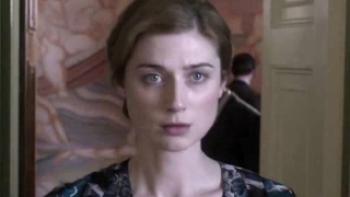
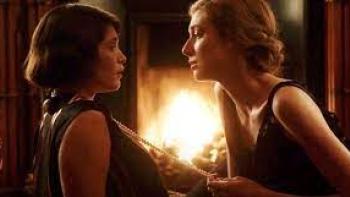
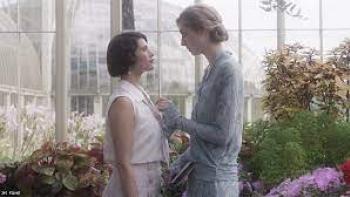
Vita & Virginia
Parent and Kid Reviews
What's the Story?
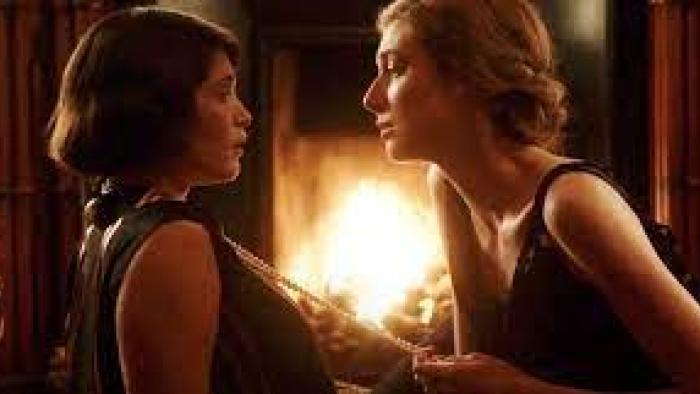
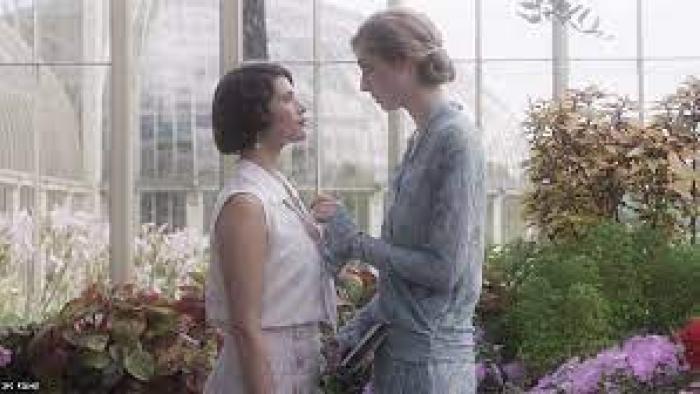
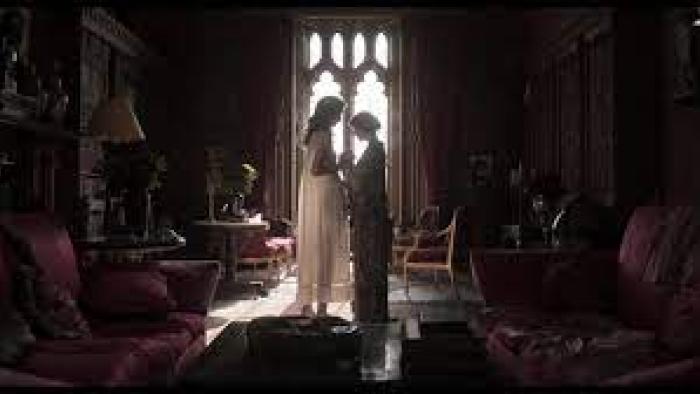
It's 1922 and Vita Sackville-West (Gemma Arterton) is eager to meet famed author Virginia Woolf in VITA & VIRGINIA. Vita's own popular page-turner books sell well, but her work isn't as respected as Virginia's A Room of One's Own, Mrs. Dalloway, and To the Lighthouse. While Vita has been having affairs, her diplomat husband Harold Nicolson (Rupert Penry-Jones) has led his own romantic life with a series of men. Virginia and her sister Vanessa (Emerald Fennell) were raised in privilege and both lead artistic lives in the luxury of large London homes. The Bloomsbury crowd, Clive and Vanessa Bell and Leonard Woolf, make appearances but remain peripheral. Vita's socially conservative mother (Isabella Rossellini) also makes an appearance, as she begs her daughter not to bring scandal on the family's hard-won reputation. The doings between Vita and Virginia inspired the latter to write her most popular book at the time, Orlando, the story of a man who becomes a woman and lives immortally, with a fictionalized Vita as the man-like woman.
Is It Any Good?
This romantic drama is unlikely to interest most teens. The real problem with Vita & Virginia is that Vita is so thoroughly unlikable and yet she looms large as the wan Virginia's love interest as well as the muse who inspired one of Woolf's oddest works, Orlando. We want to see what Virginia sees in Vita, but what we see isn't pretty, a fickle, disloyal, selfish, insensitive heartbreaker, not the best partner for someone suffering from debilitating mental illness. This often feels overly earnest, dry, and static, and other times burdened with excessive explication that offers to the uninitiated just who Virginia Woolf was and how influential her group was.
On the other hand, we need more explanation as Virginia's moments of mental imbalance, hallucinations, and inner voices depict her as needing care, a fragile wisp too breakable to withstand ordinary life. Here, Virginia, known to be witty, just seems ponderous and socially backward. Scenes between her and Vita almost reduce her to childishness and their conversations are dull, earnest, and obscure. One is never sure exactly what Virginia means half the time. Decipher this one: "I shan't make you want me anymore by giving myself away like this." The film's unintentionally funniest line comes when someone remarks that Virginia doesn't look well while she's immersed for months writing a new book. Deadpan, expressionless, and corpselike, she disagrees, and replies, "Do you not think I look full of life?" No, Virginia, we do not. After several attempts, Woolf would eventually commit suicide in 1941, at the age 59, drowning herself in the River Ouse.
Talk to Your Kids About ...
Families can talk about what Vita's motives were for becoming close to Virginia. Did it seem as if she really fell in love with Virginia, or was she looking to break into a rarified and high-prestige literary world? Why?
Did Vita seem insensitive to Virginia's mental instability? Why or why not?
Why do you think Virginia was attracted to Vita?
Movie Details
- In theaters : August 23, 2018
- On DVD or streaming : December 2, 2019
- Cast : Gemma Arterton , Elizabeth Debicki , Isabella Rossellini , Rupert Penry-Jones , Peter Gerdinando
- Director : Chanya Button
- Studio : IFC Films
- Genre : Drama
- Run time : 110 minutes
- MPAA rating :
- Last updated : November 12, 2024
Did we miss something on diversity?
Research shows a connection between kids' healthy self-esteem and positive portrayals in media. That's why we've added a new "Diverse Representations" section to our reviews that will be rolling out on an ongoing basis. You can help us help kids by
Suggest an Update
Common Sense Media's unbiased ratings are created by expert reviewers and aren't influenced by the product's creators or by any of our funders, affiliates, or partners.
See how we rate