







Common Sense Media Review
 By Jeffrey Anderson
,
based on child development research. How do we rate?
By Jeffrey Anderson
,
based on child development research. How do we rate?
Slow but touching drama about forgiveness vs. revenge.
Parents Need to Know
Why Age 14+?
Any Positive Content?
Where to Watch
Videos and Photos

What Remains
What's the Story?
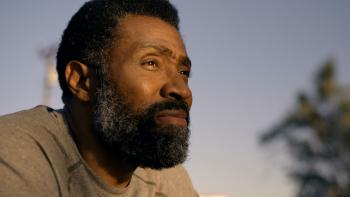
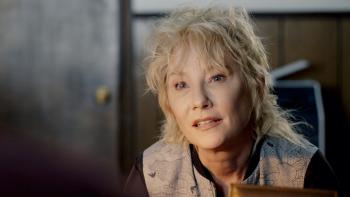
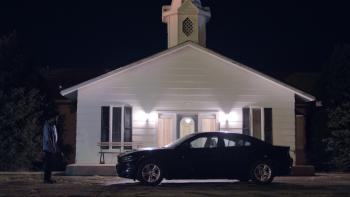
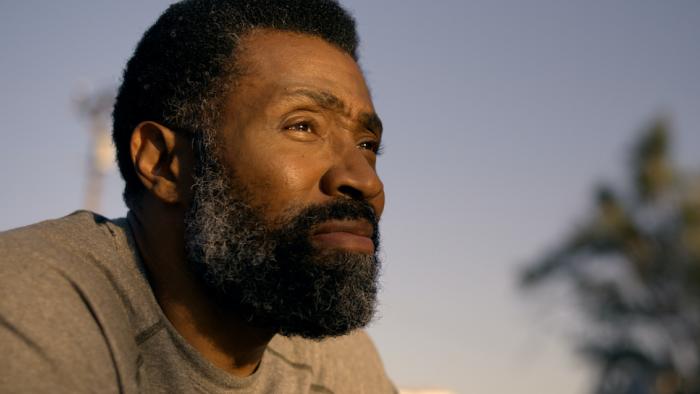
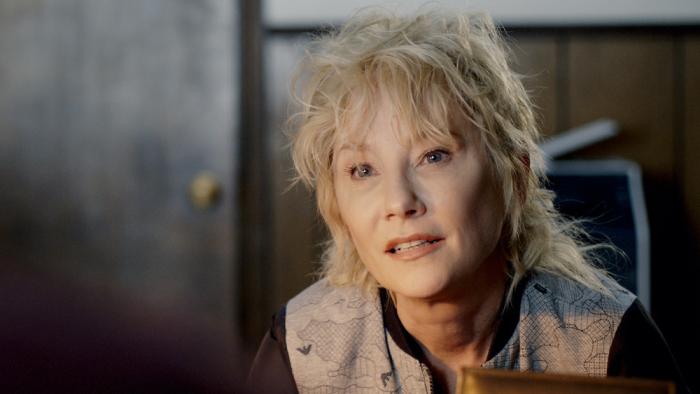
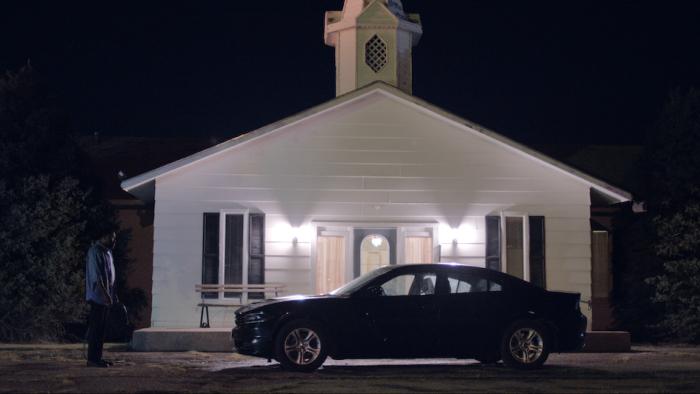
In WHAT REMAINS, Pastor Marshall (Cress Williams) gives a sermon about how he's decided to forgive Troy Parker (Kellan Lutz), the man who caused the pastor's wife's death. Five years later, Parker is released from prison. Unable to find a job, Parker stops by the church to talk to the pastor, who once again does the right thing and offers Parker a job. Over time, they talk and start to form something of a friendship. Unfortunately, the pastor's son, Samuel (Marcus Gladney Jr.), has never forgiven his father for being so kind to his mother's killer, and they've grown apart. Now Samuel, who's about to leave for college on a full scholarship, becomes even more outraged to find Parker working at the church. Meanwhile, sheriff Maureen (Anne Heche) investigates a burned truck with a dead body inside.
Is It Any Good?
This drama is often painfully slow, and it sometimes suffers from budgetary restraints, but its message of forgiveness comes through clearly and without heavy-handedness. Even though it has a murder mystery woven into it, What Remains seems to have been downshifted into a lower gear, and little suspense is generated. More straightforward dramatic scenes -- such as a long montage of characters cleaning scrap wood from an abandoned property -- may leave viewers glazed over. But at the heart of the movie are some genuine human conundrums that are well worth pondering. The pastor's sermon about forgiveness is convincing, but behind the scenes, he's less than fully convinced. He's hurting, and, unfortunately, a natural human response is vengeance -- i.e., lashing out at the one who caused the hurt.
Samuel is all about vengeance, and writer-director Nathan Scoggins does a good job of establishing with a few economical scenes that the rest of this small Texas town is on his side; nobody wants Parker around. All of this makes the pastor's decision even harder -- harder still as Parker becomes less a force of evil and more a troubled human being. A curious scene in which Scoggins splits the screen into two halves depicts two scenarios: one in which the pastor has a hard discussion with Samuel, and one in which they ignore one another. The movie never returns to the former scenario and only follows the latter one, which is a strange and bold choice. In that, What Remains subtly and compellingly suggests that, while humans have fierce feelings and reactions, that understanding begins with conversation -- and forgiveness comes from understanding.
Talk to Your Kids About ...
Families can talk about What Remains' depiction of violence. How did it make you feel? Was it exciting? Shocking? What did the movie show or not show to achieve this effect? Why is that important?
How is drinking depicted? Do characters overindulge? Is this glamorized? Are there consequences? Why does that matter?
Why do you think the movie showed the alternate scene in which the pastor and Samuel talk about their feelings, only to move ahead with a scenario in which they don't talk?
How does the movie depict forgiveness, as opposed to vengeance?
Movie Details
- In theaters : December 2, 2022
- On DVD or streaming : December 2, 2022
- Cast : Cress Williams , Kellan Lutz , Anne Heche
- Director : Nathan Scoggins
- Studio : Gravitas Ventures
- Genre : Drama
- Run time : 101 minutes
- MPAA rating :
- Last updated : October 8, 2026
Did we miss something on diversity?
Research shows a connection between kids' healthy self-esteem and positive portrayals in media. That's why we've added a new "Diverse Representations" section to our reviews that will be rolling out on an ongoing basis. You can help us help kids by
Suggest an Update
Common Sense Media's unbiased ratings are created by expert reviewers and aren't influenced by the product's creators or by any of our funders, affiliates, or partners.
See how we rate