








Common Sense Media Review
 By Weiting Liu
,
based on child development research. How do we rate?
By Weiting Liu
,
based on child development research. How do we rate?
Sex and cursing in fun, dark drama about adult filmmaking.
Parents Need to Know
Why Age 16+?
Any Positive Content?
Where to Watch
Videos and Photos
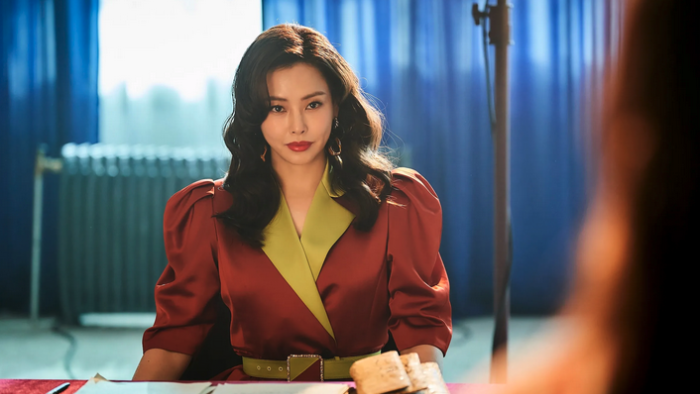
Aema
Parent and Kid Reviews
What's the Story?
Set in 1980s Seoul, AEMA follows two actresses navigating the male-dominated world of South Korean cinema during the production of the country's first mainstream erotic film. Hee-ran (Lee Hanee), a veteran star, resists contracts that reduce her to her body, while rookie dancer-turned-actress Ju-ae (Bang Hyo-rin) lands the controversial lead role and fights to be taken seriously. Their rivalry plays out against the ambitions of director Kwak In-Woo (Cho Hyun-chul), who wants to create something artistic, and studio head Gu Jung-ho (Jin Seon-kyu), who seeks profit through coercion and exploitation. As censorship rules loosen and the stakes rise, both women must decide how much of themselves they are willing to sacrifice—and whether solidarity can help them reclaim power in an industry designed to silence them.
Is It Any Good?
This entertaining period drama works best as a showcase for complex women who understand the unequal world they inhabit yet refuse to surrender their self-respect. Both Hee-ran and Ju-ae navigate a film industry designed to exploit them, and Aema highlights their small rebellions as meaningful acts of survival. This tension gives the drama a charge: it's about how women carve out careers on their own terms, even when the rules are stacked against them.
Stylistically, Aema avoids meticulous realism in favor of a more theatrical, almost staged approach. At times the sets and aesthetics feel off-brand or even a little cheap, which unexpectedly works in the show's favor. Rather than breaking immersion, the heightened style leans into dark humor, turning the industry's exploitation into something both absurd and unsettling. And the cast seems to embrace that tone—delivering performances that feel cathartic, playful, and occasionally piercing. While not every swing connects, the mix of grim history and dark comedy makes for a unique experience.
Talk to Your Kids About ...
Families can talk about how the rivalry between Hee-ran and Ju-ae evolves into solidarity in Aema. What does that shift suggest about women navigating male-dominated industries?
In what ways does the show's theatrical style affect how audiences interpret its critique of exploitation and censorship?
What parallels can be drawn between the systemic abuses depicted in 1980s South Korean cinema and ongoing power dynamics in today's entertainment industries?
TV Details
- Premiere date : August 22, 2025
- Cast : Lee Hanee , Bang Hyo-rin , Cho Hyun-chul
- Network : Netflix
- Genre : Drama
- Topics : Adventures , Family Stories , Fantasy ( Dragons , Fairies , Fairy Tales , Magic ) , Friendship , History , Royalty ( Kings , Princes , Princesses , Queens )
- TV rating :
- Last updated : June 10, 2026
Did we miss something on diversity?
Research shows a connection between kids' healthy self-esteem and positive portrayals in media. That's why we've added a new "Diverse Representations" section to our reviews that will be rolling out on an ongoing basis. You can help us help kids by
Suggest an Update
Common Sense Media's unbiased ratings are created by expert reviewers and aren't influenced by the product's creators or by any of our funders, affiliates, or partners.
See how we rate