Parents need to know that Bet is a teen thriller drama about life-and-death gambling. Children of wealthy politicians, criminal leaders, and social elite attend a prep school where education is all about gambling. Frequent, strong violence ranges from pushing and slapping to torture, abuse, and murder. Teen bully, shun, hurt, and humiliate peers. There's a "house pet/owner" system that encourages mistreating people—especially people of color. Graphic imagery includes spurts of blood, though they are more cartoonish than realistic. Extreme violence is usually off-screen or suggested instead of explicit. Teens talk crushes, dating, and sex. They frequently make mature jokes about sex, but they at most only quickly kiss. Frequent strong language ("ass," "s--t," "bitch," "damn," "bastard," and "f--k") and name-calling ("psycho," "slut," "mother c--tress"). There's some drinking and making jokes about smoking and drugs. Bet is very loosely based on the Japanese series Kakeguruiand is a Westernized interpretation of the story and characters. A central theme is the negative impacts of greed, power, and wealth, but the show only weakly touches on how race, ethnicity, gender, and sexuality impact things.
Violence & Scariness
a lot
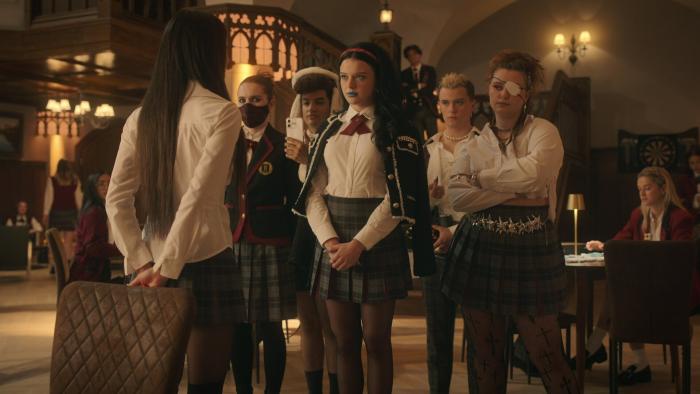
Teens use social status to harm and humiliate peers. Students who go into gambling debt become "house pets" with "owners." "Owners" make "house pets" do chores, bring them food and drink, act as entertainment, and be footstools. Frequent violence ranges from slapping, pushing, and punching to murder, self-harm (pricking fingers), torture (e.g., waterboarding, removing body parts, choking), and domestic abuse (bruises, fear of parents, verbal abuse). Spurts of blood on characters' clothes and faces. Minor bleeding from smaller wounds. Graphic violence is usually suggested or off-screen instead of directly shown, but it's still obvious what's happening. Characters use knives, katanas, bombs, poison, bow and arrows, and improvised weapons. Brief scene of animal cruelty. Characters laugh creepily during tense moments. Sharp noises when someone is startled. Lots of unsettling screams and emotional outbursts. A beaver mascot stalks and hovers to intimidate people. A young child witnesses her parents' death.
Did you know you can flag iffy content?
Adjust limits for Violence & Scariness in your kid's entertainment guide.
Teens talk crushes, dating, and sex. They say things like "I've been bad," "pop that cherry," "banged," "pimping your friends," "kinda turning me on." Suggestive touching of thighs and face. Jokes about masturbation, kinks, sex workers, and mature sexual acts. A teen is bullied about being a virgin; students bet on when he'll have sex. Brief kisses. No nudity. Yumeko makes her uniform skirt into a micro mini skirt. Teens play strip poker but still have most of their clothes on.
Did you know you can flag iffy content?
Adjust limits for Sex, Romance & Nudity in your kid's entertainment guide.
Frequent swears include "bastard," "stupid ass," "get your head out of your ass," "s--t," "piece of s--t," "holy s--t," "bitch," "mother c--tress," "dammit," "damn," "f--k," "f---ing," "f--k me." Students mock and belittle their peers. Name-calling like "insane," "psycho," "slut," "house pet," and dehumanizing insults like "kitten," "dog," "beaver."
Did you know you can flag iffy content?
Adjust limits for Language in your kid's entertainment guide.
Passing reference to a student being stoned. A character makes a joke about being a drug dealer for ketamine. Teens and adults drink alcohol; it happens infrequently onscreen but it's suggested that it happens often. A character adds poison to drinks.
Did you know you can flag iffy content?
Adjust limits for Drinking, Drugs & Smoking in your kid's entertainment guide.
Students gamble for money, thrill, and power over people. Adults enable and encourage this behavior. Teens talk about having an addiction to gambling. The show teaches the rules to some betting games. A teen is a social media influencer who starts his videos with ads for a fictional cosmetics company.
Positive Messages
a little
You have to take risks for your ambitions to come true. There are no winners without losers. Challenging the system gives hope to the powerless. Topics include fairness, greed, loyalty, betrayal, revenge, friendship, family, and the effects of abuse.
Positive Role Models
a little
Teens attend a school where "teachers have no control, and students have no accountability." Adults are rarely seen. Students gamble instead of attend classes. Parents encourage kids' gambling and violence. Yumeko is motivated by revenge. She's violent and reckless, but she values loyalty, friendship, and fairness. She challenges the status quo and gives peers hope. She seeks to raise her status but helps people along the way. Her friends try to stop her from making bad decisions, but they usually end up going along with her plans.
Diverse Representations
a little
Bet is loosely based on a Japanese manga. It's a Westernized adaptation created by a White, male showrunner. The setting has been changed to a fictional boarding school in North America. Yumeko is a Japanese transfer student. Ryan and Mary are Black. The remaining main characters are White American, Canadian, or Eastern European. The main cast is a group of Canadian actors with various backgrounds, including Japanese, Nigerian, Irish, Romanian, Ukrainian, Navajo, Guatemalan, and Pakistani.
The students with the most power are White. Students in debt are called "house pets." The people they lose gambling matches to are called their "owners." Students of color are "house pets" more often than White students. There are some gay and lesbian characters. Neurodiversity (anxiety, stimming, general mental health) is made a punchline. A main theme is how power and wealth create imbalance and encourage violence, but the show only touches the surface of the issue and doesn't address the complex roles of race, ethnicity, gender, and sexuality.
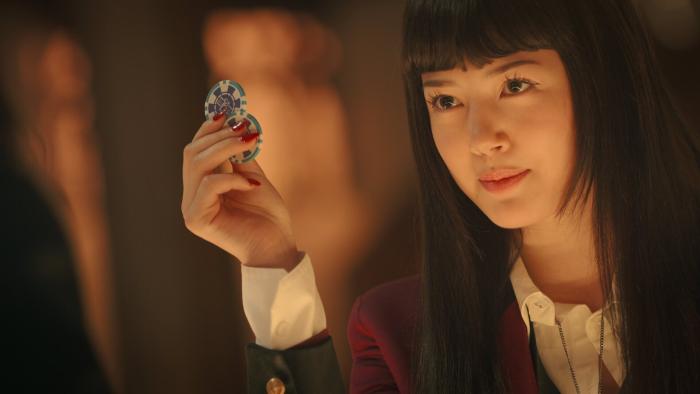
BET your money, your status, and even your life at the cutthroat boarding school St. Dominic's. Transfer student Yumeko (Miku Martineau) is willing to gamble it all to the climb to the top. After all, she's got revenge on her mind and Student Council in her sights.
This teen psychological thriller could say some interesting things about class, wealth, and power, but it doesn't quite get there. Bet overshadows it's potential themes with intense, cartoony violence and a focus on the thrill of gambling. Characters challenge the status quo, but it seems half-hearted since they game the system for their own selfish benefit. It's hard to tell what is satire versus jokes made in poor taste.
Bet also doesn't fully succeed as an adaptation. On one hand, it's an exciting melodrama that adds a layer of social commentary Kakeguruidoesn't have. On the other hand, it's a very Western take with a somewhat diverse but still mostly white cast. The show acknowledges that it's not a direct adaptation, but it's "loosely inspired" is pretty loose. Casual viewers might enjoy it as a fun flick, but serious fans will probably be disappointed.
Talk to Your Kids About ...
Families can talk about power and status. Where do Bet characters get power and status from? What do they do with it? How does having or not having power affect people?
How does Bet make a distinction between types of violence in the story? What's realistic? What's exaggerated? How does this affect your view of the characters and the real world?
Yumeko says, "You have to take risks for your ambitions to come true." Are the risks characters take worth it in the end? What do they gain? What do they lose?
Research shows a connection between kids' healthy self-esteem and positive portrayals in media. That's why we've added a new "Diverse Representations" section to our reviews that will be rolling out on an ongoing basis. You can help us help kids by
Common Sense Media's unbiased ratings are created by expert reviewers and aren't influenced by the product's creators or by any of our funders, affiliates, or partners.