






Common Sense Media Review
 By Melissa Camacho
,
based on child development research. How do we rate?
By Melissa Camacho
,
based on child development research. How do we rate?
Dating deepfake challenge has sex, alcohol, smoking.
Parents Need to Know
Why Age 15+?
Any Positive Content?
Where to Watch
Videos and Photos

Deep Fake Love

Parent and Kid Reviews
What's the Story?
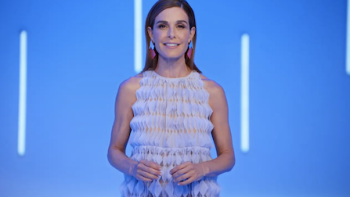
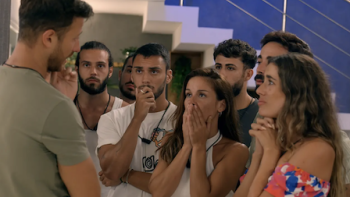
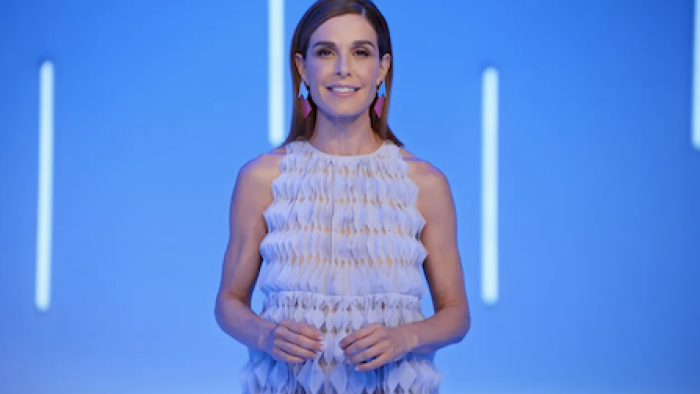
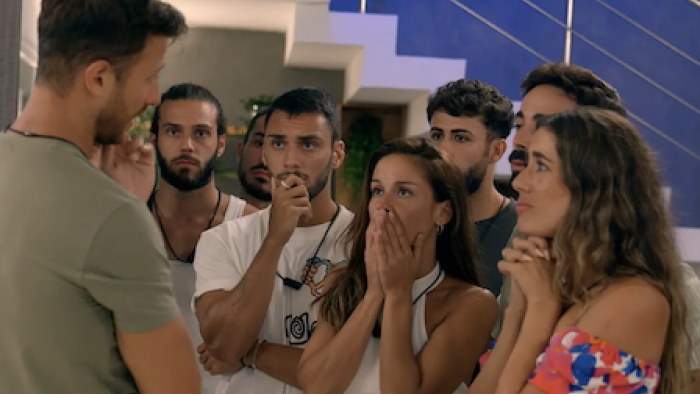
Hosted by Raquel Sánchez Silva, Falso Amor, a.k.a. DEEP FAKE LOVE is a Spanish reality competition series that challenges the trust that lovers have in each other with the help of advanced technology. Five committed couples are at a tropical paradise, whereupon they are each split up and sent to stay in one of two luxury villas. Each villa is also home to a group of singles who are ready to have a good time. After spending time mingling in their respective villas, the cast members are sent to "The White Room" where they must each watch a video revealing what their other half has been up to while they've been apart. The catch? After watching the antics of their partner, each cast member must guess if what they saw was real, or if the video is a deepfake. As the process continues over the course of days, the participants struggle to figure out the strength of their relationships. At the end of the game, the couple that collectively has the highest number of correct guesses wins 100,000 Euros.
Is It Any Good?
This outrageous series attempts to elevate reality romance by incorporating some of today's most controversial and potentially destructive technology applications into it. From creating situations intended to tempt cast members to behave inappropriately, to using face scanning technology to produce impressive deepfake videos, it goes out of its way to plant seeds of doubt in each cast member's mind about their significant other. The show's entertainment value lies in the voyeuristic and highly sexual videos, as well as the drama that ensues when contestants melt down while watching their other half (allegedly) flirt, kiss, and engage in steamy sexual romps. The tortured moments when contestants try to make sense of what they are seeing and deciding what to believe also adds to this.
It's so over-the-top that one might think that Deep Fake Love is attempting to offer a lesson on media manipulation, or is a warning to viewers about the importance of thinking more critically about what they see in media. But this gives the series too much credit. Instead, this is an ethically-challenged contest produced with the purpose of providing audiences with titillating soap opera-like narratives that will keep them guessing until the end.
Talk to Your Kids About ...
Families can talk about deepfakes. How are they produced? How can you tell that something is a deep fake versus a video featuring real people or events? Why is this important?
Is the use of deepfakes in Deep Fake Love unethical? Why or why not? Are there consequences to producing deepfake videos for the sake of entertainment?
TV Details
- Premiere date : July 6, 2023
- Cast : Raquel Sánchez Silva
- Network : Netflix
- Genre : Game Shows
- TV rating :
- Last updated : July 7, 2023
Did we miss something on diversity?
Research shows a connection between kids' healthy self-esteem and positive portrayals in media. That's why we've added a new "Diverse Representations" section to our reviews that will be rolling out on an ongoing basis. You can help us help kids by
Suggest an Update
Common Sense Media's unbiased ratings are created by expert reviewers and aren't influenced by the product's creators or by any of our funders, affiliates, or partners.
See how we rate