







Common Sense Media Review
 By Melissa Camacho
,
based on child development research. How do we rate?
By Melissa Camacho
,
based on child development research. How do we rate?
Edgier Degrassi for the digital age still has heart.
Parents Need to Know
Why Age 13+?
Any Positive Content?
Where to Watch
Videos and Photos


Degrassi: Next Class



Parent and Kid Reviews
Based on 12 parent reviews
Parents say that this show, while insightful and packed with important messages about various teen issues, may not be suitable for younger audiences due to its intense content, including depictions of suicide, bullying, and drug use. Many reviews emphasize that it tackles topics like mental health, relationships, and body image in a meaningful way, making it a valuable watch for older teens, but caution is advised for those under 13.
- difficult topics
- positive messages
- suitable for teens
- caution for younger viewers
- moral lessons
 Summarized with AI
Based on 43 kid reviews
What's the Story?
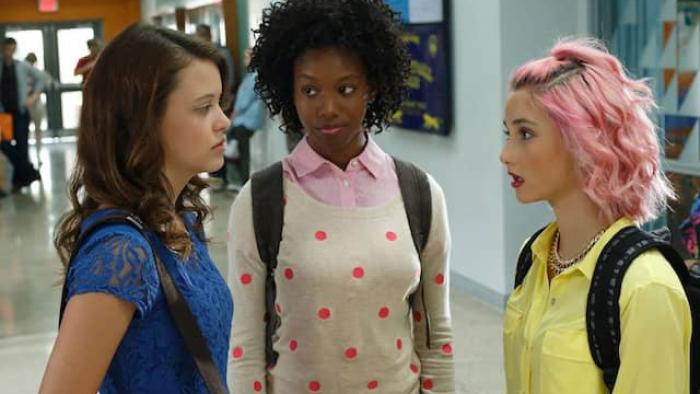
DEGRASSI: NEXT CLASS, the third version of the popular Canadian Degrassi franchise, centers on a group of sophomores and juniors at the fictional Degrassi Community School located in Toronto, Ontario. Students including Maya (Olivia Scriven), Tristan (Lyle Lettau), Miles (Eric Osborne), Zoe (Ana Golja), Grace (Nikki Gould), and others have returned to high school, along with new folks like Esme Song (Chelsea Clark), Goldi Nahir (Soma Bhatia), and Vijay Maraj (Dante Scott). From broken hearts and running for student council to social media-related challenges such as cyberbullying, the Degrassi gang navigate their high school years one day at a time.
Is It Any Good?
This stylized teen soap offers all the drama you'd expect from the Degrassi gang, but it does so with a contemporary flair. Most notable in Degrassi: Next Class is the way that each narrative incorporates the use of digital technology, social media, and episode hashtag titles. Though the show is still committed to featuring an array of traditional topics teens may relate to, including romance, sexuality, and dysfunctional family dynamics, it also incorporates modern topics such as depression and doxxing.
This version is trendier than its predecessors (it's hard to keep up with Pretty Little Liars and Gossip Girl), and while some students are wealthier than others, the majority come from a privileged background. But beyond this, the cast is extremely diverse, and the show still has lots of positive lessons. Fans of the early versions of the series may be interested in checking out Degrassi: Next Class to see how things have changed (or not) with this new cohort. But no doubt: This installment will garner a whole new generation of followers.
Talk to Your Kids About ...
Families can talk about many of the issues that teens face in Degrassi: Next Class. What are some of the difficult decisions they face, and how do they make those choices (and live with the consequences)? How do digital technology and social media affect the way they—and we—think about these things?
Do you think the series offers an accurate representation of what teens go through every day? Why, or why not?
What gives a TV series its longevity? Is it the characters? The storylines? What kinds of changes do the producers of this series have to implement to make it relevant for a new generation of viewers?
How do the characters in Degrassi: Next Class demonstrate empathy and integrity? Why are these important character strengths?
TV Details
- Premiere date : January 4, 2016
- Cast : Olivia Scriven , Lyle Lettau , Eric Osborne
- Network : Netflix
- Genre : Drama
- Topics : School ( High School ) , Friendship
- Character Strengths : Empathy , Integrity
- TV rating :
- Award : Common Sense Selection
- Last updated : July 29, 2026
Did we miss something on diversity?
Research shows a connection between kids' healthy self-esteem and positive portrayals in media. That's why we've added a new "Diverse Representations" section to our reviews that will be rolling out on an ongoing basis. You can help us help kids by
Suggest an Update
Common Sense Media's unbiased ratings are created by expert reviewers and aren't influenced by the product's creators or by any of our funders, affiliates, or partners.
See how we rate