

Exciting period tech drama shows drinking, swearing, sex.
Parents Need to Know
Why Age 14+?
Any Positive Content?
Parents Need to Know
Parents need to know that Halt and Catch Fire is a fast-moving period drama set in the 1980s and '90s that tracks the tech industries in Dallas, Texas, and Silicon Valley. Characters frequently swear ("s--t," "a--hole," "hell," etc.) and drink alcohol. There's also occasional smoking and cocaine use, plus one-off uses of MDMA and mushrooms. Characters have simulated sex (without showing anything sensitive) and appear in their underwear, while a couple of nonsexual scenes show male nudity from behind (naked buttocks visible). Relationships are mostly office romances, often with iffy power dynamics between employers and employees, but they're always shown as consensual. Characters carry shotguns, fight with fists, and take beatings (appearing bruised and bloodied). Injury close-ups include a character slicing his hand with a knife and a homemade, inflamed tattoo. Cars crash; no one appears seriously injured. Spoiler alert! Off-screen, a main character dies from health complications, and a supporting character dies by suicide—there are sad scenes of people grieving. There isn't much racial or ethnic diversity, but White women have main roles, and they're portrayed as clever and tech-savvy. The series presents the sexism they deal with in tech, and women develop complex, fulfilling relationships with one another. The show also has a few bisexual and gay characters, and one main character has a chronic illness. Positive messages include the importance of creativity, passion, and hard work. Characters are very flawed, but they love working together and they have integrity, maturing over the course of the series as they learn communication skills and humility.
Sex, Romance & Nudity
a lot
Characters make out and are implied nude during simulated sex, showing bare shoulders and male torsos (nothing sensitive is shown). People wear just their underwear, with infrequent male nudity from behind (bare bottom visible). A business meeting takes place at a strip club with scantily clad women dancing on poles. A 14-year-old runs into pornographic websites while she works on a project (nothing sensitive is shown, and she hands the computer over to an adult each time it happens). Relationships are mostly office romances, often with iffy power dynamics between employers and employees (but they're always shown as consensual).
Did you know you can flag iffy content?
Adjust limits for Sex, Romance & Nudity in your kid's entertainment guide.
Characters often drink and talk about having "a few too many drinks," "pounding vodka," etc. Occasional cigarette and cigar smoking, sometimes indoors. Less frequently, characters smoke weed, take MDMA, do mushrooms, and snort cocaine at work and at parties. It's implied that a couple of characters rely on alcohol and drugs to cope with stress, but consequences aren't a major focal point.
Did you know you can flag iffy content?
Adjust limits for Drinking, Drugs & Smoking in your kid's entertainment guide.
"S--t," "bulls--t," "bitch," "son of a bitch," "ass," "a--hole," "damn," "hell," "bastard," "d--k," "balls," "t--ties," and "Jesus Christ" and "God" as exclamations. Insults like "White trash," "Japs," "fat ass," and "f--gots."
Did you know you can flag iffy content?
Adjust limits for Language in your kid's entertainment guide.
The series frequently incorporates real companies into its plotlines, including IBM, Honeywell, Texas Instruments, Apple, Sony, Nintendo, Xerox, Yahoo!, etc. Characters use real brands, such as driving Porsche cars, drinking Shiner Bock beer, and wearing Adidas track suits. Pop culture mentions include Star Wars, Cabbage Patch Kid, the Terminator movie, Atari, Netscape, and others.
Violence & Scariness
a little
Characters carry shotguns, fight with fists, and take beatings (appearing bruised and bloodied). A torn shirt reveals body scars; the owner describes falling off a roof. Someone gets electrocuted during a storm. Injury close-ups on a character slicing his hand with a knife and a homemade, inflamed tattoo that lightly bleeds. Cars crash (no one appears seriously injured), including a car running over an armadillo, its blood and guts briefly shown. Off-screen animal deaths where the killing blow is heard (a bird by shovel, a cow by gunshot). A campy horror movie playing on a TV set briefly shows a bloody hand punching out of a dead body. A parent receives a serious medical diagnosis and struggles with the physical and mental effects; another adult has a heart attack. Spoiler alert! Off-screen, a main character dies from health complications, and a supporting character dies by suicide—sad scenes of people grieving.
Did you know you can flag iffy content?
Adjust limits for Violence & Scariness in your kid's entertainment guide.
Morality can be murky, but the series glamorizes innovation, passion, teamwork, and drive—and the grit that goes into it. It also shows the importance of sticking with friendships despite fights and disagreements.
Positive Role Models
some
The main characters have major flaws: Joe is volatile and destructive, Gordon is selfish, Cameron is childish and stubborn, and Donna can be manipulative. That said, they're all clever, hardworking, and passionate. Cameron also has integrity, believing in her own ideas (sometimes to the detriment of her relationships). Characters mature over the series, improving at communication, collaboration, and humility.
Diverse Representations
some
Main cast is all White. Characters of color appear in stereotypical roles as coders, such as Ryan (played by Indian American actor Manish Dayal) and Yo-yo (Cooper Andrews, Samoan-Jewish American). Women of color are largely absent, except for Donna's employee, Tanya (Sasha Morfaw, Cameroonian American), who works in venture capital. That said, White women Donna and Cameron have main roles, and they're portrayed as clever and tech-savvy. The series shows the sexism they deal with, such as being underestimated at work. They feel tokenized at first, but later seasons show female colleagues Diane and Katie, as well as Donna and Gordon's teen daughters, Joanie and Hayley, developing complex, fulfilling relationships with one another. A main lead is bisexual; he also has several scars on his body from a childhood accident. Minor and supporting characters are gay, but the series associates queerness with difficulties: Queer characters are beaten, discuss past bullying, have HIV scares, struggle with being in the closet, etc. In a major plotline, a parent receives a diagnosis of brain damage and struggles with the chronic illness across several seasons.
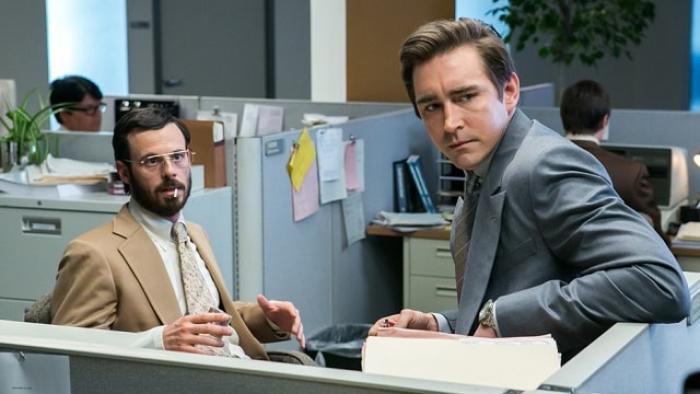
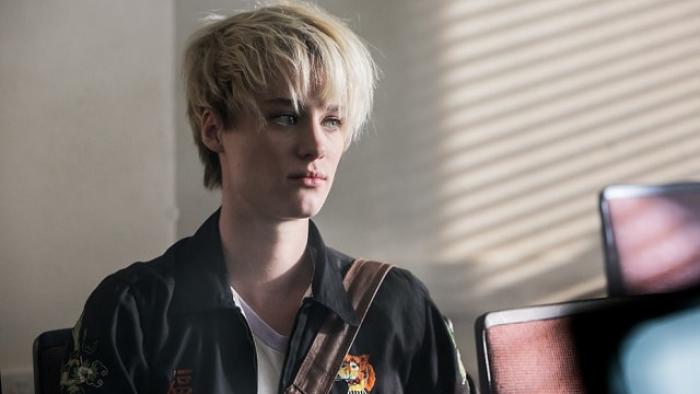
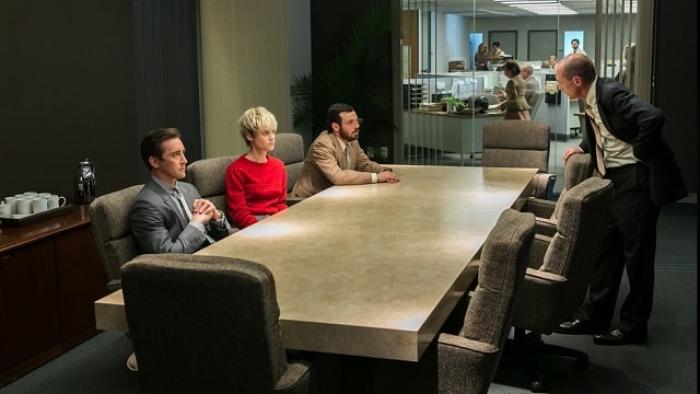
Beginning in Texas' "Silicon Prairie" circa 1983, HALT AND CATCH FIRE follows four risk-takers with ambitious goals about what tech can do for humanity. Spearheading their first project together is Joe MacMillan (Lee Pace), a former IBM executive who recruits a disillusioned engineer, Gordon Clark (Scoot McNairy), to dissect his ex-employer's flagship PC. But to succeed, the two must add unpredictable prodigy Cameron Howe (Mackenzie Davis) and Gordon's wife, engineer Donna Clark (Kerry Bishé), to the mix. Through years of working together (and butting heads), these visionaries lay down the brickwork for the dot-com boom that's to come.
There are shades of Don Draper to this frothy show's charismatic Joe MacMillan, and that's probably no coincidence. Halt and Catch Fire debuted near the end of Mad Men—and so the network delivers another period hero who's handsome, mysterious, and ever charming. As Joe draws the doubtful into his web, he draws in viewers, too, with a seductive quality that's hard to ignore.
Of course, Halt and Catch Fire's characters are fictional, but, since their stories are set in a real time and place, anyone who watches stands to learn something. (Lesson 1: There's a lot more to high-tech history than Silicon Valley.) The real success of the series, though, is its ability to make old technology feel new by turning the complicated language of computing into a universal human drama that modern audiences can relate to.
Talk to Your Kids About ...
Families can talk about how Halt and Catch Fire blends fictional and factual storytelling. How accurate is its portrayal of the tech industry in the 1980s and '90s? How can viewers understand what's fact and what's fiction?
What role do women play in the show? What kinds of sexism do they face at home and at the workplace? Since the 1980s and '90s, how has the tech industry improved (or worsened) on this front?
How has technology changed since the advent of the world's first personal computer? What are the pros and cons of today's technology? Where do we go next?
Research shows a connection between kids' healthy self-esteem and positive portrayals in media. That's why we've added a new "Diverse Representations" section to our reviews that will be rolling out on an ongoing basis. You can help us help kids by
Common Sense Media's unbiased ratings are created by expert reviewers and aren't influenced by the product's creators or by any of our funders, affiliates, or partners.