







Common Sense Media Review
 By Joyce Slaton
,
based on child development research. How do we rate?
By Joyce Slaton
,
based on child development research. How do we rate?
Sweet family comedy is marred by old-fashioned premise.
Parents Need to Know
Why Age 13+?
Any Positive Content?
Where to Watch
Videos and Photos


Imaginary Mary



What's the Story?
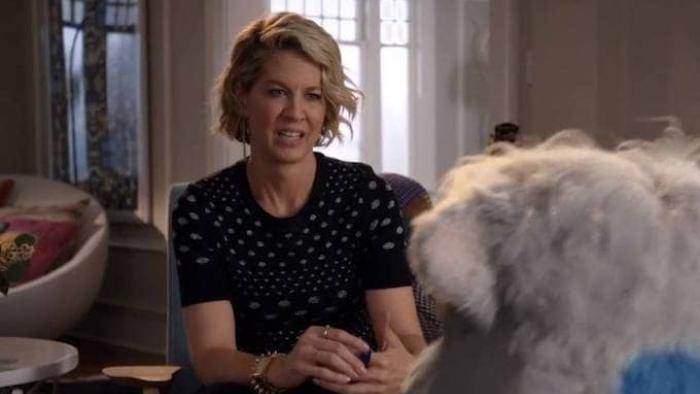
Back when she was a sad little girl with parents who weren't there for her, Alice (Jenna Elfman) had a friend no one else could see or hear, who gave her advice, helped her through hard times, and most of all, convinced Alice she shouldn't rely on romance to make her happy. So Alice grows up to a fiercely independent career woman, with a successful sports PR business. But when she falls in love with charming divorced dad Ben (Stephen Schneider) it all gets turned upside-down -- and IMAGINARY MARY is back to give Alice plenty of terrible advice. Now Ben and his three quirky kids, Andy (Nicholas Coombe), Dora (Matreya Scarrwener), and Bunny (Erica Tremblay) are in her life -- and so is Mary.
Is It Any Good?
Winning actors and decent gags give a bit of lift to this sweet-natured family comedy, but the "adult with an imaginary friend" storyline hasn't aged well. Movies like Harvey and Drop Dead Fred now seem like relics from a time when we didn't understand mental illness; now viewers may be weirded out instead of charmed by a woman who's seeing and hearing a fuzzy CGI creature (voiced by Rachel Dratch). Nonetheless, Imaginary Mary isn't without its charms. Elfman, given a character less daft to play than in her 1990s breakthrough Dharma & Greg, is smart and sympathetic, a woman who realizes Mary is voicing her emotional terror. She and Ben have real chemistry, too, and warm relationships with each of Ben's kids, particularly the straining-to-be-cool Adam.
But it's hard to see where the show will go, saddled as it is with an animated id. If Mary is Alice's needy and scared self, does that mean as Alice's need for her evaporates that Mary will, what, die? But if she doesn't, won't the idea of a character who sees and hears things that aren't there grow increasingly odd and unsettling? For a show clearly straining for ABC-family-comedy appeal, Mary's presence is a big problem.
Talk to Your Kids About ...
Families can talk about how Imaginary Mary compares to other family-centered shows. Does the content seem more or less realistic than others? Do the central relationships seem nontraditional to you? How are they different from other sitcom families?
How does the media portray relationships in general? Is it ever appropriate to use stereotypes as a way of portraying them? Why do you think topics such as divorce, sex, and dating are dealt with so frequently on TV shows and in movies?
How do the characters in Imaginary Mary demonstrate communication and perseverance? Why are these important character strengths?
TV Details
- Premiere date : March 27, 2017
- Cast : Jenna Elfman , Rachel Dratch , Nicholas Coombe , Stephen Schneider
- Network : ABC
- Genre : Comedy
- Character Strengths : Communication , Perseverance
- TV rating :
- Last updated : February 15, 2023
Did we miss something on diversity?
Research shows a connection between kids' healthy self-esteem and positive portrayals in media. That's why we've added a new "Diverse Representations" section to our reviews that will be rolling out on an ongoing basis. You can help us help kids by
Suggest an Update
Common Sense Media's unbiased ratings are created by expert reviewers and aren't influenced by the product's creators or by any of our funders, affiliates, or partners.
See how we rate