








Common Sense Media Review
 By Melissa Camacho
,
based on child development research. How do we rate?
By Melissa Camacho
,
based on child development research. How do we rate?
Bloody, compelling action series has drinking, smoking.
Parents Need to Know
Why Age 16+?
Any Positive Content?
Where to Watch
Videos and Photos

Last Samurai Standing
What's the Story?
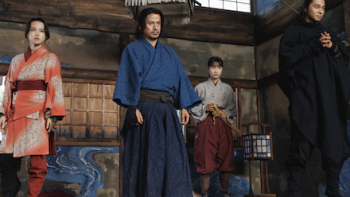
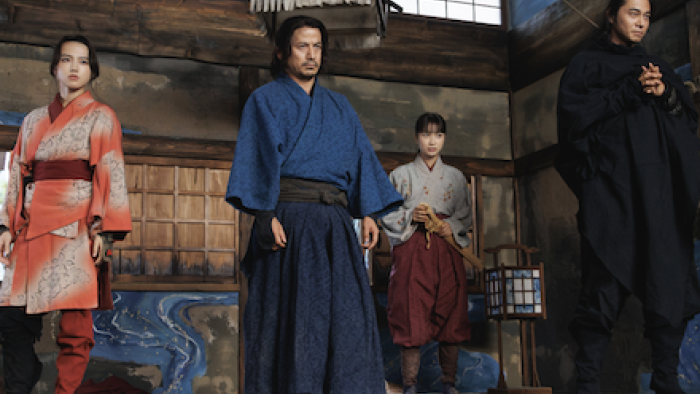
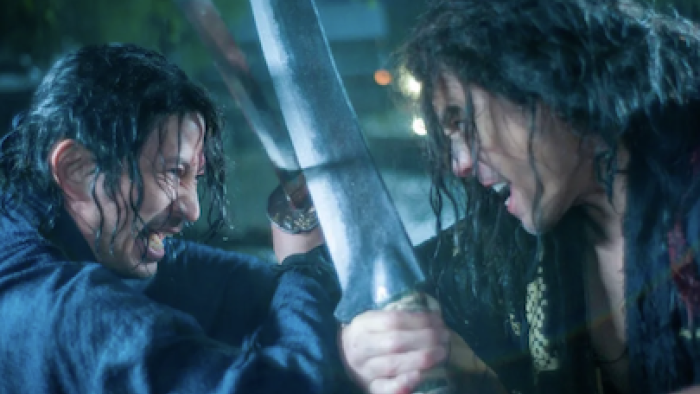
Based on Shogo Imamura's manga series Ikusagami, LAST SAMURAI STANDING is a Japanese action series about a samurai warrior's fight for survival after the last shogunate. Shujiro Saga (Junichi Okada) was once an assassin known as "Kukusho the Manslayer" who served the Tokugawa shogunate. After the loss to pro-imperialist forces at the Battle of Toba-Fushimi in the Boshin War, the samurai class was immediately rendered obsolete and stripped of its power, pensions, and honor. Now it's 1897, nearly 10 years after the Meiji government began its westernization of Japan, and a desperate Saga still suffers from PTSD. He's also unemployed and unable to take care of his family in the midst of a cholera outbreak. His only chance to save his family is to accept a mysterious call for warriors to compete in a fighting tournament in the ancient city of Kyoto for a cash prize of 100 billion yen in gold. It's not until Saga arrives at Tenryu-ji Temple that he learns that he and 291 other samurai, ninja, and other fighters from different clans have been lured into a deadly game called "Kodoku," which can only be won by traveling along the Tokaido route while killing opponents and stealing their wooden ID tags in order to pass through the seven checkpoints between Kyoto and Tokyo. Anyone who loses their tag or fails to collect the required number of them at a checkpoint is executed. Those who tell outsiders about the game meet the same fate. It's a terrifying competition, made worse for Saga by his PTSD and the fact that among the contestants are clan enemies that will be difficult to defeat, including the brutal Kanjiya Bukotsu (Hideaki Ito). Soon he finds himself taking naive teenager Futaba Katsuiki (Yumi Fujisaki) under his wing, and throughout the journey he forms alliances with his sister-in-law Iroha Kinugasa (Kaya Kiyohara) and schemer Kyojin Tsuge (Mashahiro Hagashide). Nobody knows who's behind the game or what awaits them at the end of the journey, but Saga has no choice but to fight and survive.
Is It Any Good?
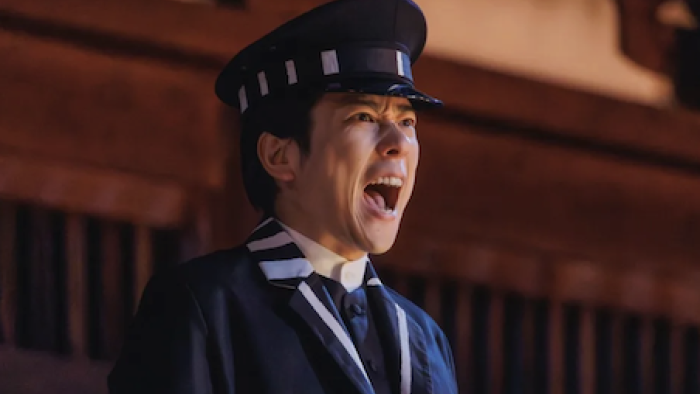
The entertaining action series combines bloody combat and social commentary to tell the story of a Japanese warrior struggling to survive in a world that no longer values him or his life's purpose. Set in the Meiji Restoration, Last Samurai Standing highlights how Japanese modernization is seen through a Western lens ito avoid being colonized, and how those who favored it quickly destroyed the people and traditions that once defined their culture in the name of progress. Meanwhile, the pleasure taken in the Hunger Games-like competition by the game's announcer (played by Kazunari Ninomiya) and the event's "civilized" observers is as grotesque as the Kodoku itself, which is designed to force the last of the samurai to destroy one another.
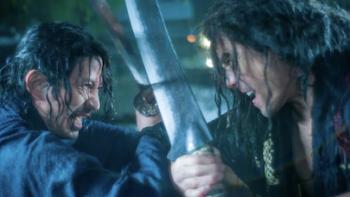
Throughout it all, Saga finds himself fighting a psychological battle with his PTSD, while wrestling with the fact that he's changing into the ruthless killer he once was. It's a good story, and Last Samurai Standing does a good job of telling it with the help of impressive sword-wielding fight scenes choreographed by Junichi Okada himself. No doubt that those who enjoy period Japanese action shows will want to tune in, but lesser fans of the genre may appreciate the narrative if they can stomach the violence that comes with it.
Talk to Your Kids About ...
Families can talk about the Meiji Restoration. What were the consequences of modernizing so quickly, and according to Western standards, on Japanese society?
How is media violence regarded in Japanese culture? Does Last Samurai Standing reflect this cultural standard?
TV Details
- Premiere date : November 13, 2025
- Cast : Junichi Okada , Kazunari Ninomiya , Yumi Fujisaki
- Network : Netflix
- Genre : Action
- Topics : Adventures , History
- Character Strengths : Courage , Humility , Perseverance , Teamwork
- TV rating :
- Last updated : November 17, 2025
Did we miss something on diversity?
Research shows a connection between kids' healthy self-esteem and positive portrayals in media. That's why we've added a new "Diverse Representations" section to our reviews that will be rolling out on an ongoing basis. You can help us help kids by
Suggest an Update
Common Sense Media's unbiased ratings are created by expert reviewers and aren't influenced by the product's creators or by any of our funders, affiliates, or partners.
See how we rate