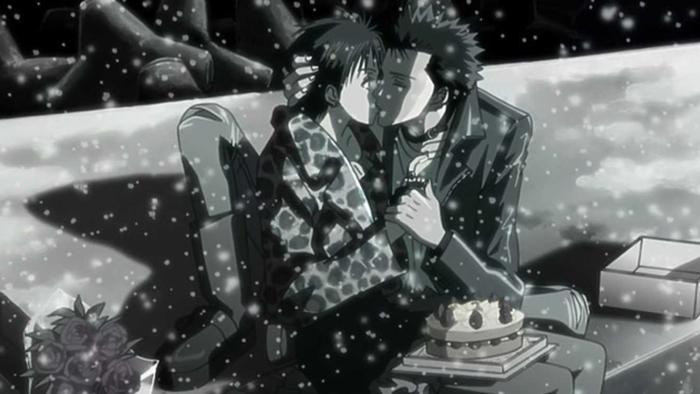
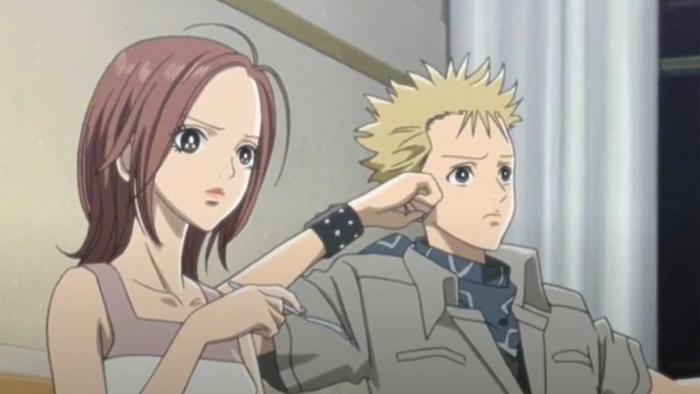
Parents need to know that Nana is a mature anime about young adults moving to Tokyo and navigating new relationships as they pursue their dreams. The story starts fairly lighthearted but gets later on. Characters deal with heavy topics like abuse, mental health, addiction, and sexual assault. On-screen violence is pretty limited, but some characters do get aggressive. They yell, use physical force, and manipulate others. There's lots of dating and talk of love. Characters have consenting sex that's shown in montage images of people in bed together, kissing, bathing together, or holding each other while naked. Sensitive areas are covered when characters are shown to be fully nude. Breasts are briefly, infrequently shown. Sexual violence is discussed and implied but anything graphic takes place off-screen. Teen characters have sex with adults in questionable situations (e.g. with a married man, with adult women for money). Drinking and smoking are frequent, with some characters using drugs. Adults talk about how it's bad for health, but they don't model what they advise against. Profanity includes "damn," "bitch," "ass," "hell," and "heck." Both Nana's (voiced by Rebecca Shoichet and Kelly Sheridan) try to be good friends and romantic partners, but everyone in the story is struggling. They reflect on how they could have done better as they dealt with loneliness, jealousy, and self-destructive tendencies.
Sex, Romance & Nudity
a lot
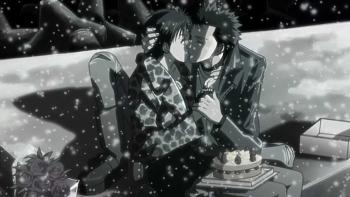
Young adults figure out romance, heartbreak, and jealousy. Nana K. is obsessed with love and always wants to be in a relationship. Topics of cheating, marriage, pregnancy, and implied sex work. Characters have sex on-screen. It's obvious but not graphic. People lie in bed together, kiss, bath together, and hold each other while naked. Full nudity is censored with carefully placed objects or specific camera angles. Sexual violence is mentioned. Some characters pressure others into having sex. Characters talk about having sex as teenagers. A women remembers when she was a teen and had a sexual relationship with a married adult man. A teen boy makes money by sleeping with adult women. A couple brief mentions of mature sex acts like BDSM.
Did you know you can flag iffy content?
Adjust limits for Sex, Romance & Nudity in your kid's entertainment guide.
Drinking and smoking is common for teens and adults, often with for the purpose of getting drunk. Adults of drinking age hang out in bars. Teens mostly drink at someone's house. Some adults try and fail to encourage a teen to stop smoking. An adult rock star struggles with addiction to drugs.
Did you know you can flag iffy content?
Adjust limits for Drinking, Drugs & Smoking in your kid's entertainment guide.
There are references to suicide, sexual abuse, grooming, and domestic abuse. A teen girl is a victim of grooming by an adult man. A character is pressured to have sex when she doesn't want to. A character is controlling, aggressive, and manipulative towards his romantic partner. Graphic violence usually takes place off-screen.
Did you know you can flag iffy content?
Adjust limits for Violence & Scariness in your kid's entertainment guide.
Moderate profanity includes "damn," "goddamn," "bitch," "ass," "hell," and "heck." Some characters swear more frequently than most others. Bickering name calling like "sad, lonely man," "loud mouth," "drama queen," "pervert." Occasional joking innuendos about sex.
Did you know you can flag iffy content?
Adjust limits for Language in your kid's entertainment guide.
Nana O. wears a lot of Vivienne Westwood fashion. Brands are sometimes shown on products like cigarettes, alcohol, food, and drink.
Positive Role Models
some
Nana K. is resilient and self-aware. She knows her weaknesses and reflects on how to be a better friend and partner. Her energy and cheerfulness helps her make friends quickly. Nana O. is highly independent but cares deeply about her friends. Other characters are good friends who look out for each other, give advice, and help out in hard times. But many characters have self-destructive habits and coping mechanisms because of their past and current life difficulties.
Positive Messages
a little
Young adults navigate relationships and figure out who they are. Relationship topics include romance, friendship, jealousy, loneliness, loyalty, betrayal, and trust. Heavy topics include domestic abuse, sexual violence, suicide, mental health, addiction, and unhealthy relationships. Fame and societal pressure can take a serious toll on people's health.
Diverse Representations
a little
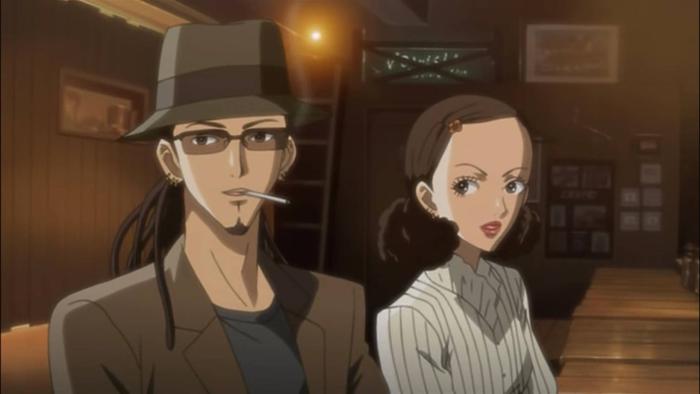
The setting is early 2000's Tokyo, Japan. Characters are mostly Japanese. Reira is half-American, half-Japanese. Junko and Kyousuke might be seen as biracial because of their curly hair, tan skin, and interest in hip-hop and Reggae culture, but they are canonically Japanese. Characters briefly talk about dieting and wanting to be skinnier. All characters are well-rounded, complex people. Some may lean into femininity or masculinity, but they avoid being gendered stereotypes. Different types of family structures are shown. Romantic relationships are all heterosexual, but Nana K. and Nana O.'s friendship has some romantic subtext.
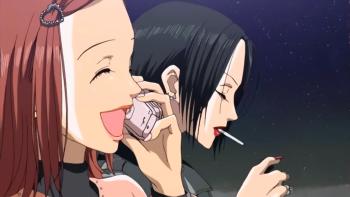
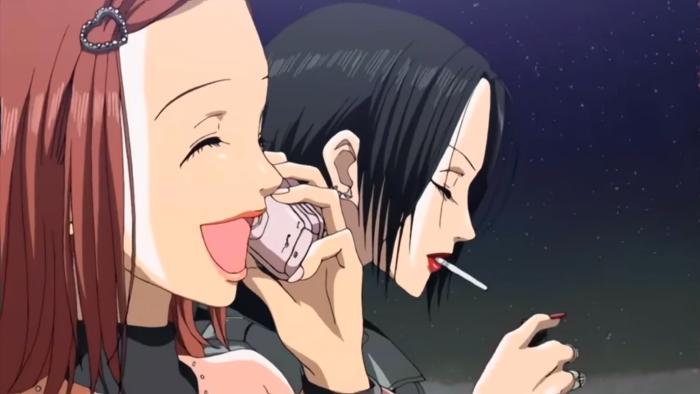
NANA follows two 20-year old women, both named Nana, who meet on a train to Tokyo to start their new lives. A chance encounter makes them roommates and, eventually, very close friends. They struggle with the challenges of adulthood as they seek love, strive for fame, and figure out who they are.
This beloved shojo anime is a deep, emotional exploration of young adulthood, but it's heavy themes can be hard to handle. Nana's characters represent a wide range of backgrounds and adult experiences. They're complex people with complex problems. There's no easy answers, so the characters make choices that don't always make them strong role models. However, their stories are honest examples of real-world struggles, and the narration shows characters reflecting on how they wish they'd known better or done things differently.
Talk to Your Kids About ...
Families can talk about the Nanas. How did their friendship help them mature and change? Why did their friendship sometimes cause them pain? How could they have been better friends to each other?
Families can talk about safe relationships. What are the qualities of a safe, healthy relationship with friends, family, or romantic partners? What can you do if you or someone you know is in a harmful relationship?
Characters often use drinking, smoking, drugs, and sex to cope with their problems. How does this affect them? What are other coping strategies they could use?
Which characters can you relate to and why? Is there anything you learned by watching their story?
Research shows a connection between kids' healthy self-esteem and positive portrayals in media. That's why we've added a new "Diverse Representations" section to our reviews that will be rolling out on an ongoing basis. You can help us help kids by
Common Sense Media's unbiased ratings are created by expert reviewers and aren't influenced by the product's creators or by any of our funders, affiliates, or partners.