








Common Sense Media Review
 By Weiting Liu
,
based on child development research. How do we rate?
By Weiting Liu
,
based on child development research. How do we rate?
Sex, grief in dramatization of real-life family abduction.
Parents Need to Know
Why Age 15+?
Any Positive Content?
Where to Watch
Videos and Photos
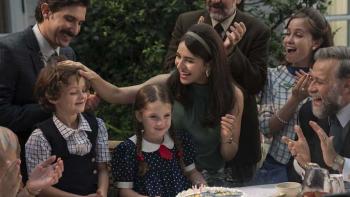
No One Saw Us Leave
Parent and Kid Reviews
What's the Story?
NO ONE SAW US LEAVE follows Valeria (Tessa Ía), a mother in 1960s Mexico whose husband, Leo (Emiliano Zurita), abducts their two children after their marriage collapses under family and social pressure. As Valeria embarks on a years-long search across continents to find them, what begins as a custody battle turns into a gripping story of survival, resilience, and a woman's defiance against the forces determined to silence her.
Is It Any Good?
This heartwrenching family melodrama recounts a real-life abduction with emotional weight. Set in 1960s Mexico, No One Saw Us Leave's meticulous period detail and rich cinematography pull viewers into a world where gender, class, and religion intertwine to trap its heroine. Ía's restrained yet piercing performance gives depth to scenes of despair and resistance, while Zurita's melancholic depiction of self-destruction captures the ruin of a man consumed by pride and repression.
But for all its sentimental gravity, the series can feel uneven—its dialogue occasionally stiff and its pacing stretched thin across five episodes. And some subplots, like Valeria's love affair with Carlos, feel underexplored. No One Saw Us Leave succeeds more as a portrait of pain and perseverance than as a tightly constructed thriller. It leaves viewers with a lasting sense of empathy, even if its storytelling doesn't always match the intensity of the true events that inspired it.
Talk to Your Kids About ...
Families can talk about how No One Saw Us Leave portrays the effects of patriarchy on family and identity. In what ways does Leo's control over Valeria reflect broader societal expectations of women in 1960s Mexico? Does Valeria's eventual reunion with her children represent empowerment?
What does the series suggest about truth in stories based on real events? How does adapting Tamara Trottner's memoir shape the audience's idea of authenticity? Can a dramatization of trauma fully honor the lived experience it's based on?
How does the show explore the consequences of family fallout on children? How does their understanding of "family" evolve as they grow up between two parents at odds?
TV Details
- Premiere date : October 15, 2025
- Cast : Tessa Ía , Emiliano Zurita
- Network : Netflix
- Genre : Drama
- Topics : Family Stories ( Dads , Grandparents , Moms , Siblings , Single Parents ) , History
- TV rating :
- Last updated : October 28, 2025
Did we miss something on diversity?
Research shows a connection between kids' healthy self-esteem and positive portrayals in media. That's why we've added a new "Diverse Representations" section to our reviews that will be rolling out on an ongoing basis. You can help us help kids by
Suggest an Update
Common Sense Media's unbiased ratings are created by expert reviewers and aren't influenced by the product's creators or by any of our funders, affiliates, or partners.
See how we rate