







Common Sense Media Review
 By Joyce Slaton
,
based on child development research. How do we rate?
By Joyce Slaton
,
based on child development research. How do we rate?
Worthy docuseries traces 6 decades of LGBTQ+ struggle.
Parents Need to Know
Why Age 11+?
Any Positive Content?
Where to Watch
Videos and Photos


Pride

What's the Story?
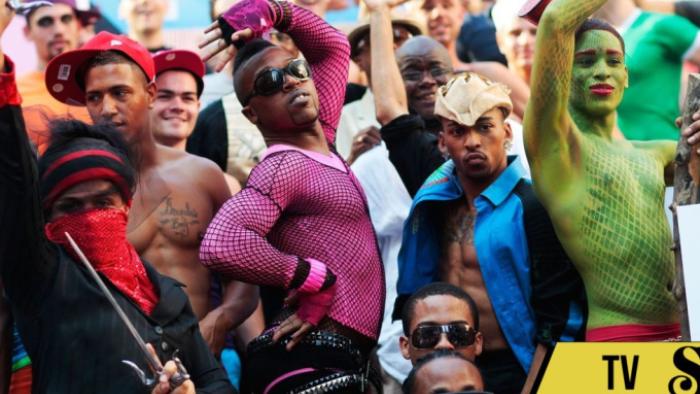
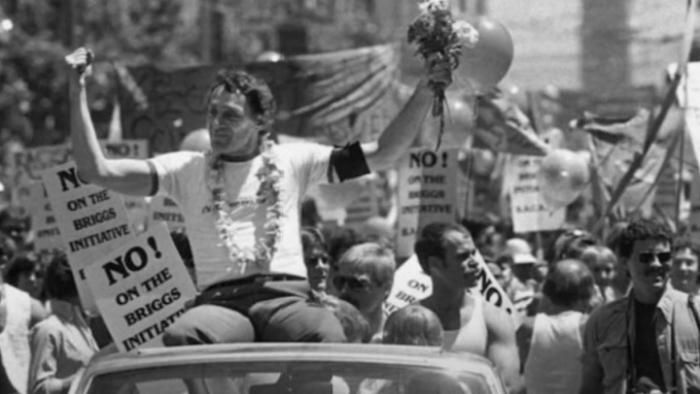
Beginning in the 1950s, PRIDE looks at the highlights and lowlights of LGBTQ+ history in the United States, from the Lavender Scare that led to mass dismissal of gay people in government jobs, up to the current cultural focus on the rights of transgender people. Covering one decade in each of six episodes, Pride uses archival photos and videos, including news footage and imagery taken by queer people and shared from private collections. It tells a story about people who weren't always understood, but who kept agitating for change and, to a large extent, got it.
Is It Any Good?
Documentaries tracing America's LGBTQ+ history tend to follow a well-worn path from Stonewall to AIDS to transgender rights, but this series scores by working in lesser-known highlights. Pride starts in the 1950s when, as the episode title has it, "People Had Parties" that were the only realistic way of mingling safely with other queer people, and unspools a decade of history in each of six episodes culminating with "2000s Y2Gay." Along the way, Pride uncovers some vintage nuggets: Joseph McCarthy's 1954 threat to expose Sen. Lester Hunt's gay son, which led to Hunt's suicide in his Senate office; San Francisco's Compton Cafeteria riot, which preceded Stonewall by three years; and the scandal that led to Crystal LaBeija rejecting White drag competitions and founding drag ball culture's first house.
Pride also nabs interesting actors and personalities: John Waters, with his perpetually amused viewpoint on his own wild ride through America's changing gay culture; Alia Shawkat re-creating pivotal scenes in the life of Madeleine Tress, who was just an ordinary lesbian who nonetheless caught the attention of the FBI for her orientation; and NYC underground nightlife chronicler (and the guy who broke the "Party Monster" murder story) Michael Musto are highlights. So though it does run through big-picture looks at Stonewall, AIDS, and "Don't Ask, Don't Tell," Pride also takes viewers to places they've never been before. It's a worthy series that also happens to be pretty fun to watch.
Talk to Your Kids About ...
Families can talk about Pride's decision to use current actors to reenact important moments from queer history. What was the impact of seeing these stories reenacted? Did the segments feel exploitative to you? Did they help you understand the meaning and context of these events?
Documentaries are made to entertain, inform, inspire, and/or persuade. Which category or categories best describe Pride? Why?
This series spotlights a wide company of activists and members of the LGBTQ+ community. What did you think about the representation you saw in this series? Did you see anyone you particularly identified with? Is that important?
TV Details
- Premiere date : May 14, 2021
- Cast : Margaret Cho , John Waters , Alia Shawkat , Susan Stryker
- Network : FX
- Genre : Reality TV
- Topics : Activism
- Character Strengths : Compassion , Courage
- TV rating :
- Last updated : October 8, 2026
Did we miss something on diversity?
Research shows a connection between kids' healthy self-esteem and positive portrayals in media. That's why we've added a new "Diverse Representations" section to our reviews that will be rolling out on an ongoing basis. You can help us help kids by
Suggest an Update
Common Sense Media's unbiased ratings are created by expert reviewers and aren't influenced by the product's creators or by any of our funders, affiliates, or partners.
See how we rate