







Common Sense Media Review
 By Martin Brown
,
based on child development research. How do we rate?
By Martin Brown
,
based on child development research. How do we rate?
Documentary on hip-hop artists stays mostly surface-level.
Parents Need to Know
Why Age 14+?
Any Positive Content?
Where to Watch
Videos and Photos


Rapture


What's the Story?
Each episode of RAPTURE focuses on a single rapper, telling the story of their career by weaving together concert footage, interviews, and day-in-the-life footage. There's an effort to include a wide range of subjects, from hip-hop luminaries like Nas, T.I., and Just Blaze, to newer stars like Logic and G Easy, to up-and-comers like Rapsody and A Boogie with a Hoodie. Episodes typically provide a window into each artist's background and family life, their place in the broader hip-hop community, and how they approach their work in the studio or on tour.
Is It Any Good?
By its very nature, this documentary series is a mixed bag. Each episode starts over from scratch, and the subjects vary wildly in terms of their likeability, the quality of their music, and which aspects of their lives they're willing to reveal to the cameras. Someone who dislikes the rapper Logic, for example, probably isn't going to walk away from Rapture as a fan. And on the flip side, a Logic fan probably isn't going to walk away with any revelatory information about him. Most of the time, the show feels tethered to the amount of access they've been given, which can be anything from backstage on tour to just running errands. Sometimes you're just going apartment hunting with Nas and his real estate agent, which is...not very exciting. Because of this, most of the episodes just feel like boilerplate PR for the artists. They're all telling the stories of their careers, but each one is a version of the same, simple story: "I wanted to do something, and then I did it."
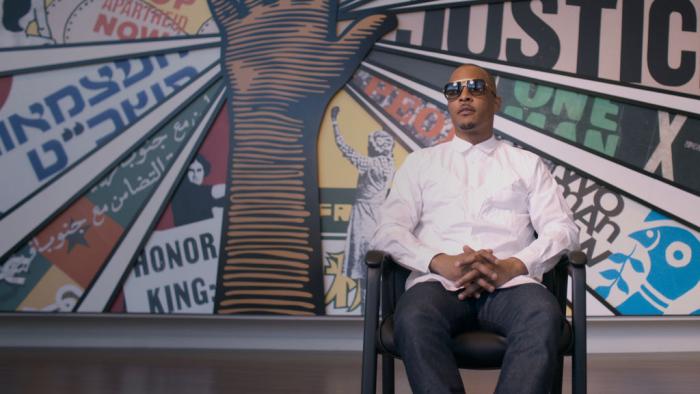
There's one very big exception to that. Episode 3 finds T.I. in a genuinely transitional moment, as he has decided to shift his music toward social consciousness in the wake of the murders of Philandro Castile, Eric Garner, and others, and the rise of the Black Lives Matter movement. T.I. sets out to educate himself and his family about America's history of racism, and how to incorporate activism into his art, and he has long conversations with Congresswoman Maxine Waters, anti-racism activist Jane Elliott, Civil Rights Movement leader Andrew Young, and Harry Belafonte, who is a model of the type of artist-activist that T.I. aspires to be. The episode transcends the rest of Rapture, not only because of its powerful subject, but because it's the only one that feels like it's genuinely asking questions rather than simply making publicity statements.
Talk to Your Kids About ...
Families can talk about what it takes to be a successful artist. All of the stories told in Rapture are success stories. What have these artists done to get to where they are in their careers? How are their paths similar? How are they different?
Families can talk about what it means to choose a career in music. What did it mean for each of these rappers to choose a life in music? What sacrifices did they have to make? Did they have support from their families?
Episode 3, "T.I.: Taking a Stand," dives deep into issues of racism, social justice, and activism. This is a great opportunity for families to discuss these complex issues, especially since the episode is about T.I. educating himself on them.
TV Details
- Premiere date : March 30, 2018
- Cast : Nas , T.I. , Logic
- Network : Netflix
- Genre : Reality TV
- TV rating :
- Last updated : November 11, 2020
Did we miss something on diversity?
Research shows a connection between kids' healthy self-esteem and positive portrayals in media. That's why we've added a new "Diverse Representations" section to our reviews that will be rolling out on an ongoing basis. You can help us help kids by
Suggest an Update
Common Sense Media's unbiased ratings are created by expert reviewers and aren't influenced by the product's creators or by any of our funders, affiliates, or partners.
See how we rate