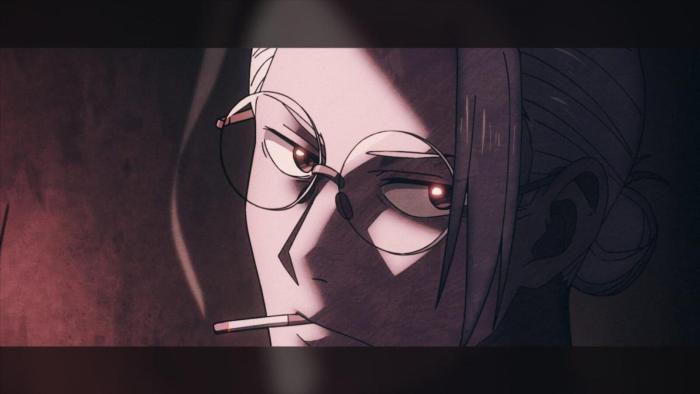
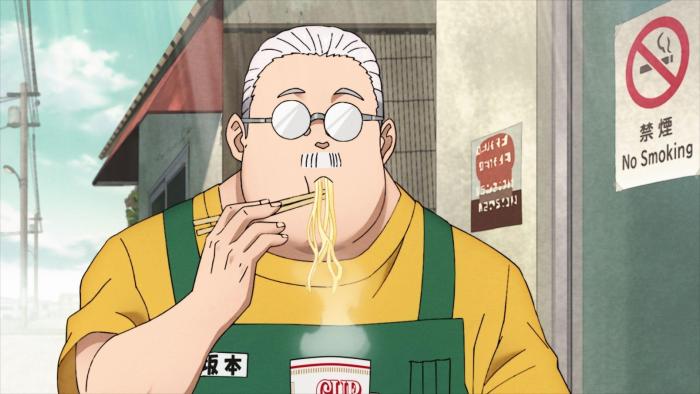
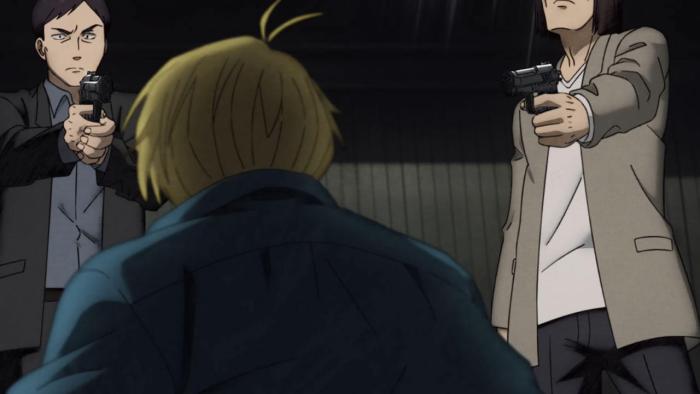
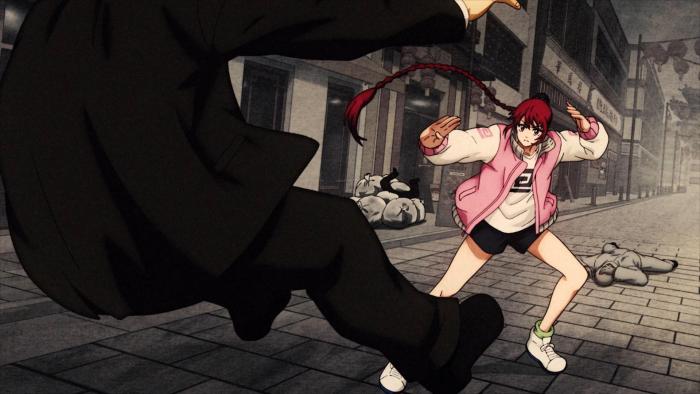
Parents need to know that Sakamoto Days is a comedy action anime about a former assassin fighting to protect the peace of his new life as a married family man. Each episode features combat with the "villain of the week," as Sakamoto (voiced in English by Matthew Mercer) and Shin (voiced by Dallas Liu) battle enemies both new and old. Violence includes gruesome deaths, gun fights, improvised weapons, martial arts, mentions of suicide, and verbal abuse. Villains show little mercy or compassion, while Sakamoto and Shin resolve to de-escalate situations without killing people. Language includes cursing ("s--t," "f----r," "damn," "bastard," "hell," "dumba--") and general crude language (e.g., "get off my dick"). Characters regularly threaten death and comment negatively on Sakamoto's body type ("tub of lard," "big fat creepy weirdo"). Adults smoke cigarettes and drink alcohol like sake and beer. There's some passing sex jokes and partial nudity showing a male character's bare torso. Sakamoto lives by example to help others leave behind a history of crime and violence to find new purpose in life.
Violence & Scariness
a lot
Plot centers around assassin groups and the criminal underworld. Frequent violence is often brutal but sometimes comedic. Dramatic music makes violence seem exciting. Graphic, bloody scenes of villains nonchalantly hurting and killing people on-screen. Combat scenes have guns, explosives, martial arts, brass knuckles, bludgeoning weapons, beheadings. Sakamoto imagines killing people but doesn't actually kill. When fighting, he deals non-lethal injuries with improvised or less-deadly weapons (e.g., candy, pencil, taser). Mixed messages on gun safety: Sakamoto has a secret, locked bunker full of guns and weapons, but other characters leave their weapons lying around in the open. An adult threatens to punch a kid while yelling "you're dead" after the kid accidentally shoots him with a toy arrow. Bosses verbally berate their employees. Some references to suicide.
Did you know you can flag iffy content?
Adjust limits for Violence & Scariness in your kid's entertainment guide.
Profanity includes "s--t," "f----r," "damn," "damn it," "bastard," "hell," "dumba--," "dips--t." Coarse language like "get off my dick," "ya little brat," calling someone "worthless" or "monkey" as an insult, or calling a female character "woman" or "lady" instead of her name. Frequent threats of violence and death ("die," "kill him," "I'm gonna kill you," "you're dead," "light him up," "ice this little prick"). Characters insult Sakamoto's weight ("tub of lard," "big fat creepy weirdo," "big fat joke").
Did you know you can flag iffy content?
Adjust limits for Language in your kid's entertainment guide.
Sakamoto is married and has a kid. His love for his wife is mentioned frequently, since she inspired him to change his life. Partial nudity shows a male character's bare chest in the shower or bandaged after serious injuries. Some jokes about sex.
Did you know you can flag iffy content?
Adjust limits for Sex, Romance & Nudity in your kid's entertainment guide.
It's never too late to start over. Your past doesn't have to define everything about your future. Family is precious. A peaceful, everyday life is more valuable than power and wealth.
Positive Role Models
some
Sakamoto is a retired assassin turned friendly neighborhood store owner trusted by the locals. He helps younger people start down a new path in life by giving them a job and new purpose. Aoi accepts Sakamoto's flaws but pushes him to be a better person and do good in the world. Sakamoto, Shin, and Lu help people in need. Characters use violence to solve problems, but killing is looked down on.
Diverse Representations
very little
Characters are mostly Japanese. Some, like Lu Xiaotang, are Chinese. There are frequent comments, insults, and jokes about Sakamoto's body size ("he really grew," "out of shape," "big fat creepy weirdo," "tub of lard," "he may be fat, but you can't judge a book by its cover"). Both male and female characters are skilled fighters with power, influence, and fame.
SAKAMOTO DAYS follows retired assassin Taro Sakamoto (voiced in English by Matthew Mercer) as he tries to live a peaceful new life as a typical family man. That peace is interrupted by former student, Shin Asakura (voiced by Dallas Liu), whose botched assassination attempt turns into a cry for help—one that Sakamoto can't help but hear.
This action-packed anime hides a gooey emotional center under its bloody premise and coarse humor. Sakamoto Days digs deep to reinforce its message about living a life focused on helping others and doing good. The hyped-up action gets ridiculous in a way that circles back to being entertaining, and it serves as a good foil to Sakamoto's motives and goals. The fatphobic humor is particularly disappointing and sometimes hard to overlook, but it's not enough to warrant skipping the show entirely.
Talk to Your Kids About ...
Families can talk about violence in media. How does the show glorify violence? How does it disapprove of violence? How do characters' relationships with violence affect their personalities and well-being?
Why is Sakamoto motivated to help others? How does this influence his methods of resolving conflict?
Talk about identity and values. What do Shin, Lu, and other similar characters decide is most important to them? What influences each character, and how does they make decisions about how to live their lives?
Research shows a connection between kids' healthy self-esteem and positive portrayals in media. That's why we've added a new "Diverse Representations" section to our reviews that will be rolling out on an ongoing basis. You can help us help kids by
Common Sense Media's unbiased ratings are created by expert reviewers and aren't influenced by the product's creators or by any of our funders, affiliates, or partners.