







Common Sense Media Review
 By Joyce Slaton
,
based on child development research. How do we rate?
By Joyce Slaton
,
based on child development research. How do we rate?
Big-box workplace comedy is diverse, pretty funny.
Parents Need to Know
Why Age 14+?
Any Positive Content?
Where to Watch
Videos and Photos


Superstore

Parent and Kid Reviews
Based on 19 parent reviews
Parents say that while the show can be funny and appealing to older kids and teens, it contains numerous sexual innuendos and inappropriate content that may not be suitable for younger viewers. Many parents express concerns over the level of crude humor presented, arguing that it goes beyond just benign jokes and may not be appropriate for audiences under 12 or 13.
- mixed humor appeal
- sexual innuendos
- inappropriate for younger
- suitable for teens
- parental concerns
- бечал
 Summarized with AI
Based on 90 kid reviews
Kids say this show is a hilarious and entertaining comedy that tackles serious workplace issues and relationships through quirky characters, although it does contain some adult themes, including frequent sexual references and jokes. While many reviews praise its humor and the lessons it offers, there are mixed feelings about its appropriateness for younger viewers, with most suggesting it is better suited for ages 12 and up due to its mature content.
- humor and entertainment
- mature themes
- character depth
- family viewing age
- sexual references
- workplace commentary
Summarized with AI
What's the Story?
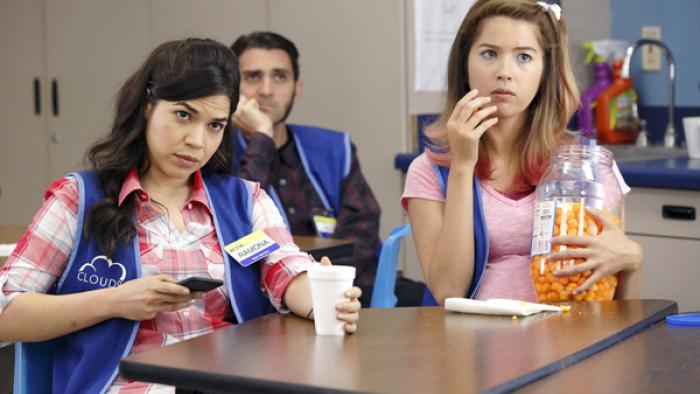
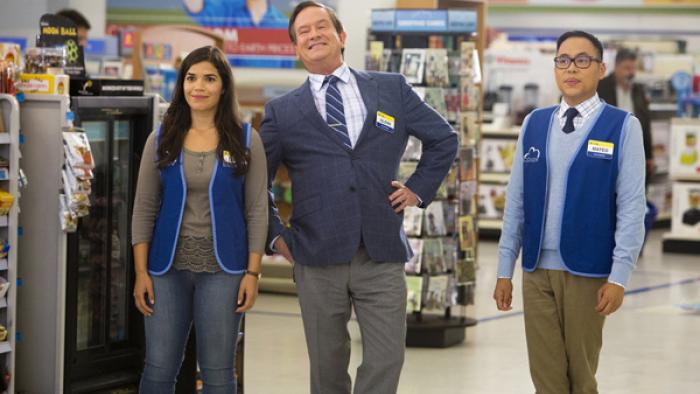
Created by one of the producers of The Office, SUPERSTORE is a workplace comedy about the employees at a big-box store. The characters doing time in blue vests include naive new hire Jonah (Ben Feldman of Mad Men), jaded veteran Amy (America Ferrera), clueless supervisor Glenn (Mark McKinney), and overeager manager Dina (Laura Ash). Their customers may be cranky and weird and the store policies inexplicable, but when all's said and done, the superstore turns out to be a kind of home, and the people who work in it are a reluctant found family -- or as dysfunctional and unavoidable as family, anyway. Underlying the comedy are stories about people trying to do their best amid challenging circumstances and coming together when things get tough.
Is It Any Good?
This funny character-driven series is full of great actors and clever writing. Superstore uses familiar sitcom beats, including meeting scenes attended by dead-eyed employees and presided over by an overly enthusiastic manager. What distinguishes the show is how it champions ordinary working-class Americans and skewers the absurdities of late capitalism.
The chemistry between will-they-or-won't-they leads played by Ferrara and Feldman generates smiles, and the supporting cast of misfits keeps viewers laughing out loud.
Talk to Your Kids About ...
Families can talk about why workplace comedies like Superstore are such a staple on television. What's funny about a group of people who must be together for hours a day but wouldn't otherwise be friends?
How are viewers supposed to feel about the characters on Superstore? Are some supposed to be relatable and some absurd? Which characters are which, and how can you tell?
How do the characters demonstrate compassion, empathy, and teamwork? Why are these important character strengths?
TV Details
- Premiere date : November 30, 2015
- Cast : Ben Feldman , Mark McKinney , America Ferrera
- Network : NBC
- Genre : Comedy
- Topics : Activism , Friendship
- Character Strengths : Compassion , Empathy , Teamwork
- TV rating :
- Last updated : August 20, 2026
Did we miss something on diversity?
Research shows a connection between kids' healthy self-esteem and positive portrayals in media. That's why we've added a new "Diverse Representations" section to our reviews that will be rolling out on an ongoing basis. You can help us help kids by
Suggest an Update
Common Sense Media's unbiased ratings are created by expert reviewers and aren't influenced by the product's creators or by any of our funders, affiliates, or partners.
See how we rate