







Common Sense Media Review
 By Fernanda Camargo
,
based on child development research. How do we rate?
By Fernanda Camargo
,
based on child development research. How do we rate?
Franchise origin has good story but outdated stereotypes.
Parents Need to Know
Why Age 9+?
Any Positive Content?
Where to Watch
Videos and Photos


Teenage Mutant Ninja Turtles
What's the Story?
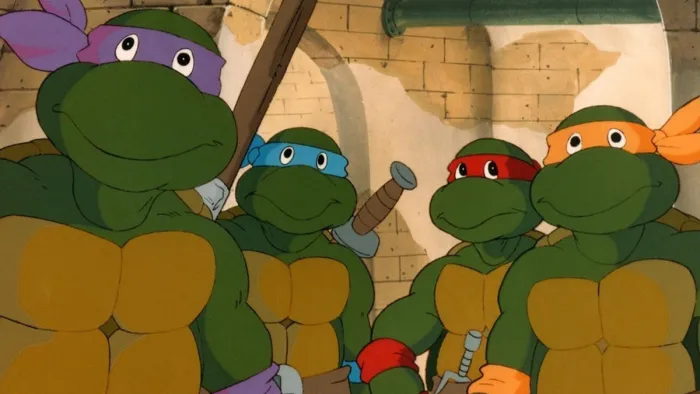
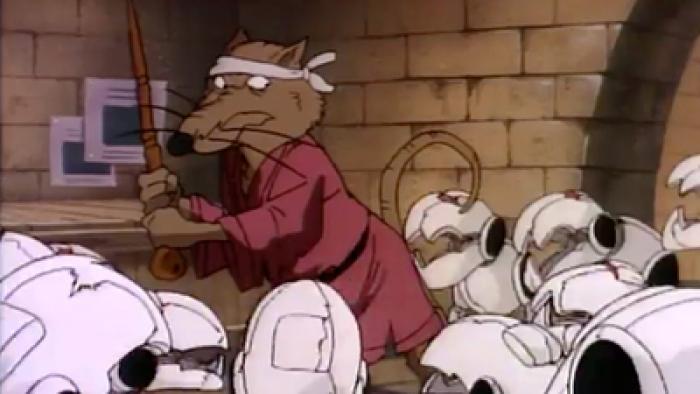
In TEENAGE MUTANT NINJA TURTLES (1987), Leonardo (Cam Clarke), Donatello (Barry Gordon), Michelangelo (Townsend Coleman), and Raphael (Rob Paulsen) are outcasts living in the city sewer with former ninja master Splinter (Peter Renaday), who mutated into a rat. Upon meeting a smart news reporter named April O'Neil (Renae Jacobs), the Teenage Mutant Ninja Turtles slowly uncover a villain's plan to take over the world. They become vigilantes, fighting crime and protecting the city from the hands of the corrupt Shredder (James Avery) and the alien tyrant Krang (Pat Fraley).
Is It Any Good?
This otherwise engaging origin story is overshadowed by outdated insults, one-dimensional characters and a little too much violence. Unfortunately, Teenage Mutant Ninja Turtles is a product of its time. It's simplistic, with the intent of familiarizing a young audience with the toy line, and reproduces outdated ideas about women and crime.
However, if your child is a fan of the franchise, know that this is the beginning of the story, and the plot itself is quite interesting. It's a know-your-child type of situation, but if you choose to watch it together, it could spark conversation about stereotypes, disparities in the representation of men and women, and judging someone based on their appearance. You might even discuss how journalism shapes public opinion and the use of technology for control.
Talk to Your Kids About ...
Families can talk about the insults used in Teenage Mutant Ninja Turtles. Some of the words used reflect negative stereotypes about how people should act or look. Do you think it's okay to label people in certain ways? What can you do if you ever see this happening in real life?
April O'Neil uses her role as a reporter to help shape public opinion of the Turtles. How do you think media influences our thoughts on certain topics or individuals? Can you think of examples when this has happened to you or someone you know?
The female characters in the show are often reduced to stereotypes of women as damsels in distress but they are actually fundamental for the Turtles to succeed. In what ways have April helped the Turtles? Why do you think she is not considered a hero as well?
TV Details
- Premiere date : December 28, 1987
- Cast : Cam Clarke , Townsend Coleman , Barry Gordon , Rob Paulsen , Renae Jacobs
- Networks : Nickelodeon , Paramount+
- Genre : Kids' Animation
- Topics : Superheroes
- TV rating :
- Last updated : September 18, 2025
Did we miss something on diversity?
Research shows a connection between kids' healthy self-esteem and positive portrayals in media. That's why we've added a new "Diverse Representations" section to our reviews that will be rolling out on an ongoing basis. You can help us help kids by
Suggest an Update
Common Sense Media's unbiased ratings are created by expert reviewers and aren't influenced by the product's creators or by any of our funders, affiliates, or partners.
See how we rate