







Common Sense Media Review
 By Mandie Caroll
,
based on child development research. How do we rate?
By Mandie Caroll
,
based on child development research. How do we rate?
Fun classic compilation has some dated tropes, stereotypes.
Parents Need to Know
Why Age 6+?
Any Positive Content?
Where to Watch
Videos and Photos


The Scooby-Doo Show
What's the Story?
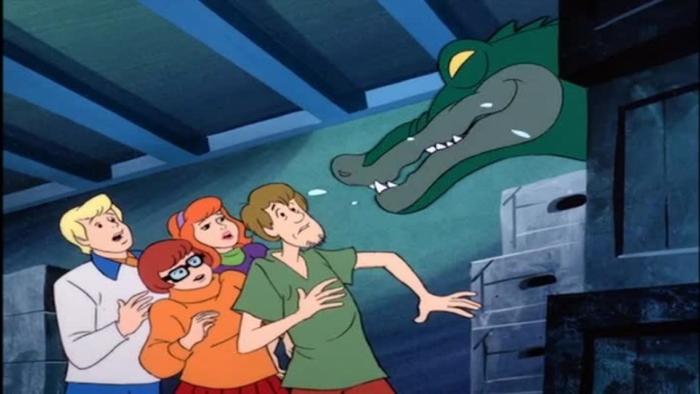
The 40 episodes of THE SCOOBY-DOO SHOW began airing as a collective in 1980 and have been consistently available for viewing ever since. The episodes consist of several shows that originally aired over three seasons from 1976-1978. The premise of the show is that the Mystery, Inc. gang stumbles into ghouls, ghosts, and monsters, only to eventually unravel the criminal plans of various bad actors disguised as ghouls, ghosts, and monsters. The teenagers (and dog) that make up Mystery, Inc. -- Fred (voiced by Frank Welker), Daphne (Stefanianna Christopherson), Velma (Nicole Jaffe), Shaggy (Casey Kasem), and Scooby (Don Messick) -- are quite different from one another, though they work well together. Each member of the crew contributes their individual strengths to solving cases (even if accidentally, as is often the case with Shaggy and Scooby), which always end in triumph for the mystery gang.
Is It Any Good?
Between positive messages about teamwork and facing fears, Shaggy and Scooby's eye-roll but giggle-inducing humor, the kid-appropriate scariness, and comforting predictability (the baddies get caught every time), this series will always be a classic. The Scooby-Doo Show's evergreen appeal for kids -- and adults who grew up on these cartoons -- comes down to the humor, and this will keep kids coming back to the show.
Parents will likely find that many of the episodes rely on problematic character tropes and reflect cultural ignorance. Daphne as the beautiful damsel-in-distress, Velma as the unattractive, bookishly-smart girl, Fred as the ideal man, and Shaggy as the cowardly, disheveled boy-man, are tiresome and limiting gender stereotypes. Characters mock other languages (as in the episode "Scooby's Chinese Kooky Fortune Caper") and cultural histories and practices (see "The Fiesta Ghost is an Aztec Ghost") in ways that border on racism. For families who decide to share this show with their children, it offers an opportunity to discuss how biases have historically influenced our media as they enjoy the otherwise smart humor and hilarious hijinks of this beloved cartoon.
Talk to Your Kids About ...
Families can talk about the kinds of teenagers Daphne, Fred, Velma, and Shaggy are. How are they different from one another? How are they similar? Which character do you like the best? Why?
Some of these episodes happen outside of Crystal Cove and outside the United States. What do you know about other places in the United States and Mexico, Italy, China, England, or anywhere else the gang travels to? How well did these episodes capture the people and cultures of these places?
What makes a classic cartoon like this so funny? How does this show compare to cartoons made in your lifetime?
TV Details
- Premiere date : June 14, 2020
- Cast : Casey Kasem , Don Messick , Frank Welker
- Networks : Max , Prime Video , Boomerang
- Genre : Kids' Animation
- Topics : Friendship , School ( High School ) , Fantasy
- TV rating :
- Last updated : September 30, 2025
Did we miss something on diversity?
Research shows a connection between kids' healthy self-esteem and positive portrayals in media. That's why we've added a new "Diverse Representations" section to our reviews that will be rolling out on an ongoing basis. You can help us help kids by
Suggest an Update
Common Sense Media's unbiased ratings are created by expert reviewers and aren't influenced by the product's creators or by any of our funders, affiliates, or partners.
See how we rate