







Common Sense Media Review
 By Patricia Monticello Kievlan
,
based on child development research. How do we rate?
By Patricia Monticello Kievlan
,
based on child development research. How do we rate?
Go inside history with stunning visuals, critical decisions.
Parents Need to Know
Why Age 11+?
Any Positive Content?
Where to Download
Videos and Photos


Think Like Churchill
Parent and Kid Reviews
What's It About?
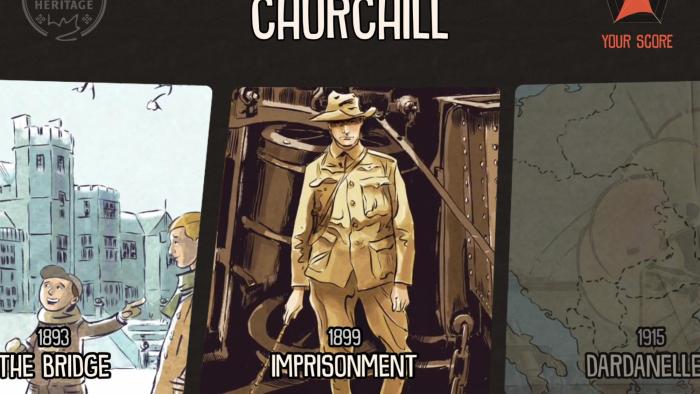
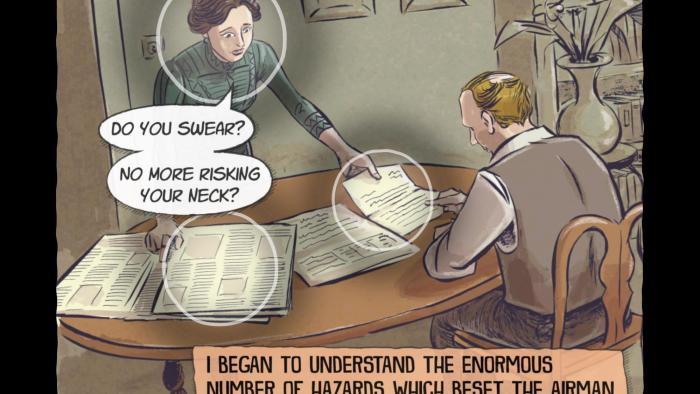
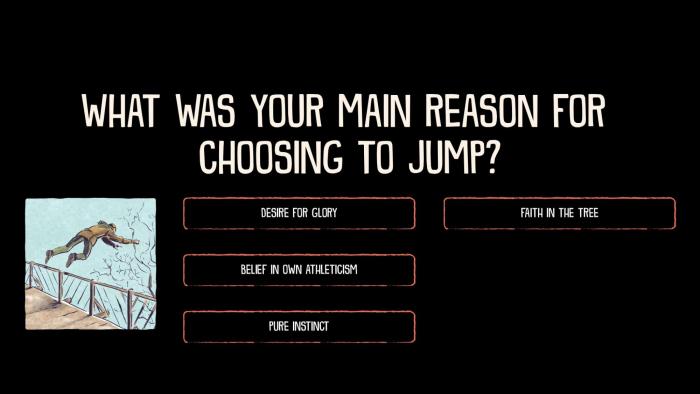
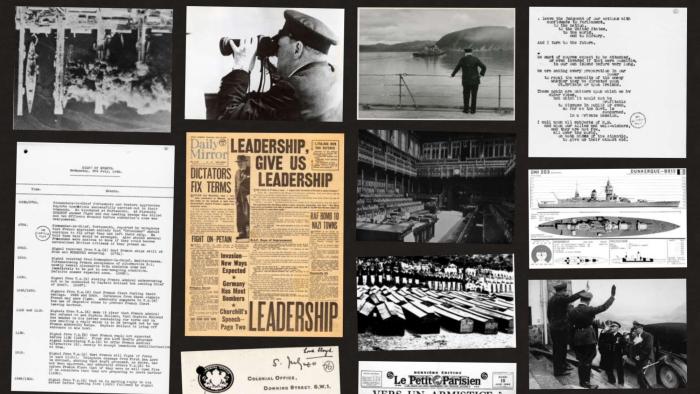
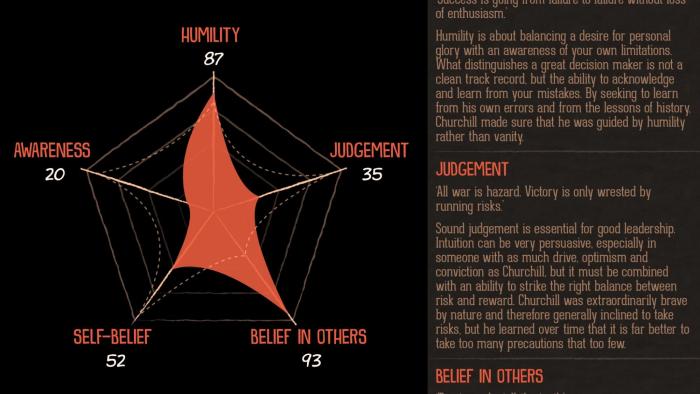
In THINK LIKE CHURCHILL users face several scenarios from Nobel laureate and British Prime Minister Winston Churchill's life and must weigh how to respond at key decision points. The scenarios range from personal (whether or not to pursue his passion for aviation in flying's early, dangerous days) to international (how to save the French fleet from Nazi destruction). Each story plays out like a graphic novel with caption text on-screen and some limited, high-impact animation. Along the way, users can click hovering rings (reminiscent of smoke rings from Churchill's cigar) that circle people and objects on-screen. Clicking reveals biographical information and high-resolution versions of primary-source documents such as photographs, telegrams, and newspaper clippings. Once users reach the decision point, they must make a choice and then select their reasons from a range of options that vary depending on the scenario. Then, users are treated to narrative feedback: They learn why their choice was a good one or a bad one, and they find out what Churchill really did. Finally, users can explore a detailed results page that shows their results versus Churchill's featuring a graph measuring five factors: awareness, humility, judgment, self-belief, and belief in others. Your performance is scored on a scale of 1 to 100, and there's an analysis of Churchill's real-life decision. Users can easily revisit their results on each scenario from this page (their names appear across the top of the screen), and all of a user's results across all scenarios are aggregated into a single graphic that appears on the app's front page.
Is It Any Good?
Between the gorgeous visual style and the excellent primary-source documents, Think Like Churchill is a terrific resource for taking an inside look at the life and experiences of one of the 20th century's most pivotal leaders. What makes it especially good for learning is the decision point and its resulting feedback. It's excellent that users must make their choice, select a reason for their choice, and then explore what Churchill really did. The detailed graph and text results make users confront deeper insights about the consequences of their selections, and the graph highlights how choices skewed along any of these five axes could lead to a dangerous outcome. Ultimately, this app is as much about learning about Churchill as it is about the nature of leadership. The only drawback is how text-heavy it is: Some kids will be daunted by the sheer amount of reading. Also, there's no audio to help kids with the reading, which would make it more accessible to all. Ultimately, thought, it's an exceptional way to engage with history and reflect on the enormous impact a single choice can make.
Talk to Your Kids About ...
Families can talk about what kids know already. Encourage kids who already know about Churchill to aim for reproducing his decisions; encourage kids who are new to Churchill to dive deeper for more information on the people and events profiled briefly in each scenario.
Have kids talk about the five criteria. Why are these five factors included, and why would they be important to a leader? Discuss what other characteristics might make a good leader or guide people to good decisions.
App Details
- Devices : iPhone , iPod Touch , iPad
- Subjects : Social Studies : events , historical figures , history
- Skills : Thinking & Reasoning : analyzing evidence , decision-making , making conclusions , thinking critically
- Pricing structure : Paid
- Release date : January 28, 2015
- Genre : Education
- Topics : History
- Publisher : Touchpress Limited
- Version : 1.1.0
- Minimum software requirements : iOS 7.1 or later.
- Last updated : October 1, 2025
Did we miss something on diversity?
Research shows a connection between kids' healthy self-esteem and positive portrayals in media. That's why we've added a new "Diverse Representations" section to our reviews that will be rolling out on an ongoing basis. You can help us help kids by
Suggest an Update
Common Sense Media's unbiased ratings are created by expert reviewers and aren't influenced by the product's creators or by any of our funders, affiliates, or partners.
See how we rate