







Common Sense Media Review
 By Susan Faust
,
based on child development research. How do we rate?
Lively skeletons star in a Mexican artist's layered bio.
Parents Need to Know
Why Age 6+?
Any Positive Content?
Where to Read
Parent and Kid Reviews
What's the Story?
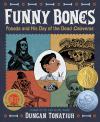
The life story of a Mexican printmaker is told in FUNNY BONES. José Guadalupe Posada (1852-1913), also known as Lupe and later as Don Lupe, is known today for popularizing calaveras as part of Day of the Dead celebrations. Encouraged by his older brother, he became an accomplished printmaker, working with three different techniques: lithography, engraving, and etching. Lupe used his printmaking to make diplomas, matchbooks, and invitations, but he also used his printmaking to make political cartoons, tell entertaining and accessible stories on broadsides (posters), and eventually created calaveras. His calavera poems and skeleton illustrations became part of Day of the Dead celebrations, often showing boney figures at work and play. Tonatiuh asks questions along the way. For example, what might the dancing skeletons mean? Perhaps that a celebration of death is also a celebration of life? Lupe married and had a son, and, throughout his busy working life, Lupe often collaborated with others. He used his calaveras during the Mexican Revolution of 1910 to criticize some leaders. Don Lupe died poor and little known. His art was discovered after his death, and, as Posada, he became renowned around the world. The book ends with an informative author's note about Posada and the Day of the Dead; a glossary; a bibliography; art credits; where to see Posada's work; and an index.
Is It Any Good?
A beloved Mexican printmaker is the fascinating subject of this lively and layered biography. In Funny Bones, the focus is on José Guadalupe Posada (1852-1913) and his life as an artist, but author-illustrator Tonatiuh seamlessly grounds that story in political, cultural, and art history. Posada did not invent calaveras poems, but his skeleton illustrations helped popularize them so that today calaveras are an essential element in Day of the Dead celebrations. This stellar book is nonfiction at its best. Tonatiuh's flat Mixtec-inspired style meshes with Posada's more flamboyant calaveras to support a narrative, clear and concise. Copies of Posada's political cartoons, broadsides, and calaveras add authenticity. An author's note explains how Posada was discovered by artists Jean Charot and Diego Rivera, over a decade after his death. Their writings turned Posada into an international star. As a valuable resource and a good read, Funny Bones stands as a fine introduction to a now famed Mexican artist. It also stands as exemplary nonfiction for its accuracy, accessibility, authenticity, and artistry.
Talk to Your Kids About ...
Families can talk about Funny Bones and how different artists express themselves or communicate through the arts. Do you like to do art? If so, what kind?
As can be seen in this book, people in Mexico and beyond honor loved ones on the Day of the Dead. Lupe used his calaveras to help show gratitude for those that had died. Does your family have any special traditions to remember family and friends who have passed away? If so, what are they? What purpose do those traditions serve?
In the story, Don Lupe uses his art to speak out about bad people in government. He shows courage when there was no freedom of speech. Do you ever feel the need to protest people or ideas in our government? If so, when and where? And how do you express your ideas?
The art in this book is stylized, inspired by art in ancient Mixtec codices, and the people, seen in profile, look similar. What do you think about the sameness? Why do you think the author draws this way? Does the style work for the story? Why or why not?
Book Details
- Author :
- Illustrator : Duncan Tonatiuh
- Genre : Picture Book
- Topics : Activism , Arts , History , Holidays ( Día de los Muertos )
- Character Strengths : Communication , Courage , Gratitude
- Book type : Non-Fiction
- Publisher : Abrams Books for Young Readers
- Publication date : August 25, 2015
- Publisher's recommended age(s) : 6 - 10
- Number of pages : 40
- Available on : Audiobook (unabridged), Hardback, Apple Books, Kindle
- Awards : ALA Best and Notable Books , Pura Belpré Awards and Honors
- Last updated : August 25, 2026
Did we miss something on diversity?
Research shows a connection between kids' healthy self-esteem and positive portrayals in media. That's why we've added a new "Diverse Representations" section to our reviews that will be rolling out on an ongoing basis. You can help us help kids by
Suggest an Update
Common Sense Media's unbiased ratings are created by expert reviewers and aren't influenced by the product's creators or by any of our funders, affiliates, or partners.
See how we rate