






Common Sense Media Review
 By Regan McMahon
,
based on child development research. How do we rate?
By Regan McMahon
,
based on child development research. How do we rate?
Powerful art amplifies inspiring civil rights protest tale.
Parents Need to Know
Why Age 6+?
Any Positive Content?
Where to Read
What's the Story?
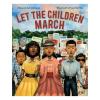
LET THE CHILDREN MARCH tells the story of the 1963 Brimingham Children's Crusade, narrated by a ficitonal young girl who volunteers for it. Dr. Martin Luther King, Jr. organizes a peaceful march for May 2 to protest segregationist Jim Crow laws, and kids volunteer to march to avoid the risk of their parents losing their jobs if they did. "By the end of the day, 973 young marchers were jailed." The next day more protesters, mostly children, are arrested -- close to 1,000 people -- and police use high-pressure water hoses to control the crowds. The third day they use water and and police dogs, and our narrator is thrown into a police wagon and sent to jail. Kids and adults continue to protest through March 9. "The water hoses they used to sting us/ could not stop our fierce tide." Thousands of young people are imprisoned. "But we had been heard, and the seeds of revolution were sown!" On May 10, "Dr. King had reached an agreement with the white leaders of the city. Desegregation would begin." The girl and her brother are reunited with their parents, and a month later are playing on a playground they'd never been allow to play on before. Two months later, the family eats at a diner they'd never been allowed to eat in before. "Our march made a difference. We children led the way."
Is It Any Good?
In simple, dramatic scenes and spare text, a young girl walks readers through the momentous events of the historic Birmingham Children's Crusade of 1963. Let the Children March shows kids overcoming fear and risking danger and imprisonment to stand up for what's right -- and to protect their parents, who feared losing their jobs if they protested. Through her young narrator, author Monica Clark-Robinson brings readers close to how it felt to be one of those marchers. And Frank Morrison's vivid oil paintings feature many close-ups that drive home the emotions of the child participants and the white townspeople and police who opposed them.
Back matter gives more historical information, with three archival photographs of the marchers. And superb end papers highlight significant historical moments cleverly displayed on signs held by children -- from Alabama Gov. George Wallace's Jan. 14, 1963, declaration of "segregation forever" to the passage of the Voting Rights Act on Aug. 6, 1965, which "ended practices that had barred African Americans from their right to vote."
Talk to Your Kids About ...
Families can talk about the importance of advocating for what you believe in — even at the risk of personal loss. What would you be willing to sacrifice to make sure that you, your loved ones, and your fellow citizens have equal rights?
Take a look at the historical materials at the back of the book. What is the difference between reading historical accounts and reading fictional accounts of history? What can we gain from using fiction as a way to understand history?
Book Details
- Author :
- Illustrator : Frank Morrison
- Genre : Picture Book
- Topics : Activism , History
- Book type : Non-Fiction
- Publisher : HMH Books for Young Readers
- Publication date : January 2, 2018
- Publisher's recommended age(s) : 6 - 9
- Number of pages : 40
- Available on : Nook, Audiobook (unabridged), Hardback, Apple Books
- Award : Coretta Scott King Medal and Honors
- Last updated : January 7, 2026
Did we miss something on diversity?
Research shows a connection between kids' healthy self-esteem and positive portrayals in media. That's why we've added a new "Diverse Representations" section to our reviews that will be rolling out on an ongoing basis. You can help us help kids by
Suggest an Update
Common Sense Media's unbiased ratings are created by expert reviewers and aren't influenced by the product's creators or by any of our funders, affiliates, or partners.
See how we rate