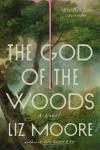
Parents need to know that The God of the Woods is a bestselling adult novel with elements that will appeal to many teen readers, as the central characters are teens, tweens, and the adults in their lives. As the story opens, a 13-year-old girl ("troubled" and wealthy) has disappeared overnight from her bunk at camp in the Adirondacks—14 years after the still unsolved disappearance of her older brother, when he was just 8 years old. Also, an escaped serial killer is in the forest. The narrative jumps back and forth between 1961 and 1975, and each chapter is seen from the viewpoint of a different character, including the missing Barbara; her mother, Alice, who's been addled by booze, pills, and her husband's neglect since before her son vanished; Jacob, the serial killer; Tracy, 12, another camper who becomes close friends with Barbara; Louise, the camp counselor with things to hide, like where she was when she should have been with Barbara; and Judy, rising star in the police department, from a traditional Polish family, tasked with unraveling it all. Kids, teens, and adults drink and use drugs, often to excess. There are no explicit descriptions of sex, but there's a lot of it going on: Adults are unfaithful to their spouses and partners, teens have sex in and out of relationships, and one guy in particular accuses his fiancée of cheating when he's cheating himself. Frequent crude language and profanity include "f--k," "s--t," "damn," "goddamn," and "motherf----r." The novel has strong messages of friendship, loyalty, and chosen family who are there for you even when you're surrounded by toxic situations.
Drinking, Drugs & Smoking
a lot
Parties at the Van Laar estate involve lots of drinking to excess. Some teen and adult characters use and sell drugs, including cocaine and marijuana. An adult character is addled by pills and booze, with fateful consequences, while another character's mom is a hopeless drunk. Adult characters smoke cigarettes. One chews tobacco. Another is arrested for DUI and drugs are found in his car. A character is horrified when her 9-year-old brother reeks of weed and is clearly stoned.
Did you know you can flag iffy content?
Adjust limits for Drinking, Drugs & Smoking in your kid's entertainment guide.
No explicit descriptions of sex, but there's a lot of it going on (though not perhaps as much as everyone imagines, as gossip tends to put a sexual spin on events and behavior that have other explanations). Adults are unfaithful to their spouses and partners, teens have sex in and out of relationships, and one guy in particular accuses his fiancée of cheating when it's him who is cheating with numerous girls himself. Some characters have loving spouses and families; a tween character's parents' divorce and her dad's new girlfriend are difficult for her. An adult character's mom has no idea who fathered the character's half-brother. A character refuses to be seduced by an employee. Rejected by her husband, a character turns to self-pleasuring. Another character says yes when asked if she's a virgin. There's drama when a boy is seen escaping out the window of a teen's dorm room.
Did you know you can flag iffy content?
Adjust limits for Sex, Romance & Nudity in your kid's entertainment guide.
The disappearance of two siblings 14 years apart is central to the story. So is the presence of a recently escaped serial killer (who's proud of his work). An innocent man is framed for the death of a kid and dies. A man kicks and beats his girlfriend. A character smashes the skull of a captive squirrel.
Did you know you can flag iffy content?
Adjust limits for Violence & Scariness in your kid's entertainment guide.
The story is set in the late 20th century and occasionally mentions brand names of the time, especially cars from Buick and Chevy to much fancier vehicles.
Positive Messages
some
Seek and find the truth. Courage, perseverance, loyalty, and problem-solving skills. Strong messages of friendship and chosen family being there for you in times of trouble. Finding a way to be your true self and do a good job of it, even if your loved ones don't always like it. Finding ways to do the right thing even when you're surrounded by people who do nothing of the kind.
Positive Role Models
some
Nearly all the adult characters are hiding secrets, often seen in flashbacks, which often emerge with fateful consequences as the story unfolds, including infidelity, drugs and alcohol, and a lot of behind-the scenes plotting and controlling. Thirteen-year-old Barbara also has a lot of secrets, but she is nobody's pawn and is a good friend to 12-year-old Tracey, who idolizes her and is faithful and loyal, and a quick learner. T.J., the camp director, has been like an older sib to Barbara and provides wisdom and support to the teen; T.J. also cares for her elderly, disabled dad. Judy the cop has a good head, a good heart, a respect for her elders and mentors, and also the courage to stand up for herself.
Diverse Representations
a little
The story is set from 1961 to 1975 in the Adirondacks. All characters appear Caucasian, but there's a strong contrast, economic and otherwise, between the lives of the wealthy Van Laars and the lives of locals who work for them or have connections to the estate. The era's evolving views about women are seen in the characters' lives, from rich women trapped in toxic but lucrative relationships to a 13-year-old who rejects the debutante track for punk rock, from a wilderness-savvy daughter of the camp director who's now doing the job herself to a bright, hardworking young police officer who's good at solving cases and whose traditional Polish family thinks she should stay home. A lot of male characters are rich, self-absorbed, and controlling. Others are kindhearted, helpful, and sometimes deeply wronged. It's mentioned that one wealthy family is Catholic. Several same-gender crushes or attraction among teens and adults.
Did we miss something on diversity?
.
Educational Value
a little
The title is a reference to the Greek god Pan, "the god of the woods. He liked to trick people, to confuse and disorient them until they lost their bearings, and their minds." Part of the story involves a how-to on wilderness survival in harsh conditions, and what to do when you're lost (in a pre-cellphone era). The story, set from 1961 to 1975, is fiction, but there's a strong sense of place in its Adirondack wilderness setting, with a lot of history of the region and details about its natural environment. Occasional literary references, as when a character suspects adults named their kid Annabel after the Edgar Allan Poe poem without ever reading it. Pop culture of the era is important, as Barbara reads Creem and dresses punk.
Pan, THE GOD OF THE WOODS, likes to mess with people's minds and drive them mad, and he's hard at work in an Adirondack forest in 1975. Barbara Van Laar, the 13-year-old heiress to the rich family who owns everything in sight, vanishes from her bunk at camp overnight, and Judy, the young small-town cop is trying to find her. Which is hard, as it soon becomes clear that just about everybody involved—family, friends, campers—has quite a few secrets they're determined to keep that way. And does it have anything to do with the still unsolved disappearance of the girl's older brother in 1961? Adding urgency to it all: A serial killer has escaped prison and is hiding in the area.
Is It Any Good?
Our review:
Parents say :Not yet rated
Kids say :Not yet rated
This twisty '70s thriller keeps the questions coming, the suspense intense, and the pages turning nonstop as a small-town cop looks for a vanished rich girl, discovering a lot of secrets along the way—some of which may have to do with what happened to the girl's brother 14 years ago. Told from the perspectives of the missing Barbara, her drug-addled mother, her bunkmate at camp, a counselor whose rich boyfriend is doing her wrong, a serial killer on the lam, and others, the novel confirms Liz Moore as a masterful storyteller. The God of the Woods is harrowing and heartfelt, with characters and readers wondering what's what right to the end—and kind of sorry when it's over.
Talk to Your Kids About ...
Families can talk about stories like The God of the Woods that contrast over-the-top lifestyles of the wealthy with the lives of all the "regular" people around them, and the complicated relationships that come up among people in those worlds. What other stories deal well with this theme?
Have you ever been to summer camp? Was it fun, or did you hate it? Did you make friends you never would have met otherwise? Are you still friends?
Do you know any kids whose families have their future lives all planned out for them already—only that's not what they want at all? What can they do?
Available on
:
Paperback, Nook, Audiobook (unabridged), Hardback, Apple Books, Kindle
Last updated
:
July 23, 2026
Did we miss something on diversity?
Research shows a connection between kids' healthy self-esteem and positive portrayals in media. That's why we've added a new "Diverse Representations" section to our reviews that will be rolling out on an ongoing basis. You can help us help kids by
Common Sense Media's unbiased ratings are created by expert reviewers and aren't influenced by the product's creators or by any of our funders, affiliates, or partners.







 By Mary Eisenhart
,
based on child development research. How do we rate?
By Mary Eisenhart
,
based on child development research. How do we rate?