







Common Sense Media Review
 By Sandie Angulo Chen
,
based on child development research. How do we rate?
Riveting dystopian reboot makes a familiar story feel fresh.
Parents Need to Know
Why Age 14+?
Any Positive Content?
Where to Read
Parent and Kid Reviews
What's the Story?
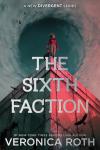
THE SIXTH FACTION is author Veronica Roth's reboot of her popular Divergent series. In this revisiting of the story, Tris chooses Abnegation instead of Dauntless but eventually decides to join the Factionless when she realizes the faction system is broken and in need of resistance. In a dystopian Chicago, society is divided into five factions based on different virtues: Abnegation (selflessness), Dauntless (bravery), Erudite (intelligence), Amity (peace), and Candor (honesty). Those who don't belong to a faction are known as the Factionless and live on the margins of society, shunned and powerless. Although Tris initially believes in the values of her upbringing, she begins to question the system's rigid divisions and the people who control them. She still meets and falls for Four and befriends Christina, who are both Dauntless, and the story features many of the same characters but with occasional twists to their motivations and personalities. As Tris becomes increasingly involved with the Factionless, she discovers dangerous secrets and a conspiracy that threatens everyone regardless of faction, forcing her to decide whom to trust and how far she's willing to go to protect the people she loves.
Is It Any Good?
Despite misgivings that Roth's reboot was an off-putting ploy, it's a well-written, riveting, and immersive story that's hard to put down. When news first broke that Roth was doing this, it felt akin to J.K. Rowling rewriting Harry Potter as if he'd been sorted into Slytherin. Talk about unnecessary. Do we really want authors to basically write canonical alternate-universe fan fiction? Apparently, the answer is yes, because Roth's first in a planned duology is a reminder of why we liked Divergent in the first place, but with even more character development, expansive world-building involving the Factionless, and overall better writing. The only reason it's not five stars is that so much of the groundwork for the story already existed, so it's not quite an original story.
It's clever how Roth weaves in existing characters but still surprises readers with new revelations. Not every event in the original Divergent is replicated, and some characters, like Four's and Tris' mothers, have a larger influence in this story than in the first one. It's also no longer told from a single perspective, with Four and Caleb getting their own chapters, allowing readers to see (if not agree with) why Caleb is so taken in by the Erudite faction leader Jeanine Matthews. Four remains as swoon-worthy a partner for Tris as ever, and this version of Tris has many more philosophical questions about identity and society to contend with now that she's living outside the relative safety of the faction system. She's simultaneously wise beyond her years and still believably a teen. The real question about this reboot is whether Tris' fate (so controversial in Allegiant) ends up more hopeful in the next and final installment. Time will tell, but Roth has made a compelling case that some stories are worth telling twice.
Talk to Your Kids About ...
Families can talk about the five factions in The Sixth Faction. What are the benefits and drawbacks of dividing society according to specific virtues? Is it possible to define someone by just one personality trait or characteristic?
How do Tris and other characters demonstrate courage, perseverance, and integrity? Does bravery always require physical strength and risk-taking, or can it look differently?
What role do family loyalty and friendship play in Tris' decisions? What about her brother Caleb's? What do you do if standing up for what you believe in means going against the wishes of your parents?
Why is it important to question authority, even when the people in charge claim to be acting for the greater good? What responsibilities do individuals have when they discover that their society's rules or leaders may be unjust?
Book Details
- Author :
- Genre : Science Fiction
- Topics : Book Characters , Dystopia , Friendship
- Character Strengths : Courage , Empathy , Integrity , Perseverance , Teamwork
- Book type : Fiction
- Publisher : Harper Collins Publishers
- Publication date : October 6, 2026
- Publisher's recommended age(s) : 13 - 18
- Number of pages : 528
- Available on : Nook, Audiobook (unabridged), Hardback, Apple Books, Kindle
- Award : Common Sense Selection
- Last updated : November 3, 2026
Did we miss something on diversity?
Research shows a connection between kids' healthy self-esteem and positive portrayals in media. That's why we've added a new "Diverse Representations" section to our reviews that will be rolling out on an ongoing basis. You can help us help kids by
Suggest an Update
Common Sense Media's unbiased ratings are created by expert reviewers and aren't influenced by the product's creators or by any of our funders, affiliates, or partners.
See how we rate