


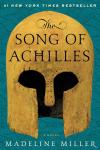
Gore, brutality, treachery in a love story for the ages.
Parents Need to Know
Why Age 15+?
Any Positive Content?
Parents Need to Know
Parents need to know that The Song of Achilles is the tale of the Trojan War and its most legendary hero, as seen through the eyes of his lifelong companion, Patroclus, whose death in battle leads to the war's brutal conclusion. Besides being a richly evocative storyteller and world-builder, author Madeline Miller is a classical scholar who closely follows Homer's narrative in The Iliad, and like the original the tale is awash in emotion, betrayal, brutality, and gore best suited to older teens and adults. It's not just combatants who fall prey to the bloodbaths: A 13-year-old girl is murdered to placate the gods, and a baby is smashed against a wall by a soldier. Over the centuries, scholars have differed on the exact relationship between Achilles and Patroclus; here, they share a strong bond from childhood that eventually leads to a lot of hot sex (emotionally but not explicitly described) and moral conflict as the war drags on and Achilles slays and slays. Patroclus often serves to remind Achilles of his kinder side at a time when kindness is in short supply. Rape and sexual abuse are a common fate for female captives who survive the slaughter of their families and communities. The beauty, affection, and humor of the lead characters' loving relationship stands in sharp contrast to the toxic world they inhabit and the doom that awaits them.
Violence & Scariness
a lot
The story sticks closely to events in The Iliad, which is famously awash in gore, hacking, slashing, maiming, and killing of humans and animals. Wartime atrocities range from the treacherous murder (aka "sacrifice") of unsuspecting 13-year-old Iphigenia, to infant Astyanax, son of Hector, being bashed against a wall in front of his captive mother. Achilles is the product of rape, as his father, a pious man, did the deed at the command of a god. Patroclus' life changes at age 10 when he accidentally kills another boy in a game gone wrong, and gruesome nightmares follow. Achilles is an unapologetically lethal warrior; Patroclus leans more to the healing arts but in the heat of battle discovers his medical know-how gives him a deadly edge. People, families, and entire villages are taken captive, abused, enslaved, raped, and slain. In the past, a cursed Heracles killed his wife and children in a fit of insanity, and a family's history is full of rape, murder, treachery, and dismemberment.
Did you know you can flag iffy content?
Adjust limits for Violence & Scariness in your kid's entertainment guide.
From childhood and long before their first kiss, Achilles and Patroclus have a strong bond that in time includes intense sex, described in several scenes of lush emotion, intense visuals, and gorgeous language that suggest and evoke overwhelming passion but avoid explicit detail. Both of them have sex with a woman due to circumstance, and Achilles fathers a child (which turns out really badly for all concerned). Over time during the long siege of Troy, soldiers and their captive women form families.
Did you know you can flag iffy content?
Adjust limits for Sex, Romance & Nudity in your kid's entertainment guide.
Wine is part of life at the time, and is sometimes consumed to excess. Drunken parties among teens lead to semi-comatose girls, and boys who abuse and rape them.
Did you know you can flag iffy content?
Adjust limits for Drinking, Drugs & Smoking in your kid's entertainment guide.
Author Madeline Miller is a classical scholar as well as a strong storyteller, and here she closely follows the characters and events of The Iliad, bringing the characters to life as their relationships unfold under the fated decrees of the great war. An afterword includes a list of divine and human characters and the roles they play in Greek mythology, the Trojan War, and beyond.
Diverse Representations
some
The deep bond and love story of Achilles and Patroclus begin when they're boys, and they face scorn and insults from their heterosexual peers and also parents. Achilles' mom disguises him as a girl to keep him out of the war; there are complications including a pregnancy. Most main characters are Greek, but in Troy, various tribes in the area get involved, including dark-skinned soldiers and captives, and an army of women warriors. Women are seen and used as pawns, chattel, slaves, and war prizes, with little to no control of their lives. Patroclus' mother is mentally disabled, called "simple." Gods, demigods, and mythic beings like centaurs are important characters.
Did we miss something on diversity?
.
Positive Role Models
some
Achilles is the best and most lethal warrior ever, but also has a kind heart and a softer side. Patroclus loves him and offers steadfast support, while also becoming a skilled healer. Captive Briseis, grateful for their protection and friendship, becomes a strong force for protecting the vulnerable in dire situations. Agamemnon has no redeeming qualities whatever, murdering his daughter and causing the suffering and death of thousands for his ego, greed, and power tripping. His brother Menelaus, whose wandering wife caused it all, is far more kindhearted. Odysseus is clever, ruthless, manipulative and deadly, and also devoted to his wife. The gods are almost all vicious, self-absorbed, and happy to abuse humans for sport. In the background is Helen, who may have launched all the carnage to enhance her own status and fame.
Positive Messages
some
Who the characters are and why they make the choices they do are strongly driven by the society and culture of the time, which is often quite different from today's world, but brought forcefully to life. Fate, and what to do about it, is a strong theme as characters often have to act and make decisions in situations not of their choosing and beyond their control. Lifelong unconditional love, and its true cost, are strong themes.
THE SONG OF ACHILLES finds the title character and his steadfast companion, Patroclus, bonding as children, long before the Trojan War that will be the death of them and so many others. As Patroclus tells the tale, they're longtime lovers whose bond will be sorely tested by hostile gods, treacherous men, and moral dilemmas, and they're just turning 16 as they sail off to a war in Troy they know they won't be returning from.
Is It Any Good?
Our review:
Parents say :Not yet rated
Kids say :Not yet rated
Master world-builder and classical scholar Madeline Miller delivers a fiercely compelling tale of a doomed mythic hero as seen by the friend who has loved him from boyhood. Set against the treachery, brutality, and gore of the Trojan War, The Song of Achilles finds the legendary warrior and his lover Patroclus in a tender, deeply emotional connection that's sorely tested over a decade-long siege, betrayal, and bloodshed, and finding joy in unlikely moments. "He seemed so much the hero," Patroclus reflects as they set off for war, "I could barely remember that only the night before we had spit olive pits at each other." This epic retelling will enchant most older teen and adult readers, but especially lovers of Greek legends, great writing, and love stories.
Talk to Your Kids About ...
Families can talk about the Trojan War, and how it has launched so many tales over the centuries, including The Song of Achilles. What do you think storytellers find so compelling about it, and why does it remain relatable so long after the events?
Achilles and Patroclus try to behave with integrity, even as circumstances and the treachery of others make it all but impossible. Do you know people in real life struggling to do the right thing even when overwhelming forces seem to prevent it? What's the situation, and is there anything you can do to support them?
What do you think it is about fame, power, and glory that makes people do so many bad (or at least really heedless) deeds to get them? Have you ever wanted fame, power, or glory? What's appealing about these things?
Available on
:
Paperback, Nook, Audiobook (unabridged), Hardback, Apple Books, Kindle
Last updated
:
February 25, 2026
Did we miss something on diversity?
Research shows a connection between kids' healthy self-esteem and positive portrayals in media. That's why we've added a new "Diverse Representations" section to our reviews that will be rolling out on an ongoing basis. You can help us help kids by
Common Sense Media's unbiased ratings are created by expert reviewers and aren't influenced by the product's creators or by any of our funders, affiliates, or partners.