






Common Sense Media Review
 By Susan Faust
,
based on child development research. How do we rate?
By Susan Faust
,
based on child development research. How do we rate?
Stirring recap of the Constitution's Preamble and promise.
Parents Need to Know
Why Age 5+?
Any Positive Content?
Where to Read
Parent and Kid Reviews
What's the Story?
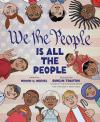
The Preamble to the Constitution opens WE THE PEOPLE IS ALL THE PEOPLE. The story then launches into an exploration of what "we" represents: urban and rural folks, young and old; men and women; people of different religions, ethnic groups, communities (e.g., LGBTQ), and occupations; Native Americans and migrants, forced and voluntary; and a spectrum of physical differences (e.g., skin tones, hair styles, abilities.) Specific historic challenges and short-comings are introduced with spare text. For example, migration is the subject of one spread: "People/ who were here,/ who arrived later,/ who still come today." Pictured are enslaved Africans, a Pilgrim, a Chinese railway worker, Hispanic laborers, and contemporary kids arriving by air. Overall, emphasis is on the jobs people do for the common good. They build, clean, repair, write, think, compete, cooperate, teach, heal, protect, assemble, and protest. The story culminates with six pronouns that signal the book's journey: "Her. Him. Them. You. Me. Us." Author and illustrator notes offer some historic and personal background.
Is It Any Good?
The Preamble to the Constitution begins with the phrase, "We the people," and this stirring recap shows what that means today. No longer limited to White, male property owners, the Preamble now applies broadly as stated in the book's title, We the People Is All the People. This nonfiction picture book provides a much-needed celebration of diversity and inclusion. A spare, almost poetic text stitches together a visual montage to represent a range of Americans. Stylized art provides detail, often using articles of clothing such as the hijab or yarmulke to suggest identity. Some might be uncomfortable with this reductionist approach. Still, the book makes an important point: The meaning of "all" has expanded over time, and that represents progress. The book makes another point, equally important: Much more work is still needed to further expand what "all" means and to help achieve "a more perfect union." This accessible book is a catalyst for serious discussion, even for the young. What is the Preamble's promise? How can we work together to better fulfill that promise? At a time when marginalization and demonization erode the meaning of "we" and "all," this timely book stands as a reminder that eternal vigilance is the price of pursuing a "more perfect union."
Talk to Your Kids About ...
Families can discuss the phrase "We the People" in the Preamble to the Constitution as shown in We the People Is All the People. What does "we" mean in your family or in school or neighborhood or town? How is "we" different than "I?"
The people pictured in this book represent different identities. Often clothing, skin color, or hair styles provide clues. What do you think about representing people in this way? Did you see yourself or people you know represented? What's that like to relate to people in a book?
The book suggests that over time many people have had to struggle for acceptance and opportunity. They have shown courage, and they have persevered. Talk about one or two such examples in the art. What historical movements captured in this book might you be curious to learn more about?
Some of the illustrations show people working together to protest and fight for equal justice, fair wages, and the like. Teamwork makes a difference. How do you rely on teamwork in your daily life?
Book Details
- Author :
- Illustrator : Duncan Tonatiuh
- Genre : Picture Book
- Topics : Activism ( Gender equality , LGBTQ+ rights , Racial justice , Civic engagement , Climate change ) , History
- Character Strengths : Courage , Perseverance , Teamwork
- Book type : Non-Fiction
- Publisher : Abrams Books for Young Readers
- Publication date : April 28, 2026
- Publisher's recommended age(s) : 4 - 8
- Number of pages : 40
- Available on : Nook, Audiobook (unabridged), Hardback, Apple Books, Kindle
- Award : Common Sense Selection
- Last updated : September 29, 2026
Did we miss something on diversity?
Research shows a connection between kids' healthy self-esteem and positive portrayals in media. That's why we've added a new "Diverse Representations" section to our reviews that will be rolling out on an ongoing basis. You can help us help kids by
Suggest an Update
Common Sense Media's unbiased ratings are created by expert reviewers and aren't influenced by the product's creators or by any of our funders, affiliates, or partners.
See how we rate