







Common Sense Media Review
 By Sandie Angulo Chen
,
based on child development research. How do we rate?
By Sandie Angulo Chen
,
based on child development research. How do we rate?
Epic, women-led sequel is part tribute, part intense battle.
Parents Need to Know
Why Age 12+?
Any Positive Content?
Where to Watch
Videos and Photos


Black Panther: Wakanda Forever
Parent and Kid Reviews
Based on 28 parent reviews
Parents say the film is a complex exploration of grief and loss, dealing with mature themes that may be challenging for younger viewers, despite its engaging action-packed sequences. While some found it emotionally powerful and a fitting tribute to the original, others expressed disappointment, feeling it did not resonate as strongly and contained distracting political elements.
- grief exploration
- action-packed
- emotional impact
- mature themes
- mixed reactions
 Summarized with AI
Based on 73 kid reviews
Kids say the sequel delivers a commendable tribute to a beloved character while showcasing strong female leads, though many believe it doesn't quite match the excellence of its predecessor. Viewers appreciate its emotional depth, cultural representation, and engaging action, but some criticize its lengthy runtime and pacing issues.
- emotional tribute
- strong female leads
- cultural representation
- pacing issues
- action sequences
- not as good
Summarized with AI
What's the Story?
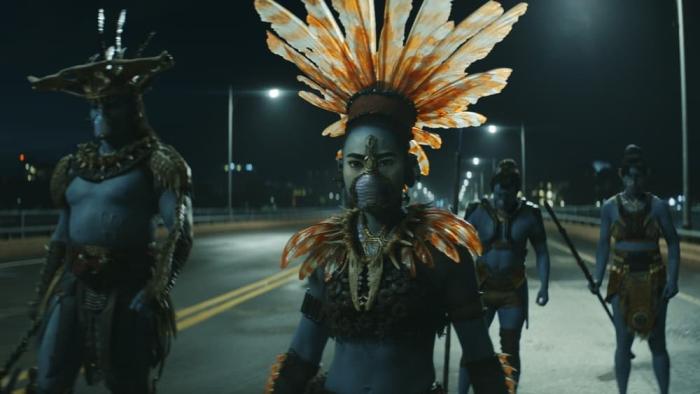
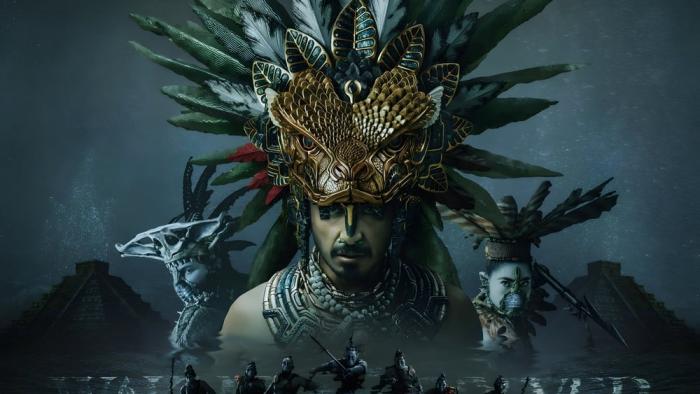
BLACK PANTHER: WAKANDA FOREVER begins with the off-camera death of King T'Challa (the late Chadwick Boseman) after an undisclosed illness that even his genius little sister, Shuri (Letitia Wright), can't troubleshoot and fix. And since Erik Killmonger (Michael B. Jordan) had all of the sacred heart-shaped herb destroyed in Black Panther, a new Black Panther cannot be named after T'Challa's passing. A year later, Queen Ramonda (Angela Bassett) makes a statement to the international community asserting that T'Challa's absence doesn't mean that Wakanda can be weakened or destabilized by rogue mercenaries or jealous superpowers who want to steal vibranium. So when an American military operation to mine for vibranium underwater ends with everyone involved being killed, the CIA assumes that Wakandans are the assassins. But the culprit is actually the Talokanil, a group of mysterious, blue-skinned underwater mutants descended from Mesoamericans. Their leader, Namor (Tenoch Huerta Mejia), can fly, has pointed/elven ears, and can -- unlike his people -- breathe outside of the water. He tries to convince the queen to join forces with him, oppose the sharing of vibranium, and secretly turn over the American scientist responsible for a machine that can detect vibranium underwater. But it turns out that when Shuri and General Okoye (Danai Gurira) track down the scientist, she's just a 19-year-old MIT undergraduate named Riri (Dominique Thorne) who reminds Shuri of herself. Unwilling to give Riri to Namor, the Wakandans must prepare to fight the Talokanil -- with or without a new Black Panther.
Is It Any Good?
Writer-director Ryan Coogler's sequel, led by an excellent ensemble of women, pays tribute to the hard loss of Boseman/T'Challa by exploring how grief (and revenge) can be all-consuming. It feels like Shuri is speaking for the fans when she cries out and wonders how life can go on without her brother. But, step by step, the influential women of Wakanda (with backup from Winston Duke's M'Baku and Martin Freeman's Agent Ross) manage to safeguard their homeland and prepare for yet another battle -- not for leadership of the kingdom, but for its very existence. Bassett and Wright do a beautiful job with their emotional scenes as mother and daughter, queen and princess. There's an authentic tenderness to their interactions that's mirrored in all of the women's relationships, even Nakia (Lupita Nyong'o), who's now the headmistress of a school in Haiti but agrees to help Wakanda defeat Namor. Although W'Kabi's (Daniel Kaluuya) absence is felt nearly as keenly as T'Challa's, at least his possible return to the franchise is left open. Meanwhile, award-winning TV star and comedian Michaela Coel joins the cast as another fierce and funny member of the Dora Milaje.
Coogler's interpretation of the canonical characters may not appeal to hardline comic book purists, but viewers who are more familiar with Marvel through the movies will appreciate the director's inclusion of complicated, morally gray antagonists who, while villainous, often make thought-provoking points. When Namor suggests an alliance between Black and Brown nations against the threat of greedy, colonizing forces, it frankly makes sense. Make friends, not foes, he says to Ramonda, even as he blackmails her with an ultimatum. Oscar-winning costume designer Ruth Carter and composer Ludwig Göransson do a phenomenal job of adding Mayan-inspired costumes and music to the proceedings (the soundtrack includes tracks in Spanish and Mayan, as well as "Lift Me Up," a lovely Rihanna ballad). Mexican actor Huerta gives a nuanced performance as the intense Namor, but ultimately this movie belongs to the women of Wakanda, who pull off the nearly unimaginable feat of proving that the story can go on.
Talk to Your Kids About ...
Families can talk about how the filmmakers handled the continuation of the Black Panther series without Boseman as T'Challa. Do you agree with the decision not to recast the role in Wakanda Forever?
Why is representation important in movies, shows, and books? What progress have superhero movies made when it comes to diverse characters? What do you think of the racial and gender representation in this movie compared to that of other superhero films?
How does the movie explore issues related to race? What do you think of the story pitting Black Africans and Indigenous Mexicans against one another? What's the message about what happens when Black and Brown people fight instead of collaborate?
Discuss the role of women in the movie. How are Ramonda, Shuri, Okoye, Nakia, and the other Dora Milaje unique in the Marvel Cinematic Universe? Why is it still uncommon for women to hold positions of power in movies (not just superhero movies)?
Talk about the theme of grief and loss in the story. Was it necessary? Do you think there should be another Black Panther movie?
Movie Details
- In theaters : November 11, 2022
- On DVD or streaming : February 1, 2023
- Cast : Angela Bassett , Letitia Wright , Tenoch Huerta , Danai Gurira
- Director : Ryan Coogler
- Studio : Disney/Marvel
- Genre : Action/Adventure
- Topics : Fantasy ( Magic ) , Superheroes
- Character Strengths : Courage , Perseverance , Teamwork
- Run time : 161 minutes
- MPAA rating :
- MPAA explanation : sequences of strong violence, action and some language
- Awards : Common Sense Selection , Golden Globe - Golden Globe Award Winner , NAACP Image Award - NAACP Image Award Nominee
- Last updated : October 8, 2026
Did we miss something on diversity?
Research shows a connection between kids' healthy self-esteem and positive portrayals in media. That's why we've added a new "Diverse Representations" section to our reviews that will be rolling out on an ongoing basis. You can help us help kids by
Suggest an Update
Common Sense Media's unbiased ratings are created by expert reviewers and aren't influenced by the product's creators or by any of our funders, affiliates, or partners.
See how we rate