







Common Sense Media Review
 By Sandie Angulo Chen
,
based on child development research. How do we rate?
By Sandie Angulo Chen
,
based on child development research. How do we rate?
Brilliant, mature coming-of-age story explores race, class.
Parents Need to Know
Why Age 17+?
Any Positive Content?
Where to Watch
Videos and Photos


Dope
Parent and Kid Reviews
Based on 8 parent reviews
Based on 13 kid reviews
Kids say this film is a vibrant coming-of-age story that blends humor with serious themes, particularly about drug culture and the experiences of young people of color. While some viewers appreciate its relatability and realistic portrayal of teenage life, others caution that its explicit content may not be suitable for younger audiences, despite the film's positive messages and engaging storytelling.
- coming-of-age story
- realistic portrayal
- explicit content
- positive messages
- cultural significance
 Summarized with AI
What's the Story?
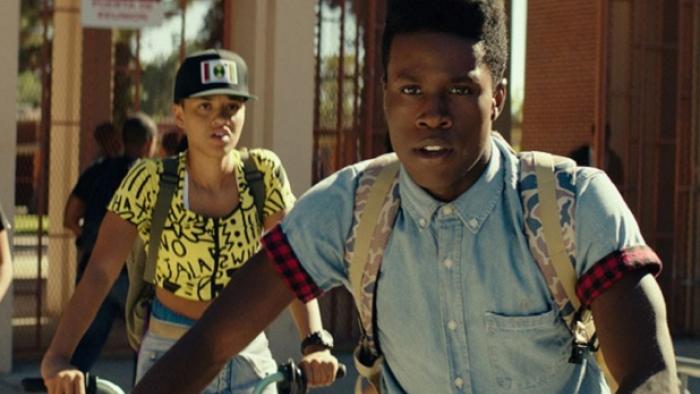
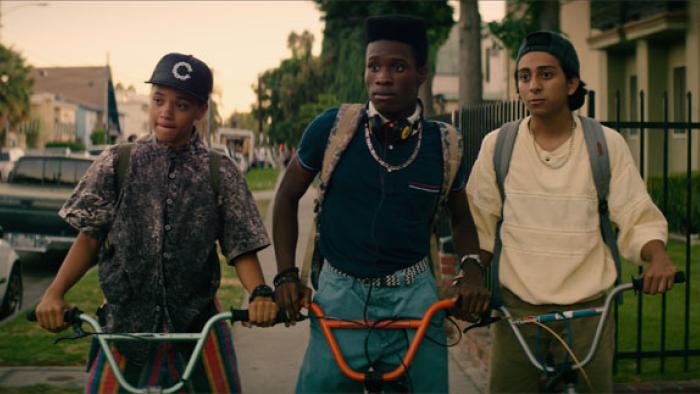
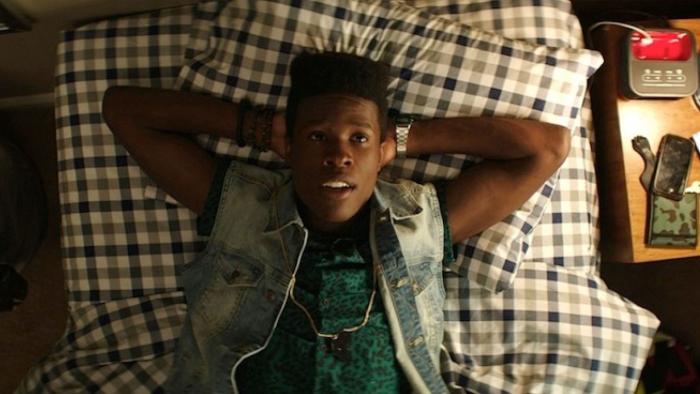
DOPE chronicles the life of high-school senior Malcolm (Shameik Moore), a self-professed '90s hip-hop geek from Inglewood, California's, worst neighborhood, "The Bottoms." He gets good grades, hopes to go to Harvard, and hangs out with two like-minded friends -- Jib (Tony Revolori) and Diggy (Kiersey Clemons). Because of Malcolm's crush on a local older beauty (Zoe Kravitz), the trio attends local drug dealer Dom's (A$ap Rocky) birthday party, where a shoot-out prompts the young dealer to leave a considerable amount of MDMA (aka "Molly") in a clueless Malcolm's backpack. Malcolm has no idea about the drugs until the next day at school. Then Dom calls Malcolm with specific instructions about what to do with the package, but things go seriously awry. Dom quickly realizes others are after the drugs, which he must somehow get rid of or sell without getting caught, implicated, or even killed -- all while preparing for the SATs and a Harvard alumni interview.
Is It Any Good?
Director Rick Famuyiwa's Sundance hit Dope is a coming-of-age comedy that's simultaneously clever, edgy, touching, and thought-provoking. Produced by Forest Whitaker (who also doubles as narrator) and Pharrell Williams (who also provided the original music), Dope is about a group that's largely without a voice in popular culture -- working-class African-American (or other minority) geeks who struggle to fit in and must always be aware of their surroundings. Moore gives a tour-de-force performance as young Malcolm, who desperately wants out of The Bottoms and into the kind of future he believes an Ivy League education can provide.
Equal parts crime caper, coming-of-age tale, and friendship comedy, Dope is brimming with energized performances, a perfectly complementary soundtrack, and lots of powerful social commentary. The philosophizing is never preachy; it's spot-on and occasionally harsh -- where you come from matters, and the color of your skin definitely matters. Malcolm, Jib, and Diggy can't afford to make mistakes, because one wrong turn, one extra pause could cost them everything. Despite its heavy themes, Dope is also hilarious, offering a biting reflection of youth culture's dependence on social media, where drugged out kids (and adults) will share anything and everything. This story comes down to one stereotype-defying boy who's basically a genius but who -- because of where he's from and what he looks like -- could just as easily end up in prison as Harvard Yard. And that's worth unpacking and discussing -- after you've laughed and laughed and laughed some more.
Talk to Your Kids About ...
Families can talk about Dope's scenes of violence, sexual experimentation, and substance use. Young characters from both a poverty-stricken neighborhood and a privileged college do similar things. What does that say about youth culture?
How does music play a role in Malcolm's life? What about other media? It is realistic the way the teens in the movie used social media to record even unsavory and illicit situations?
What does Malcolm mean when he says that he and his best friends are accused of "not being black enough"? Is doing well in school and wanting to go to college a "white" thing? How does the movie ask viewers to think about race and class?
How does Malcolm's character play against stereotypes? Why do how he looks and where he's from still have such an enormous impact on his life?
Movie Details
- In theaters : June 19, 2015
- On DVD or streaming : October 13, 2015
- Cast : Shameik Moore , Kiersey Clemons , Tony Revolori
- Director : Rick Famuyiwa
- Studio : Open Road Films
- Genre : Comedy
- Topics : Friendship , School ( High School )
- Run time : 115 minutes
- MPAA rating :
- MPAA explanation : language, drug content, sexuality/nudity, and some violence - all involving teens
- Award : NAACP Image Award - NAACP Image Award Nominee
- Last updated : October 9, 2025
Did we miss something on diversity?
Research shows a connection between kids' healthy self-esteem and positive portrayals in media. That's why we've added a new "Diverse Representations" section to our reviews that will be rolling out on an ongoing basis. You can help us help kids by
Suggest an Update
Common Sense Media's unbiased ratings are created by expert reviewers and aren't influenced by the product's creators or by any of our funders, affiliates, or partners.
See how we rate