







Common Sense Media Review
Violence, gore, language in smart cyberpunk anime classic.
Parents Need to Know
Why Age 15+?
Any Positive Content?
Where to Watch
Videos and Photos


Ghost in the Shell (1996)
Parent and Kid Reviews
Based on 20 parent reviews
Parents say this film features a complex and philosophical narrative that may captivate older teens and adults, but contains graphic violence and nudity that makes it inappropriate for younger audiences. While many reviewers appreciate its artistic merits and thought-provoking themes, they strongly advise that it is not suitable for children and recommend it primarily for mature viewers.
- philosophical narrative
- graphic violence
- nudity present
- not for children
- suitable for adults
 Summarized with AI
Based on 18 kid reviews
Kids say this movie is a visually stunning and thought-provoking exploration of identity in a high-tech world, although it features significant violence, nudity, and strong language that may not be suitable for younger audiences. While some reviewers stress the philosophical themes and artistic intent behind the nudity, others caution that the content could be overwhelming for sensitive viewers.
- visuals
- thought-provoking
- nudity concerns
- age appropriateness
- violence
- philosophical themes
Summarized with AI
What's the Story?
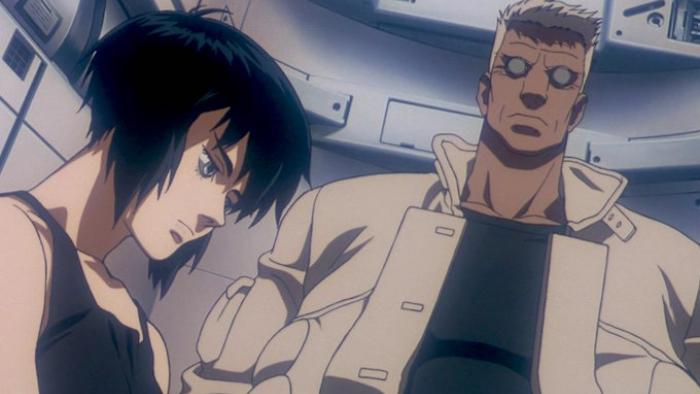
Set in the year 2029, GHOST IN THE SHELL is a neo-noir story about the government agents trying to capture the Puppet Master, an elusive hacker mastermind. Lead agent "Major" Motoko Kusanagi and her team end up uncovering a deeper case involving a secret government program called Project 2501. Meanwhile, Kusanagi starts to contemplate her existence and humanity as a cyborg with all her cybernetic parts. Will Project 2501 have the answers she's looking for?
Is It Any Good?
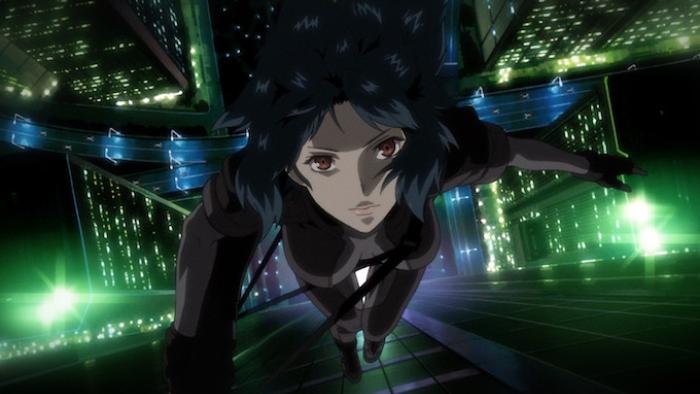
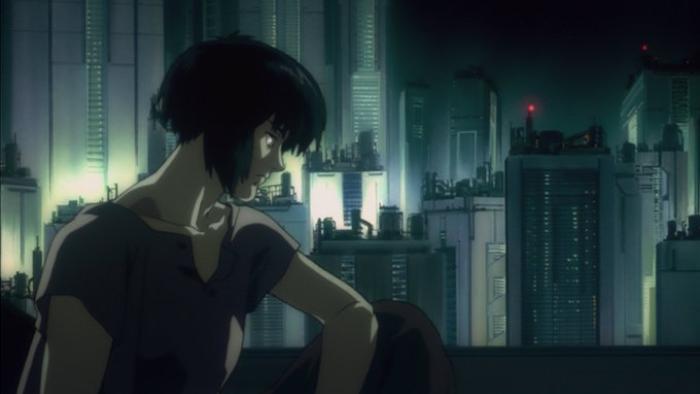
This landmark Japanese film may seem dated in some ways, but it remains one of the most innovative and ahead-of-its-time anime movies ever. As a sci-fi work, Ghost in the Shell belongs on any "best of" lists, and as an animated feature, it also boasts fantastic animation and sequences that pushed the genre in the 1990s and showed off a cool vision of the future. Along with other classics like Blade Runner, The Matrix, Akira, Neuromancer, and Snow Crash, this film was one of the first anime films to reach U.S. theater screens.
As philosophically concerned stories go, Ghost in the Shell is a great place to start. The Major's journey of self-discovery is relatable and meditative. The world feels real, organic, and lived-in, despite its futurism, and the ways people live and how technology and cybernetic hardware have affected society all feel incredibly natural. It isn't difficult believing the world of Ghost in the Shell as a possible representation of what our future might look like. The film greatly suffers, however, in its English dub, so it's recommended that viewers watch this in the original Japanese language when possible. The English dub changes a lot in its translation and delivery. Another very real barrier is the nudity: While it's never overtly sexualized, there's still a lot of it. For older teens, this kind of depiction of the female body can prompt productive conversations about objectification and sexualization. On the other hand, the female nudity might simply reinforce the ways male filmmakers write, make, and create—intentionally or not—things for a male and straight perspective. For younger audiences, the plot might be too complicated. The film does not stop to explain itself or its world.
Talk to Your Kids About ...
Families can talk about violence in Ghost in the Shell. Did any of it surprise or shock you? What's the effect of having the violence be animated vs. live action, if any? How does the violence here compare with that of other action anime titles?
What does the film mean by its title? What are "ghosts"?
What do you think about the relationship between human and machine or human and computer?
Project 2501 states that it isn't an AI. What do you think it means by this?
How would you define what Kusanagi becomes by the end of the film?
Movie Details
- In theaters : March 29, 1996
- On DVD or streaming : January 11, 2005
- Cast : Atsuko Tanaka , Akio Otsuka , Iemasa Kayumi , Koichi Yamadera
- Director : Mamoru Oshii
- Studio : Anchor Bay Entertainment
- Genre : Anime
- Topics : Robots , STEM
- Run time : 83 minutes
- MPAA rating :
- Last updated : October 8, 2026
Did we miss something on diversity?
Research shows a connection between kids' healthy self-esteem and positive portrayals in media. That's why we've added a new "Diverse Representations" section to our reviews that will be rolling out on an ongoing basis. You can help us help kids by
Suggest an Update
Common Sense Media's unbiased ratings are created by expert reviewers and aren't influenced by the product's creators or by any of our funders, affiliates, or partners.
See how we rate