







Common Sense Media Review
 By Barbara Shulgasser-Parker
,
based on child development research. How do we rate?
By Barbara Shulgasser-Parker
,
based on child development research. How do we rate?
Indigenous boy finds refuge in hockey; language, violence.
Parents Need to Know
Why Age 14+?
Any Positive Content?
Where to Watch
Videos and Photos



Indian Horse


Parent and Kid Reviews
What's the Story?
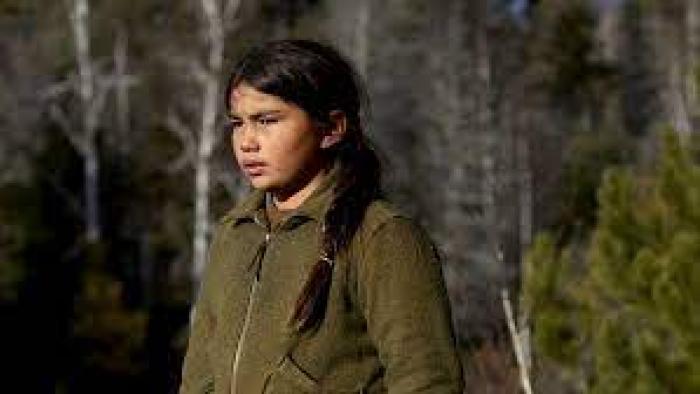
INDIAN HORSE tells the story of the devastation "legally" imposed by the Canadian government on at least 150,000 Native Canadian children from the 1800s through 1996 as part of an effort to eradicate the native culture, practices, and language. Saul (at different ages, Sladen Peltier, Forest Goodluck, and Ajuawak kapashesit) and his parents head for their ancestral lands by canoe to keep him and his brother out of the residential school system. But the brother dies of a fever, leaving Saul and his grandmother to brave winter alone. She dies and Saul is taken by authorities to a school run by cruel and abusive priests and nuns who rename the children, scour their skin, cut their hair off, punish those who speak Native languages (in this case Ojibwe), and hit and cage anyone who disobeys harsh rules. The school's horrors include sexual abuse. The seemingly kind young priest, Gaston (Michiel Huison), builds an ice rink to teach the older boys hockey, but young Saul wants to learn and soon is their best player. As the hockey teams plays and beats White teams, the boys are subjected to cruel and ugly bias by opponents and the fans that jeer at the "Indians." Ultimately, Saul's talent is recognized by a professional feeder team's Toronto coach (Martin Donovan). Saul excels on the ice but is consumed by justifiable anger as White opposing team members brutally foul him without penalty and the White fans jeer and mock him. Will Saul be able to live the life he wants?
Is It Any Good?
Indian Horse is a powerful emotional body blow, and like movies about slavery, the Holocaust, and other horrific injustices, it's at times hard to watch. The film documents the unceasing cruelty that Canada's Indigenous people endured (and by implication the Indigenous people of the United States, Australia, New Zealand, South Africa, and other places). Anyone with a brain and heart will ask themselves why White people so often vilify and oppress people of color, as exemplified here. The brutality and irrationality of that prejudice is clear through a story that rolls out all the insipid and baseless justifications dominant White cultures espouse to rationalize indecent beliefs and behaviors against people who look different. When a child urinates in his bed, a priest pushes the child's head into the wet sheet as punishment. The film highlights that no doctrine justifies such cruelty to children.
Performances may not be up to the highest professional standards in every case and the narration by Saul is often overly literary, as if taken straight from the book, using language that might read well but doesn't sound the way people actually talk. But that doesn't diminish the story's power. That this story needs to be told is unquestionable, especially in the hope that broadcasting past shamefulness might prevent future abuse and bias.
Talk to Your Kids About ...
Families can talk about the fact that a democratic government set out to eradicate a culture. What reasons do you think the Canadian government could offer as justification for taking children from their parents?
Do you think destroying the culture and language of Natives was beneficial to the Canadian state? If not, why do you think Canada, and other nations that tried to do the same thing, did it?
The Canadian government apologized for these practices in 2008. How do you think laws requiring kids to be taken from their parents reflect the way governments can institutionalize racist beliefs and practices?
Movie Details
- On DVD or streaming : January 1, 2017
- Cast : Ajuawak Kapashesit , Sladen Peltier , Forest Goodluck
- Director : Stephen S. Campanelli
- Studio : Screen Siren Pictures
- Genre : Drama
- Run time : 96 minutes
- MPAA rating :
- Last updated : March 8, 2023
Did we miss something on diversity?
Research shows a connection between kids' healthy self-esteem and positive portrayals in media. That's why we've added a new "Diverse Representations" section to our reviews that will be rolling out on an ongoing basis. You can help us help kids by
Suggest an Update
Common Sense Media's unbiased ratings are created by expert reviewers and aren't influenced by the product's creators or by any of our funders, affiliates, or partners.
See how we rate