








Common Sense Media Review
 By Barbara Shulgasser-Parker
,
based on child development research. How do we rate?
Mom risks everything to help sick son; language, violence.
Parents Need to Know
Why Age 14+?
Any Positive Content?
Where to Watch
Videos and Photos



Nothing to Lose

Parent and Kid Reviews
What's the Story?
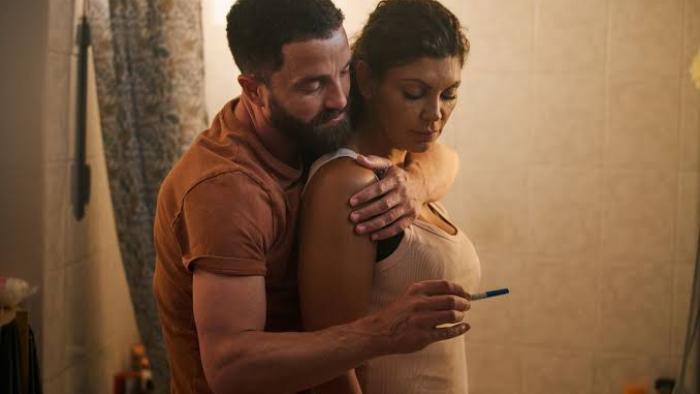
In NOTHING TO LOSE, Jada (Nawell Madani) and Paul (Guillaume Gouix) are diligently trying to have a child, but it's not working. When fertility treatments don't work, they can't bring themselves to get pregnant by way of an anonymously donated embryo the fertility clinic offers. Yet, 10 years later, Jada lives with her son Noa (Paul Foure). We don't know how she got him. Paul is out of the picture, and the boy is diagnosed with a rare and aggressive leukemia at age 10. His only chance is a bone marrow transplant from a compatible donor. Jada and Paul don't share his DNA, so Jada looks to the fertility clinic that provided the embryo. Noa has a sibling, and Jada wants that child to be tested for compatibility. Privacy laws make that information unavailable. When Jada insists, the clinic learns that the parents who are raising Noa's brother don't want to put their child through the ordeal of testing or of bone marrow donation. Desperate, Jada is willing to do anything to get them to comply. How far will she go?
Is It Any Good?
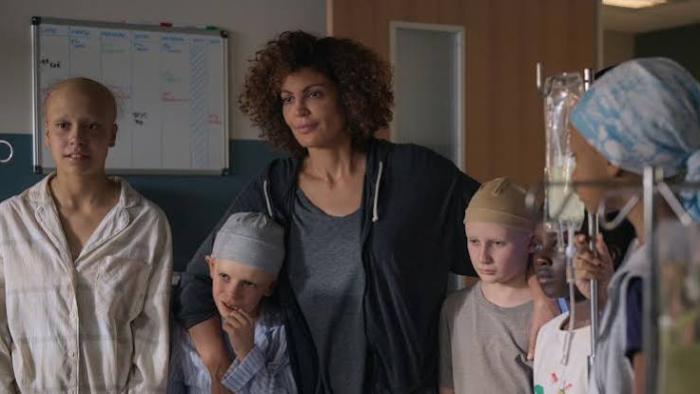
This drama has its heart in the right place since we all root for a parent trying to save a sick child. But here, the mom breaks into an office building. She uses her physical skills to wrestle with a cop, grab his gun, and take an entire pediatric hospital ward hostage. At this point, the movie loses its grip on reality. And in early scenes, Jada and Paul seem to give up on having a kid. Then, suddenly, it's 10 years later, and Noa exists and Paul is out of the picture. What happened? Is Noa adopted? Did they miraculously get pregnant? How did they have him? Disjointed narrative and magical thinking override reality.
The emphasis is on giving Jada a superhero aura, both physical and psychic. She has raised the kid alone. She doesn't need the boy's dad's help, even in this new crisis. Even the medical testing is magical. Bone marrow compatibility testing usually takes days or weeks to yield results. Here, it happens in minutes. And as much as we sympathize with and admire a parent who will do anything for her kid, it's pretty outrageous that Jada demands someone else's child be tested and be forced to donate bone marrow. That fact saps the movie of its emotional impact. Up to that point, Noa's slow decline is moving. But when his mom starts acting like a superhero to force a rich couple to test their child, the movie feels forced and improbable.
Talk to Your Kids About ...
Families can talk about the feeling of helplessness some parents may have when there's little they can do to help a sick child. How can worried parents cope?
The movie asks people to donate to pediatric illness research. Do you think fictional movies can help raise awareness about real-life causes? Why, or why not?
Do you think Jada's actions are justified? Why, or why not?
Do you think the plot is believable? Why, or why not? Does it matter?
Movie Details
- On DVD or streaming : July 8, 2026
- Cast : Nawell Madani , Guillaume Gouix
- Directors : Nawell Madani , Ludovic Colbeau-Justin
- Studio : Netflix
- Genre : Drama
- Topics : Family Stories ( Moms )
- Run time : 99 minutes
- MPAA rating :
- Last updated : July 21, 2026
Did we miss something on diversity?
Research shows a connection between kids' healthy self-esteem and positive portrayals in media. That's why we've added a new "Diverse Representations" section to our reviews that will be rolling out on an ongoing basis. You can help us help kids by
Suggest an Update
Common Sense Media's unbiased ratings are created by expert reviewers and aren't influenced by the product's creators or by any of our funders, affiliates, or partners.
See how we rate