

Stereotypes and violence mar Disney adventure stalwart.
Parents Need to Know
Why Age 7+?
Any Positive Content?
Parents Need to Know
Parents need to know that Peter Pan is Disney's mid-20th century take on J.M. Barrie's 1911 novel. Frequent violence includes kidnapping children, shooting guns, detonating bombs, and threatening to slit people's throats. Offensive portrayals and themes range from the "What Makes the Red Man Red" song and the depiction of Chief (voiced by Candy Candido) and his tribe to the way all the girls are jealous of one another and compete for Peter's (Bobby Driscoll) affections. A song about how kids need a mother and the concept of "real" mothers could also be upsetting for viewers who have a nontraditional family structure. Expect drinking and smoking; at one point, kids smoke from a ceremonial pipe. Characters have crushes, get jealous, and kiss on the cheek. Women often wear very little clothing, with one mermaid appearing to cover her breasts only with her hair. While there are themes of courage and imagination, it's ultimately a tale characterized by violence as well as racist and sexist stereotypes that call for further discussion if viewed with kids.
To stay in the loop on more movies like this, you can sign up for weekly Family Movie Night emails
.
Violence & Scariness
a lot
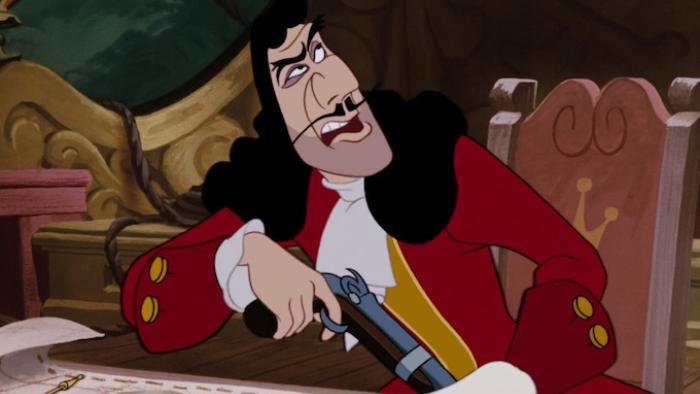
Violence/peril is very frequent. Captain Hook often points his hook and sword and shoots his gun toward people, including a pirate who falls overboard. Children are ordered to walk the plank, and there's an attempt to blow up a main character with a bomb. People are kicked, dragged, and choked. There's sword fighting, fistfighting, and the use of cannonballs, knives, clubs, slingshots, rocks, and other weapons, including a "skull buster." Children are kidnapped and tied up by Native characters and pirates, and a fairy is held hostage. Repeated mentions of slitting people's throats, boiling them in oil, drowning them, and cutting them to pieces. A hideout is called Hangman's Tree, a lynching reference that's made clear by a noose hanging from the tree. A person falls into the mouth of an alligator and repeatedly ends up in its jaws (often played for humor). Children are left alone in the house while their parents go out, and a father angrily drags the family dog out of the house by her collar.
Did you know you can flag iffy content?
Adjust limits for Violence & Scariness in your kid's entertainment guide.
The Chief passes a ceremonial pipe to the kids, who smoke it. Adults use a holder to smoke two cigars at once and drink from a liquor jug, hiccuping and falling over. A mention of rum.
Did you know you can flag iffy content?
Adjust limits for Drinking, Drugs & Smoking in your kid's entertainment guide.
Racist terms include "Red Man," "savages," "redskins," "Injuns," and "squaw." Sexist remarks include "Girls talk too much!" and "A jealous female can be tricked into anything." Other language and insults are "wench," "stupid," "imbecile," "coward," "codfish," "blithering idiot," "old bilge rat," "fiend," "flying devil," "blundering blockhead," "poppycock," "scurvy brat," and "blackguard." Places in Neverland are named "Cannibal Cove," "Hangman's Tree," and "Blind Man's Bluff." Captain Hook says he plans to "shanghai" (force someone onto a ship via drugging and kidnapping) Wendy.
Did you know you can flag iffy content?
Adjust limits for Language in your kid's entertainment guide.
Kisses on the cheek. Peter doesn't know what a kiss is and Wendy says she'll show him, trying to kiss him on the lips as he backs away. Female characters sometimes wear little clothing, with one mermaid appearing to cover her breasts only with her hair. Many Native American men are seen bare-chested. Seductive walking to a snippet of burlesque-style music. Female characters all covet Peter's affection and become jealous of one another.
Did you know you can flag iffy content?
Adjust limits for Sex, Romance & Nudity in your kid's entertainment guide.
No products mentioned in the movie, but plenty of tie-in merchandise available for purchase.
Positive Messages
a little
While freedom can be fun, maturity and responsibility are also important. Growing up doesn't need to mean losing a sense of magic if you keep imagination and hope alive. That said, the racism, sexism, and violence in the movie overshadow these positive themes. Negative messages from songs in the film are illustrated by lyrics such as, "What made the red man red?", "We're off to fight the Injuns/Because he told us so," and "You'll love the life of a thief/You'll relish the life of a crook."
Positive Role Models
a little
Wendy is a responsible big sister, but she's expected to fulfill a motherly role to her younger brothers despite being a child herself. Peter is brave and helps others, but he also solves problems with violence and avoids responsibility. Tinker Bell realizes the error of her misguided jealousy and protects Peter, though for most of the movie, she's incredibly mean to Wendy. Hook uses sneaky, cruel tactics against Peter, though is given a vulnerable side in his fear of crocodiles. The fact that Peter similarly toys with Hook blurs the line between hero and villain. Many interactions between characters are unkind or fall into bullying territory, like the pirate crew picking on Smee, or the mermaids and Tinkerbell being cruel to Wendy.
Diverse Representations
Flagged for concern
Native characters are drawn as racist stereotypes (red-toned skin, exaggerated features, headdress, war paint) with speech expressed in grunts and broken English. At one point, the Native characters tie up the Lost Boys around a big soup pot, as if implying cannibalism, and the Chief threatens to burn the kids at the stake. Main characters mock Native Americans, saying "how," dressing in feathers, tapping their hands to their mouths and dancing. Male characters are depicted as violent, short-tempered, and irresponsible. Sexist portrayals of women include preoccupations with male attention, jealousy between female characters, and repeatedly needing to be saved. Tinker Bell gestures in the mirror that her thighs are too wide. Wendy is expected to mother her younger brothers despite being a child herself. The only characters with physical disabilities are villains: Captain Hook wields his prosthetic hook as a weapon, and a pirate has a peg leg. A song about how kids need a mother and the concept of "real" mothers could be upsetting for viewers who have a nontraditional family structure.
Kids say this movie is a classic with charming visuals and memorable characters, yet many reviewers highlight its troubling themes of racism and sexism, particularly in the depictions of Native Americans and female characters. While some love the nostalgic experience and humor, a significant number express concern about the outdated stereotypes and recommend discussing these issues with children before viewing.
racism issues
sexism concerns
charming visuals
nostalgic experience
discuss with children
Summarized with AI
What's the Story?
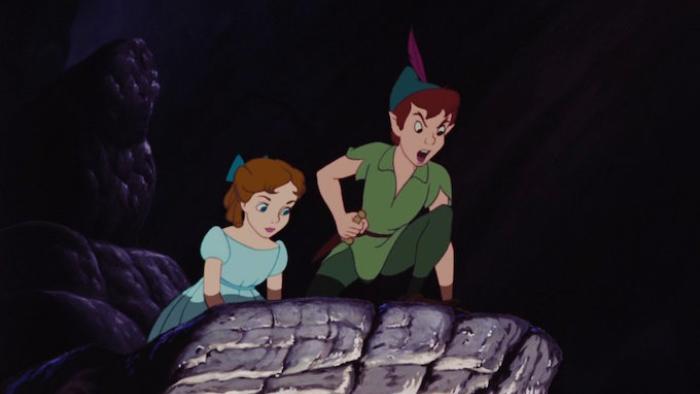
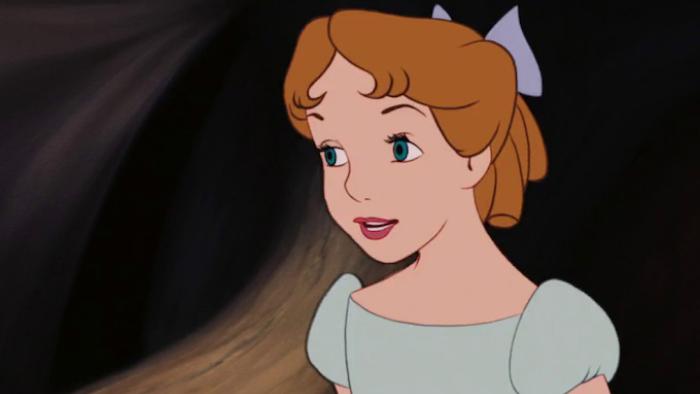
In PETER PAN, three London siblings—Wendy (voiced by Kathryn Beaumont), Michael (Tommy Luske), and John Darling (Paul Collins)—meet Peter Pan (Bobby Driscoll), a hero from their bedtime stories who flies in through their nursery window. He sprinkles them with fairy dust, and they set off to a magical place called Neverland. There, they meet Peter's friends, the Lost Boys, and go off on adventures. They must dodge danger from a Native American tribe and escape the clutches of the cruel Captain Hook (Hans Conried) and his pirate crew before returning safely back home to the nursery.
While kids may enjoy the movie's imaginative elements, violence and stereotypes mar this classic adventure. Peter Pan's magic is captivating: Fairies sprinkle pixie dust, mermaids swim in lagoons, and children are able to fly. But characters get kidnapped, shot at, and forced to walk the plank. It's also frustrating to watch Native Americans portrayed as "savages," female characters needing to be rescued, and male characters excused for their impulsive and angry behavior. Some kids might find the Lost Boys an engaging group to follow along with, but others may find it troublesome or worry about what happened to the boys' parents—or be upset by the parting that comes at the end.
Talk to Your Kids About ...
Families can talk about the idea of never growing up in Peter Pan. Have you ever thought that you didn't want to grow up, or that you'd like to be a grown-up right now? What do you think are some of the differences between kids and grown-ups?
What kinds of stereotypes do you recognize in the movie? How do they make you feel? Why are accurate depictions in the media important?
In the movie, characters often resort to violence when in conflict. What other tools could they have used to solve their problems instead?
Research shows a connection between kids' healthy self-esteem and positive portrayals in media. That's why we've added a new "Diverse Representations" section to our reviews that will be rolling out on an ongoing basis. You can help us help kids by
Common Sense Media's unbiased ratings are created by expert reviewers and aren't influenced by the product's creators or by any of our funders, affiliates, or partners.