






Common Sense Media Review
 By Jeffrey Anderson
,
based on child development research. How do we rate?
By Jeffrey Anderson
,
based on child development research. How do we rate?
Darren Aronofsky's debut feature is brilliant and intense.
Parents Need to Know
Why Age 16+?
Any Positive Content?
Where to Watch
Videos and Photos


Pi
What's the Story?
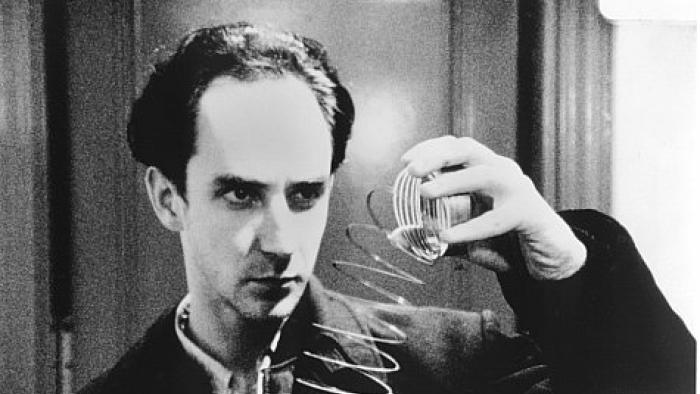
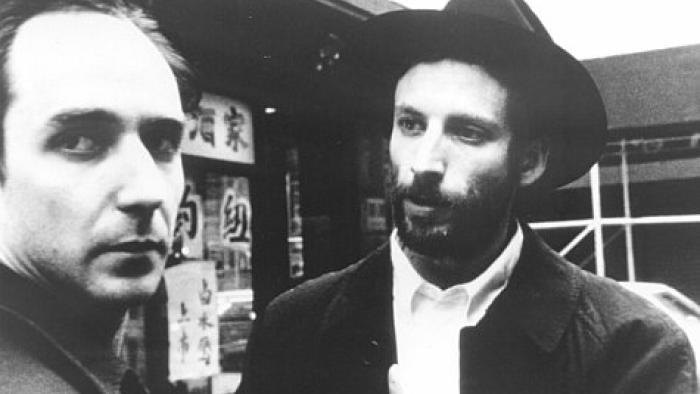
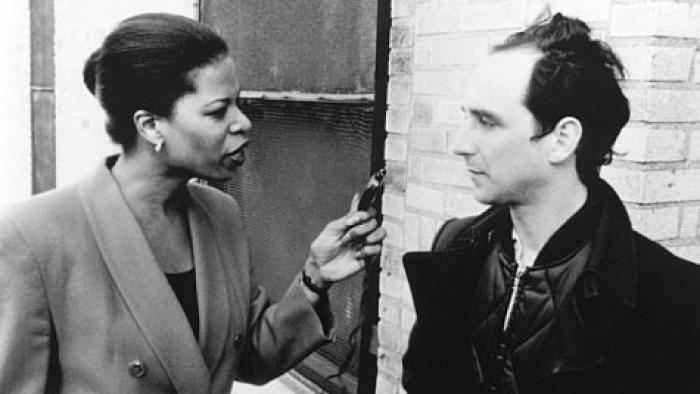
In PI, Max Cohen (Sean Gullette) is a mathematician who believes that there are patterns everywhere in nature, and is using this theory to find patterns in the stock market. He explains that, when he was young, he stared into the sun for too long, and now gets excruciating headaches that no remedy seems to help. During a test, his computer is fried, but not before printing an odd string of 216 numbers. His old professor, Sol (Mark Margolis), with whom he regularly meets for games of Go, says that in his own work he came across the same string, which he dismissed as a bug. Meanwhile, a Hasidic Jew, Lenny Meyer (Ben Shenkman), has begun pestering Max about patterns in the Torah, which also relates to the number 216. And sinister people in suits, led by the smiling Marcy Dawson (Pamela Hart), begin showing up.
Is It Any Good?
Darren Aronofsky's grainy, bleached-out black-and-white debut feature puts together many intriguing ideas, bathed in intense sequences of pain and hallucination; it's challenging but rewarding. Released in 1998 and written by the director (based on a story by himself, actor Sean Gullette, and producer Eric Watson), Pi is an almost impossibly brilliant combination of ideas that seem as if they can come only from real life. The movie sends you away pondering the infinite possibilities of patterns and mathematics and religion and nature, as well as the possibility of something greater than ourselves.
Yet Aronofsky takes a vividly downbeat view of these things, as if their very existence would certainly drive a person insane, rather than revealing anything. Pi has a penchant for torment and anguish that the director explores in virtually all of his later works (especially Requiem for a Dream, Black Swan, and mother!). The grimy cinematography offers nothing to grab on to in terms of texture or color; the screeching, terrifying headache sequences are worthy of a horror movie; and the main character's final solution is as pessimistic as they come -- though it has a somewhat peaceful conclusion. Nonetheless, Pi is an intensely personal work, uncompromising and unforgettable, that deservedly became an instant cult classic.
Talk to Your Kids About ...
Families can talk about Pi's use of violence. How does the movie use sound and light to convey a sense of intense unease? What other violence is shown or implied? What effect does it have?
How does the movie depict drugs? For what reason does the hero take drugs? Does he seem to be addicted? Are there consequences to his drug use?
What does the movie seem to be about? Is it good or bad to be thinking about mathematical patterns in the universe?
What are some scientific or mathematical ideas in the movie that appear to have come from real life? Were you inspired to do more research?
What is a "cult classic"? How does a movie become one?
Movie Details
- In theaters : July 10, 1998
- On DVD or streaming : August 28, 1999
- Cast : Sean Gullette , Mark Margolis , Ben Shenkman
- Director : Darren Aronofsky
- Studio : Artisan Entertainment
- Genre : Science Fiction
- Run time : 84 minutes
- MPAA rating :
- MPAA explanation : language and some disturbing images
- Last updated : August 7, 2022
Did we miss something on diversity?
Research shows a connection between kids' healthy self-esteem and positive portrayals in media. That's why we've added a new "Diverse Representations" section to our reviews that will be rolling out on an ongoing basis. You can help us help kids by
Suggest an Update
Common Sense Media's unbiased ratings are created by expert reviewers and aren't influenced by the product's creators or by any of our funders, affiliates, or partners.
See how we rate