






Common Sense Media Review
 By Kat Halstead
,
based on child development research. How do we rate?
By Kat Halstead
,
based on child development research. How do we rate?
Popular but disturbing horror has violence, gore, language.
Parents Need to Know
Why Age 17+?
Any Positive Content?
Where to Watch
Videos and Photos


Saw

Parent and Kid Reviews
Based on 95 parent reviews
Parents say the film is a divisive choice, with many considering it inappropriate for younger audiences due to its violence and graphic imagery, but others advocate for it, arguing it contains a compelling plot and can be suitable for mature teens with parental guidance. Despite being labeled as horror, reviews mostly highlight its intricate psychological themes and a significant plot twist, challenging the notion that it solely focuses on gore or torture.
- graphic violence
- compelling plot
- psychological themes
- parental guidance needed
- age rating debated
- not horror genre
 Summarized with AI
Based on 308 kid reviews
Kids say the movie is often mischaracterized as excessively gory, when in fact many reviewers note that much of the violence occurs off-screen or is implied, making it less frightening than expected. Ratings and age-appropriateness vary, with some recommending it for mature viewers as young as 11 or 12, while others argue it shouldn't be viewed by anyone under 17 due to its themes and occasional violent scenes.
- violence level
- suitable age
- off-screen gore
- varying opinions
- psychological horror
- strong language
Summarized with AI
What's the Story?
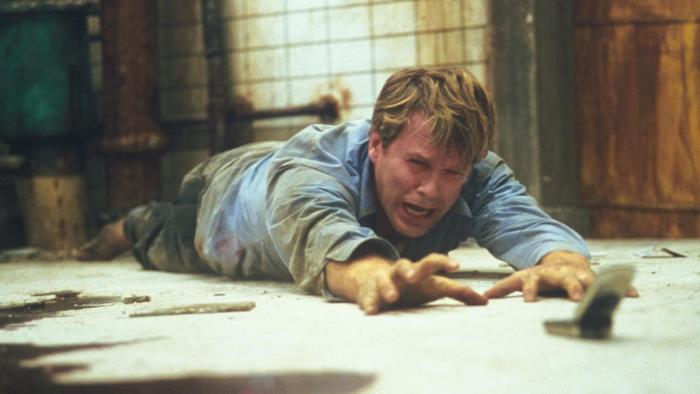
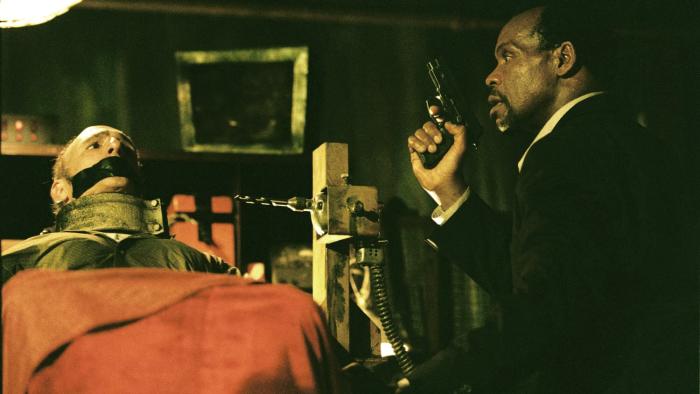
In SAW, two strangers (Cary Elwes and Leigh Whannell) wake up in a room chained to pipes and unable to escape. Gradually they discover that they're part of a twisted game orchestrated by a notorious serial killer called Jigsaw. If they don't solve his puzzle before the clock strikes six, one of them, both of them, or the people they love could end up dead.
Is It Any Good?
The first film in one of the best-known modern horror franchises, this movie made quite an impact on release and has had a great influence on the genre. Mention Saw, and most people will have a reaction, whether they've seen it or not. Such is the power of the imagery involved in both its marketing and the clever way violence is sometimes shown but often implied. The setup poses ethical dilemmas, characters bring a level of sarcasm and humor, and frenetic camerawork and editing portray the sense of panic and horror that stays with you longer than any level of blood or gore could. For some, the implied violence seems gratuitous. For others, this is a clever premise that feels like a unique offering in a genre that often falls back on derivative clichés.
Talk to Your Kids About ...
Families can talk about the use of violence in Saw. How much is shown on-screen, and how much is suggested or implied via reactions? Can you think of other movies that imply violence rather than show it in its entirety? How do they compare?
The Saw franchise has a strong fanbase and has inspired many sequels. Have you seen any of them? How do they compare to the original? Can you think of other horror franchises that have spawned a significant number of sequels? What do you think they have in common, if anything?
What do you understand of the Jigsaw killer's reasons behind his crimes? Do you agree with any aspect of them or what he's trying to teach his victims?
Movie Details
- In theaters : October 29, 2004
- On DVD or streaming : September 23, 2014
- Cast : Cary Elwes , Danny Glover , Leigh Whannell
- Director : James Wan
- Studio : Lionsgate
- Genre : Horror
- Run time : 102 minutes
- MPAA rating :
- MPAA explanation : strong grisly violence and language
- Last updated : October 8, 2026
Did we miss something on diversity?
Research shows a connection between kids' healthy self-esteem and positive portrayals in media. That's why we've added a new "Diverse Representations" section to our reviews that will be rolling out on an ongoing basis. You can help us help kids by
Suggest an Update
Common Sense Media's unbiased ratings are created by expert reviewers and aren't influenced by the product's creators or by any of our funders, affiliates, or partners.
See how we rate