







Common Sense Media Review
 By Jeffrey Anderson
,
based on child development research. How do we rate?
By Jeffrey Anderson
,
based on child development research. How do we rate?
New dad ponders AI future in alarming but thoughtful doc.
Parents Need to Know
Why Age 13+?
Any Positive Content?
Where to Watch
Videos and Photos

The AI Doc: Or How I Became an Apocaloptimist
What's the Story?
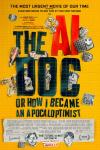
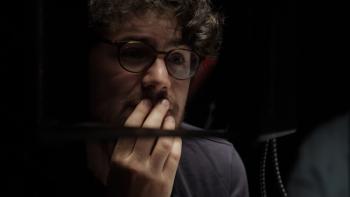
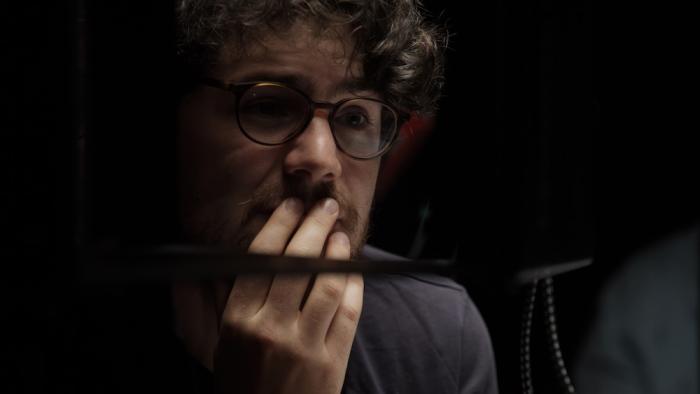
In THE AI DOC: OR HOW I BECAME AN APOCALOPTIMIST, filmmaker Daniel Roher starts wondering about the future of humanity in the wake of the advent of artificial intelligence. Doing his own research doesn't help, so he sits down to interview some of the smartest people in the world on the subject of AI. At first things don't go well. His interviewees have a cataclysmic view of what will happen; i.e., when AI becomes superintelligent, it won't have any use for humans any more, and our extinction will be imminent. But when Roher learns that his wife, filmmaker Caroline Lindy, is pregnant and that they'll soon become parents, his mission becomes more important. So he finds a different group of experts and discovers that another point of view exists: AI will help us solve complex problems like climate change and cancer. Still unsatisfied with the opposing views, Roher continues, attempting to find a middle ground that might be closer to the truth.
Is It Any Good?
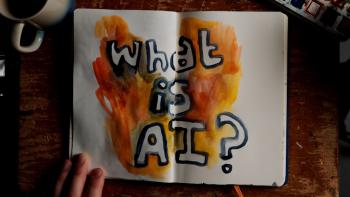
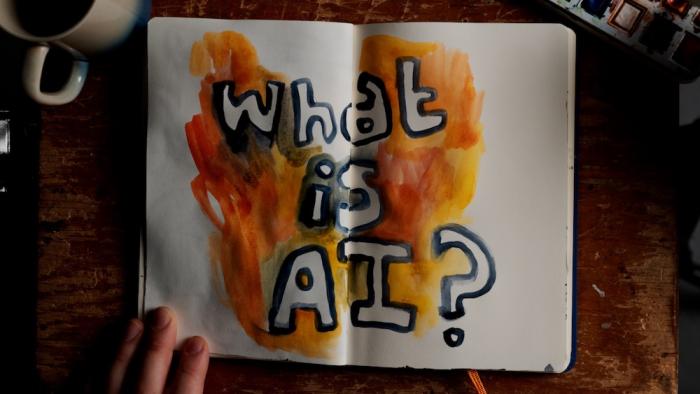
This documentary is more of a personal essay than a definitive look at emerging technology, but it's skillfully made and includes ideas both scary and hopeful that are very much worth pondering. And The AI Doc: Or How I Became an Apocaloptimist certainly has a high-profile pedigree. Roher won an Oscar for his previous documentary, the powerful Navalny, and producers Daniel Kwan and Jonathan Wang also won Oscars for Everything Everywhere All at Once. The film begins with Roher asking what might seem to be a simple question—"What is AI?"—but it's something that even the experts struggle to answer. From there, Roher wisely delivers the (potential) bad news first, and, honestly, it's scary. Viewers are likely to feel Roher's existential dread. Then comes the good news, which feels much better but leaves Roher—and viewers—polarized.
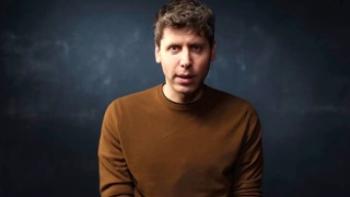
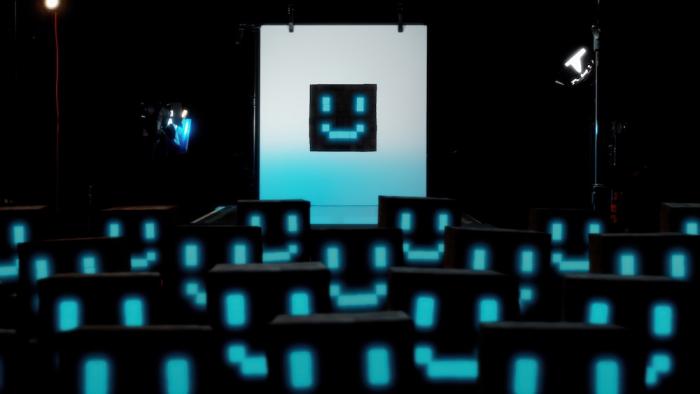
It's the third act in which Roher struggles to come to a conclusion; this is also the part in which it's acknowledged that the five biggest companies creating AI are competing for the top, very lucrative, spot, and that speed may be more important than safety to them. (Roher manages to get an interview with OpenAI CEO Sam Altman, who wouldn't return the calls of filmmaker Adam Bhala Lough for his own AI movie, Deepfaking Sam Altman.) Throughout, Roher includes clever editing, animated sequences, handmade art, and other charming touches that highlight humanity rather than machines. The truth is that no one fully understands the full breadth of this technology, and no one knows exactly what's going to happen, but thanks to movies like The AI Doc: Or How I Became an Apocaloptimist, we can at least try to think about how to be prepared.
Talk to Your Kids About ...
Families can talk about the messages inThe AI Doc: Or How I Became an Apocaloptimist. Did the documentary make you more curious, more worried, or both about the future of AI? What questions do you still have after watching it? Are there actions you think should be taken?
The film suggests that AI could change how people work, learn, and create. What changes have you already seen in your own life? Do you think these changes are mostly positive, or negative?
How can families discuss technology use at home so that tech stays helpful instead of overwhelming? (For helpful materials, check out the official educator's guide.)
How do negative human traits like greed and fear play into the AI story? What about positive ones like compassion and courage?
To use the movie's terms, if you had a choice regarding AI, would you "lock it up" or "let it rip"?
Movie Details
- In theaters : March 27, 2026
- On DVD or streaming : April 14, 2026
- Cast : Daniel Roher , Caroline Lindy , Tristan Harris
- Director : Daniel Roher
- Studio : Focus Features
- Genre : Documentary
- Topics : STEM ( AI )
- Character Strengths : Curiosity
- Run time : 104 minutes
- MPAA rating :
- MPAA explanation : language
- Award : Common Sense Selection
- Last updated : March 28, 2026
Did we miss something on diversity?
Research shows a connection between kids' healthy self-esteem and positive portrayals in media. That's why we've added a new "Diverse Representations" section to our reviews that will be rolling out on an ongoing basis. You can help us help kids by
Suggest an Update
Common Sense Media's unbiased ratings are created by expert reviewers and aren't influenced by the product's creators or by any of our funders, affiliates, or partners.
See how we rate