

Parents need to know that The Other Guys is an offbeat Will Ferrell/Mark Wahlberg comedy that sends up the buddy cop genre. The stars and action scenes might appeal to older tweens, but the content is more age-appropriate for teens and adults. Though the tone is light and comic overall—and it isn't quite as raunchy as previous Ferrell hits like Anchorman—there's constant sexual innuendo and banter (including one exchange that gets pretty detailed). The movie also has plenty of bone-crunching, guns-a-flying action sequences. There isn't much gore, but you can expect plenty of cartoonish violence, as well as a fair bit of language (including several uses of "s--t," "ass," and "God" as an exclamation). Characters drink alcohol to the point of wild drunkenness on one occasion; the next morning, a hung over character vomits. There are also drug references and a scene where a bag of cocaine explodes over a car and a supporting character rubs some into his gums.
To stay in the loop on more movies like this, you can sign up for weekly Family Movie Night emails
.
Products & Purchases
some
Mentions of VO5 Hot Oil treatments, Febreze, Goldman Sachs, Grand Theft Auto, The Kardashians, Jersey Shore, Goodfellas, Harry Potter, Star Wars, Dora the Explorer, Jersey Boys, Toyota Prius, the Knicks, Ask Jeeves, Adobe, and Tower Records. Logos/signage for Bed, Bath & Beyond, Coca-Cola, Mister Softee, USA Today, and more.
Drinking, Drugs & Smoking
some
Characters drink alcohol on several occasions, one where they go out with the purpose of getting drunk and behave badly, including peeing on a pool table. They're seen hung over the next morning, and a character vomits into a trash can. Drugs are referenced, including marijuana and cocaine, with a bag of cocaine exploding over a car during a drug raid and a supporting character rubbing some into his gums. Reference to a central character having a past drug problem.
Did you know you can flag iffy content?
Adjust limits for Drinking, Drugs & Smoking in your kid's entertainment guide.
Strong language includes "s--t," "s--thole," "s--thead," "bulls--t," "whore," "hell," "ass," "son of a bitch," "bitch," "piss," "a--hole," "pr--k," "d--k," "crap," "douche bag," "jerk-off," "damn," "hell," "goddamn," and "God" as an exclamation.
Did you know you can flag iffy content?
Adjust limits for Language in your kid's entertainment guide.
Constant references to "banging," vaginas, dental dams, orgies, being aroused, and a used condom. Two people exchange some fairly detailed, raunchy sex talk, with one's mother serving as go-between. A man says he wants to "ride" his wife like a "bucking bronco," and she says she wants a "three-day sex marathon." A couple kiss and start to undress, with implication that they have sex. A man ogles his work partner's wife's cleavage. Discussions about how one character was a pimp in college, and reference to sex workers. A character plays a computer game in which a woman agrees to "take her panties off" (out of shot).
Did you know you can flag iffy content?
Adjust limits for Sex, Romance & Nudity in your kid's entertainment guide.
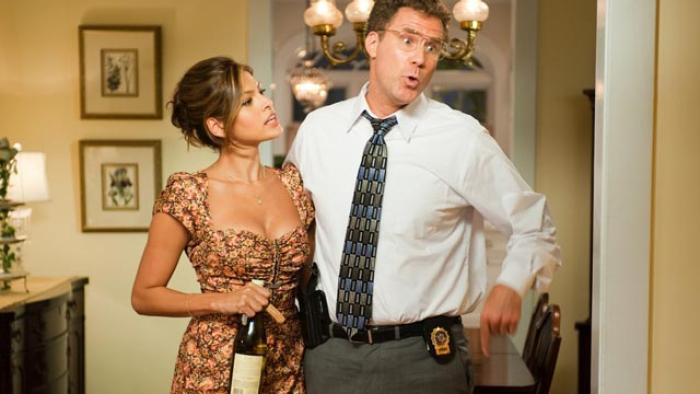
Plenty of violence, though much of it's played for laughs. Shoot-outs, explosions, fistfights, and car chases including traffic accidents. A car slams into a double-decker bus full of tourists, and others crash into vehicles and buildings. Characters are knocked unconscious and shot, presumed dead, but no injury detail is shown. Over-the-top threats include leaving a character "pissing blood out of your ass." Suicide is referenced, and a person stands on a window ledge and jumps to their death—the impact isn't shown, but the body is seen from a distance afterward. Another two people accidentally fall to their deaths. A dead body is seen under a bloodied sheet. A scene takes place at a wake following a character's death. A character shoots a gun in an office. Workplace bullying includes name-calling and practical jokes. Allen is emotionally abusive toward his wife, constantly putting down her cooking and appearance; it's played for laughs because she's portrayed by Eva Mendez, who's deemed more attractive than him. Brief reference to a serial rapist.
Did you know you can flag iffy content?
Adjust limits for Violence & Scariness in your kid's entertainment guide.
It's important to concentrate on what you have in common with other people, rather than focusing on differences. Respect others and work together. But the film also argues that people who do the hard work aren't always acknowledged or rewarded. Big corporations sometimes behave in underhanded ways, and it can feel impossible to take them on. Still, bad behavior can be held to account with enough courage and perseverance.
Positive Role Models
a little
Terry is ambitious and talented but held back by a mistake from his past. He tries to do the right thing but gets frustrated when he messes up. That frustration often comes out as anger and cruelty toward others, particularly his partner, Allen. Allen is serious and orderly. He doesn't read social situations well and is teased by other officers on the police force, but he sticks to his own way of doing things. His insecurities come out at home, where he's negative toward his wife because he fears she's too good for him. Both men want to prove themselves—and struggle to get it right—and their perseverance and good intentions gradually pay off. They also develop mutual respect and show loyalty and empathy toward each other.
Diverse Representations
Flagged for concern
Much of the humor is misogynistic. Women are rarely referenced without talking about their attractiveness. One man's wife is compared to office paperwork: "thick, ugly, and has Dawson's fingerprints all over it." Allen's wife is sexualized, and Terry stares at her breasts in a low-cut top. A central character makes fun of another for traits he considers effeminate: The way he pees "sounds feminine," and there are other sexist references for the sake of humor, like a car referred to as a "tampon on wheels." Police officers are called "ladies" as a put-down. A man says "she overreacted, she's a woman." A police captain refers to his son's bisexuality in a flippant, derogatory manner. A character says he learned dance moves at school to show other kids "how queer they are" and refers to musical kids as "fairies." Central characters are two White men, but there are Black male police officers in supporting roles, including Samuel L. Jackson and Dwayne Johnson—though their characters both die not long into the film.
Parents say the film is filled with relentless sexual innuendo and misogynistic humor that many reviewers found inappropriate for younger audiences, with several advising that it should have received a higher rating, possibly R. While some viewers appreciated the comedic chemistry between the lead actors, others noted it was overly crude and offensive, particularly towards women, making it unsuitable for children.
sexist humor
inappropriate content
crude jokes
parental warnings
mixed reviews
Summarized with AI
age 12+
Based on 85 kid reviews
Kids say this film is hilarious and showcases that the real heroes are often behind the scenes, although it is filled with crude humor, strong language, and several sexual references. While many find it entertaining, especially for older teens, some parents warn about its inappropriate content, suggesting it may not be suitable for younger audiences due to its raunchy jokes and excessive profanity.
hilarious comedy
crude humor
strong language
sexual references
suitable for teens
Summarized with AI
What's the Story?
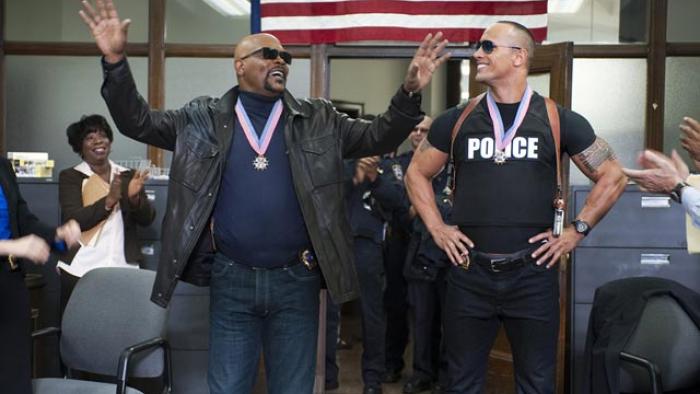
In THE OTHER GUYS, Allen Gamble (Will Ferrell) is an NYPD forensic accountant who'd rather file paperwork than be caught in the thick of action. His partner, Terry Hoitz (Mark Wahlberg), is a "peacock" who just wants to "fly," but he's been sidelined after erroneously shooting at baseball pro Derek Jeter. When the precinct loses its superstar cops (Samuel L. Jackson and Dwayne Johnson) in an oddball accident, a vacuum is created. Hoitz wants to be a hero, but Gamble doesn't want to, well, gamble. But a case involving a famous finance whiz (Steve Coogan) and purloined billions just may get Hoitz the moment in the sun he's seeking—and Gamble a taste of the thrills.
Let's get the basics out of the way: The plot of this chaotic action comedy wouldn't hold up in any court of law. That's annoying, yes, and at times even distracting; The Other Guys loses momentum in the end as it grapples with tying up the thin storyline's dangling ends (and there are many) and winds up giving the audience a tutorial on corporate fraud. Also, Anne Heche as a testy financier is woefully underused.
But all of that is a small-ish price to pay to watch Ferrell's singular and witty absurdity unspool on-screen. He milks every moment, no matter how it strains credulity and humor, and often pulls it off. He's paired perfectly with Wahlberg, whose air of danger is channeled into edgy hilarity. Some successes: A running bit about Gamble's seemingly unexplainable ability to lure attractive women like Eva Mendes (who plays his wife) and the bizarre fate that awaits a pair of celebrity cops who indulge in Bourne Identity-like action sequences, complete with explosions and gunfire and macho, canned repartee. Elsewhere, the humor can be crude: It's often misogynistic and overly sexual and revels in cruel put-downs. But there's no denying that the characters of Hoitz and Gamble are likable, and it's their chemistry that keeps things moving here.
Talk to Your Kids About ...
Families can talk about how The Other Guys compares to more typical buddy cop movies. How does the movie embrace the genre while also sending it up? Why do Hollywood and viewers love these types of odd-couple pairings?
Buddy cop movies typically feature two men in the lead roles. Why do you think that is? Can you think of films with two women in similar roles? How do they compare? What other genres are typically headlined by men? Do you think that's changing, or do you think it needs to change? Why is it important to challenge these kinds of clichés?
How are women portrayed in the movie? Do you think the movie is sexist? How do the male characters treat and talk about women?
MPAA explanation
:
crude and sexual content, language, violence and some drug material
Last updated
:
November 11, 2025
Did we miss something on diversity?
Research shows a connection between kids' healthy self-esteem and positive portrayals in media. That's why we've added a new "Diverse Representations" section to our reviews that will be rolling out on an ongoing basis. You can help us help kids by
Common Sense Media's unbiased ratings are created by expert reviewers and aren't influenced by the product's creators or by any of our funders, affiliates, or partners.