







Common Sense Media Review
Mediocre actioner is mostly OK, dude.
Parents Need to Know
Why Age 7+?
Any Positive Content?
Where to Watch
Videos and Photos


Teenage Mutant Ninja Turtles
Parent and Kid Reviews
Based on 9 parent reviews
Based on 12 kid reviews
Kids say the show is a beloved classic that combines engaging stories with memorable characters, despite the animation quality feeling dated to some. While some parents express concerns about the level of violence, most viewers appreciate the balance of action, humor, and character development, arguing that it remains suitable for all ages.
- great characters
- engaging stories
- vintage animation
- suitable for all ages
- concerns about violence
 Summarized with AI
What's the Story?
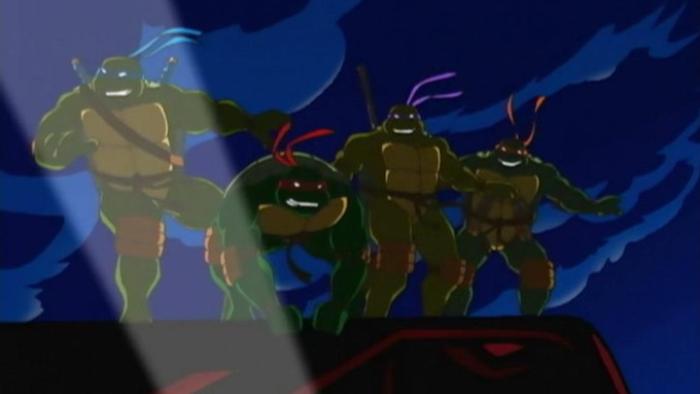
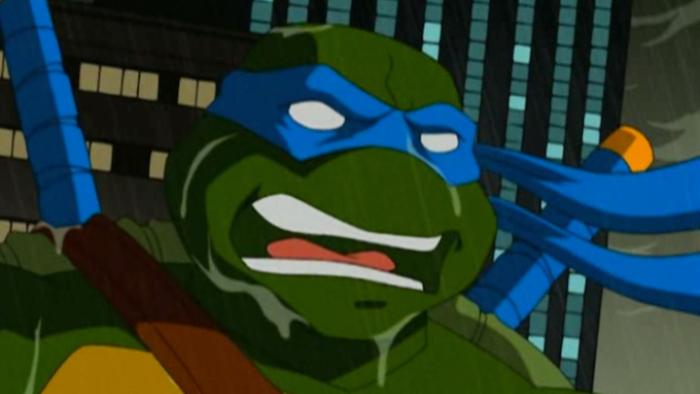
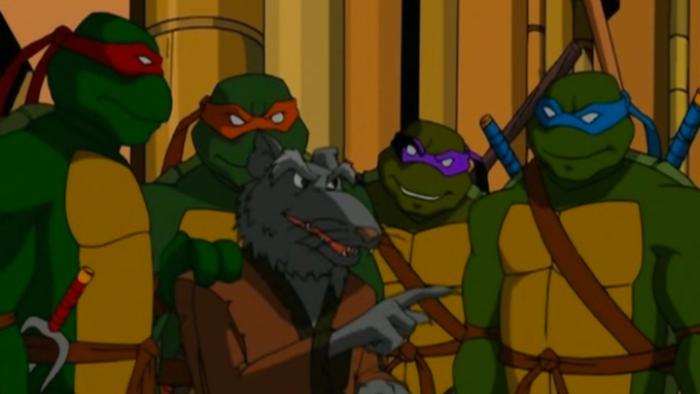
Over the years, the TEENAGE MUTANT NINJA TURTLES have had many incarnations. Their comic book origins led to their first animated series in 1987 and a few live-action movies in the early '90s. This show, which premiered in 2003, is closer to the original comic books. The animated series features the amphibious foursome -- Leonardo (voiced by Michael Sinterniklaas), Michelangelo (Wayne Grayson), Donatello (Sam Riegel), and Raphael (Frank Frankson).
Is It Any Good?
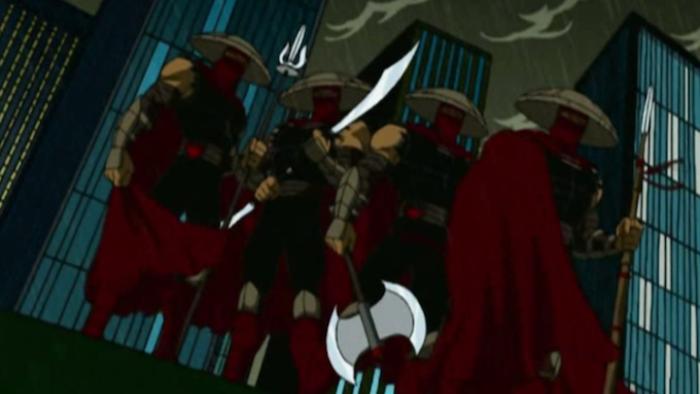
The animation makes the show less irritating than the live-action films, but only barely. The amphibious brothers still talk like southern California skater dudes (except one who, strangely, has a New York accent), and are still differentiated only by the color of their eye-masks, making them virtually indistinguishable to adult viewers. Taking its pacing and approach from Japanese anime (though not its animation style), TMNT is quite violent, filled with nunchucks, throwing stars, swords, and many, many fight scenes punctuated by flashes of blinding light and characters flying sideways through the air to land crippling kicks. Though the Turtles are ninjas, studying under a sensei named Splinter (a giant rat, natch), they're surprisingly materialistic and Western in their overall thinking.
The program's overall messages purport to be positive ones -- working as a team to overcome evil, for instance -- but the underlying themes aren't as encouraging. The brothers use violence to achieve their goals, unapologetically chopping, stabbing, maiming, and beating their enemies to within an inch of their lives; their friend Casey (Marc Thompson) has a cousin who shows up with a machine gun in order to steal an inheritance (to pay off his gambling debts!); one of the Turtle brothers is brooding and uncommunicative for no real reason; and so on. This is a show that will definitely appeal to younger viewers, but because of the violence, a preview would be a good idea.
Talk to Your Kids About ...
Families can talk about the importance of teamwork in accomplishing goals. Do the turtles work well together as a team?
Scientific-minded kids might enjoy figuring out how, exactly, these turtle creatures came to be -- what does it mean to mutate, and is it realistic to think such characters could exist?
On a completely different note, the characters, named for classic Italian artists, could provide a good starting point for a discussion of Renaissance art and history.
TV Details
- Premiere date : February 8, 2003
- Cast : Frank Frankson , Michael Sinterniklaas , Wayne Grayson
- Network : CW
- Genre : Kids' Animation
- Topics : Fantasy ( Magic ) , Adventures , Book Characters
- TV rating :
- Last updated : October 9, 2025
Did we miss something on diversity?
Research shows a connection between kids' healthy self-esteem and positive portrayals in media. That's why we've added a new "Diverse Representations" section to our reviews that will be rolling out on an ongoing basis. You can help us help kids by
Suggest an Update
Common Sense Media's unbiased ratings are created by expert reviewers and aren't influenced by the product's creators or by any of our funders, affiliates, or partners.
See how we rate