

Violence, language, sex in subversive superhero drama.
Parents Need to Know
Why Age 17+?
Any Positive Content?
Parents Need to Know
Parents need to know that The Boys is a dark comedy series about a world in which superheroes aren't actually the good guys. This means that the "heroes" in the show do terrible things including, but not limited to, sexual assault and acts of terrorism. As a result, the show has lots of mature content: sex, nudity, violence, gore, profanity, and substance use. Characters face complex moral and ethical issues, and a lot of the superheroes make selfish, manipulative, and cruel choices. Violence is intense and gory but often stylized, and sometimes played for dark humor. People are frequently killed, with blood spatter, and there's dismemberment, heads exploding, and organs on display. Characters die by suicide, there are references to rape and child abuse, and vomiting is shown. Characters have sex, oral sex, and group sex, and masturbate. There's partial female nudity (breasts and buttocks) and full-frontal male nudity. Frequent strong language includes "c--t," "f--k," "s--t," "p---y," and "d--k," plus "God," "Jesus," and "Christ" as exclamations. Characters drink, smoke, and use hard drugs and are seen heavily under the influence. Brands are frequently shown and mentioned, including Red Bull, Samsung, and Fresca (among many others), but the show uses them to satirize consumer culture.
Violence & Scariness
a lot
Focuses on the collateral damage done by superheroes trying to stop crime, so expect many action sequences that are gory compared to standard superhero stuff—though many are stylized and sometimes played for dark humor. References to rape and sexual assault. It's implied a woman is forced into oral sex, two men try to rape a woman but are stopped, and a man is filmed having sex without his permission. Mention of the physical and sexual abuse of minors. People are taken hostage at gunpoint, including kids, and are drugged and kidnapped. Fistfighting, stabbing, strangling, impaling, burning, eye gauging, electrocution, explosions, shooting. People have body parts melted and skin torn off, get crushed, have bones broken, are sliced with lasers, and throw up blood. Killings result in blood spatter, heads exploding, dismemberment, and bones and organs on display. A person has heroin forcibly injected into them and dies from an overdose. A woman dies during childbirth, with lots of blood, and a baby also dies. There's body horror when a person shrinks down and enters a man's penis, and a large penis is used to strangle a character. A plane is hijacked and crashes. People are threatened with guns and knives. Characters die by suicide. References to terrorism.
Did you know you can flag iffy content?
Adjust limits for Violence & Scariness in your kid's entertainment guide.
Many instances of sex, oral sex, group sex, and masturbation. There's partial female nudity (breasts and buttocks) and full-frontal male nudity. A large penis is used to attack and strangle someone. Clips from pornographic movies are shown. A character has sex with a sex doll, and other sex toys are mentioned. There's an instance of bestiality (played for laughs) when an octopus performs oral sex on a human character. Sexual assault (see Violence & Scariness section for details).
Did you know you can flag iffy content?
Adjust limits for Sex, Romance & Nudity in your kid's entertainment guide.
Strong language is constant and extreme: "f--k," "f---ing," "motherf----r," "c--t," "c--k," "s--t," "bitch," "p---y," "piss," "d--k," "t-ts," "ass," "a--hole," "balls," "goddamn," "damn," "hell," "bloody," and "cum guzzler." "God," "Jesus," and "Christ" are used as exclamations. A White character calls a Japanese character a "f---ing yellow bastard." A Black character uses the "N" word.
Did you know you can flag iffy content?
Adjust limits for Language in your kid's entertainment guide.
Characters smoke (cigarettes and cigars), drink and get drunk, and use hard drugs (which are snorted, smoked, and injected). Performance-enhancing drugs are also used. A gas knocks a character unconscious. A person dies from a heroin overdose. Mention of drug trafficking. Reference to cocaine, ketamine, pot, Xanax, and Benzedrine.
Did you know you can flag iffy content?
Adjust limits for Drinking, Drugs & Smoking in your kid's entertainment guide.
Characters of color within The Boys and The Seven include A-Train (played by African American actor Jessie T. Usher), Mother's Milk (Cuban American Laz Alonso), Kimiko Miyashiro (Japanese American Karen Fukuhara), and Black Noir (Trinidadian-Jamaican Canadian Nathan Mitchell). The groups are gender-balanced, and women are portrayed as strong and resourceful—but they're sometimes put in positions of abuse. LGBTQ+ characters include Frenchie and Queen Maeve, who are both bisexual and have various relationships. The show highlights racism in a few episodes, including a White character saying to a group of Black characters "all lives matter," and "supe lives matter," and a White character calling a Japanese character a "f---ing yellow bastard."
Did we miss something on diversity?
.
Positive Messages
a little
Integrity, perseverance, and teamwork are strong ways to fight back against immoral behavior. But celebrity culture often encourages hero worship and lets people act unethically. Large corporations frequently go unchecked and become corrupt. People often behave in narcissistic, selfish, and cruel ways when they're given the opportunity.
Positive Role Models
a little
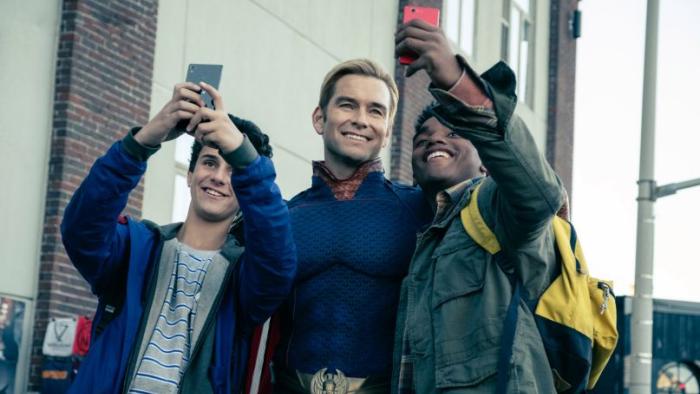
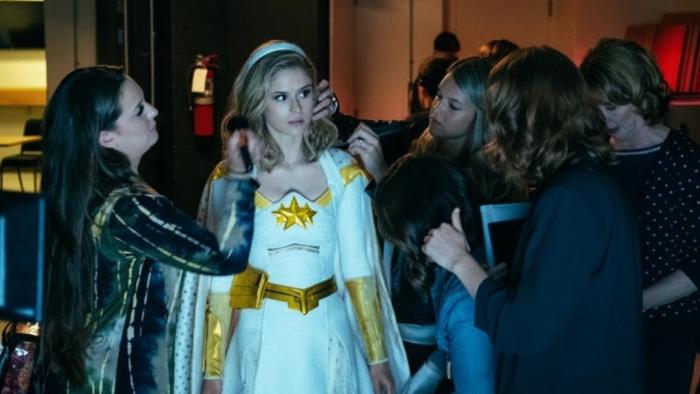
Starlight has a strong moral compass and shows integrity and empathy in fighting for what's right, rather than chasing fame. Hughie also proves his humanity, despite experiencing a trauma at the hands of The Seven. He's resilient and stands his ground in questioning methods he doesn't agree with. Most of the other "supes" and central characters engage in unethical, selfish, and cruel behavior—some more than others. Homelander in particular is narcissistic, takes pleasure in other's pain, and shows little regard for human life.
Parents say that while the show offers thrilling content and a unique take on heroes, it is filled with extreme violence, graphic sexual content, and strong language, making it inappropriate for young viewers. Some reviewers remarked on its entertainment value and intriguing themes of consumerism and fame in the superhero genre but strongly advised against letting children under 14 or 16 watch it without supervision.
mature content
inappropriate for kids
strong language
extreme violence
unique themes
Summarized with AI
age 15+
Based on 96 kid reviews
Kids say this show is a darkly comedic take on the superhero genre with a heavy emphasis on graphic violence, explicit sexual content, and strong language, making it unsuitable for younger viewers. While some praise its complex characters and engaging storylines, many warn that the extreme gore and mature themes could be disturbing and inappropriate for anyone under the age of 15 or 16.
graphic violence
explicit content
strong language
unsuitable for children
complex characters
Summarized with AI
What's the Story?
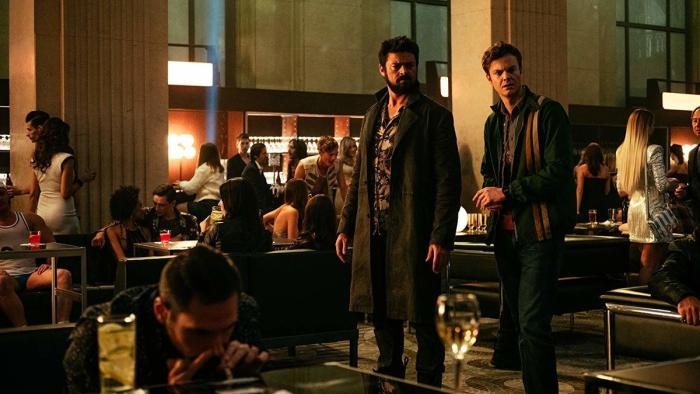
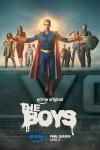
In the world of THE BOYS, superheroes lead celebrity-style lives, complete with corporate sponsorship and movie franchises of their own. At the top of their game are high-profile supergroup The Seven, whose reputations are closely managed by Vought International. They're worshipped the world over, but what the public doesn't know is that behind the scenes their behavior is far from heroic. From remorseless mass murder to sexual assault, the likes of Homelander (Antony Starr), The Deep (Chace Crawford), and A-Train (Jessie T. Usher) aren't the heroes they say they are. But there are a few people out there who know their secret. Led by The Butcher (Karl Urban), they come together to form vigilante group The Boys, and dedicate their lives to exposing the truth and fighting The Seven's violence and corruption.
Adapted from a popular comic book series, this irreverent show flips the concept of superheroes on its head and has proven a hit with critics and audiences alike. The Boys asks the question: If superheroes were luminaries who lived outside of society's typical behavioral norms, wouldn't that inevitably lead to exploiting their power for something other than the greater good? It's the kind of exploration that dates back to the 1980s and '90s, when comic book writers like Alan Moore and Frank Miller began to use their work to investigate some of the moral questions that the very idea of superheroes might bring up. It's only fitting that, many years into the MCU era, superhero movies and TV series would begin to ask these types of questions about the relationship between power and corruption. Garth Ennis's comic The Boys may not be as famous as Moore's Watchmen, but the series covers similar thematic ground by effectively pulling the rug out from under everything we've come to expect from superhero shows in spectacularly entertaining, if frequently shocking, fashion.
Talk to Your Kids About ...
Families can talk about superheroes and how The Boys turns the typical notion of a superhero on its head. What do we generally expect from superheroes and their behavior? How do the superheroes on The Boys behave differently?
How does The Boys blur the line between "good guys" and "bad guys"? What does it say about appearances and reputations compared to actual behavior behind the scenes? What do you think the show is saying about celebrity culture and power?
Do you consider any of the characters in the series role models? What are some of the positive character strengths of people like Starlight and Hughie? What darker sides to themselves do they wrestle with?
Research shows a connection between kids' healthy self-esteem and positive portrayals in media. That's why we've added a new "Diverse Representations" section to our reviews that will be rolling out on an ongoing basis. You can help us help kids by
Common Sense Media's unbiased ratings are created by expert reviewers and aren't influenced by the product's creators or by any of our funders, affiliates, or partners.