






Common Sense Media Review
 By Kari Croop
,
based on child development research. How do we rate?
By Kari Croop
,
based on child development research. How do we rate?
Dystopian drama explores the business of baby-making.
Parents Need to Know
Why Age 15+?
Any Positive Content?
Where to Watch
Videos and Photos



The Lottery


Parent and Kid Reviews
What's the Story?
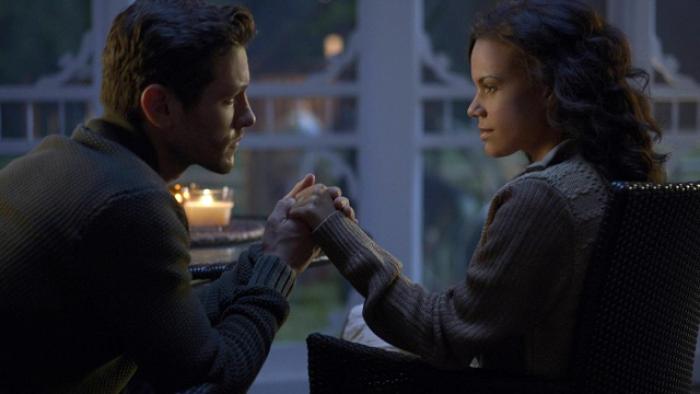
Six years after a worldwide infertility epidemic slows the global birth rate to zero, Dr. Alison Lennon (Marley Shelton) and her team of scientists have created 100 viable human embryos that are ready for implantation. To choose the women who will carry them to term, the U.S. government stages a lottery that's open to anyone. But just as THE LOTTERY offers much-needed hope, it also brings danger to those closely involved.
Is It Any Good?
Given the rising number of real-world families who are struggling to conceive, The Lottery's premise is certainly topical and could appeal to viewers -- particularly women -- who know the pain of infertility firsthand. But, in the end, this subpar Lifetime series doesn't measure up to its own promise thanks to weak production values, heavy-handed dialogue, and two-dimensional characters who don't feel fully relatable -- or believable.
One of the more interesting aspects of The Lottery is the social politics of a world in which women's fertility has become a matter of national security, resulting in a "Department of Humanity," a federal "Fertility Commission," and serious penalties for "fertility crimes." In many ways, women seem to have more power, holding key positions in government and science and taking charge of their reproductive prospects. Yet, when the dream of conceiving finally becomes a reality, their wombs are subject to the decisions of a male-dominant government.
Talk to Your Kids About ...
Families can talk about infertility and the real-world trends that sparked The Lottery's premise. How far-fetched is the idea of a global fertility crisis? How accurate is the series' portrayal of the way society -- and the government -- would react if it actually happened?
What are the legal and ethical issues involved with the lottery in the series, and how does the show explore them? Should the original donors have the right to carry their own eggs, for example?
Does the fact that women in The Lottery have stopped bearing children change the series' social dynamic when it comes to men, women, power, and gender? In what ways do childbearing and motherhood affect women's present-day options, both personally and professionally?
TV Details
- Premiere date : July 20, 2014
- Cast : Marley Shelton , Athena Karkanis , Michael Graziadei
- Network : Lifetime
- Genre : Drama
- TV rating :
- Last updated : October 22, 2022
Did we miss something on diversity?
Research shows a connection between kids' healthy self-esteem and positive portrayals in media. That's why we've added a new "Diverse Representations" section to our reviews that will be rolling out on an ongoing basis. You can help us help kids by
Suggest an Update
Common Sense Media's unbiased ratings are created by expert reviewers and aren't influenced by the product's creators or by any of our funders, affiliates, or partners.
See how we rate