







Common Sense Media Review
 By Betsy Bozdech
,
based on child development research. How do we rate?
By Betsy Bozdech
,
based on child development research. How do we rate?
Raising kids (and more) in the 'burbs; drugs, sex, swearing.
Parents Need to Know
Why Age 17+?
Any Positive Content?
Where to Watch
Videos and Photos


Weeds
Parent and Kid Reviews
Based on 8 parent reviews
Based on 14 kid reviews
Kids say that this television series, centered on a housewife who turns to drug dealing after her husband's death, presents a mix of humor and serious themes, albeit with a strong emphasis on graphic content, including explicit nudity and heavy profanity. While some viewers appreciate the entertainment value and deeper social commentary, many emphasize that it’s not suitable for younger audiences due to its mature themes.
- adult themes
- graphic content
- viewer discretion
- humor and drama
 Summarized with AI
What's the Story?
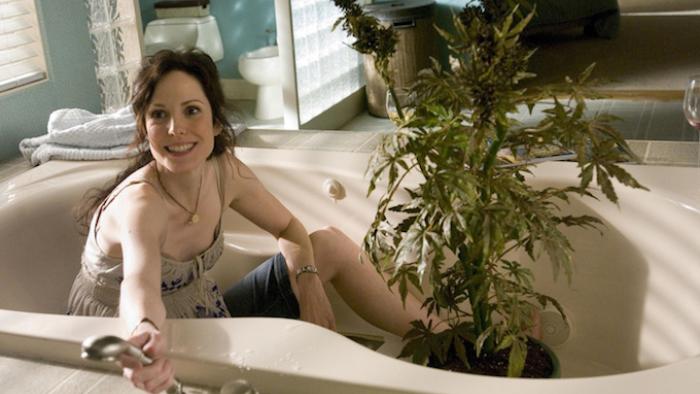
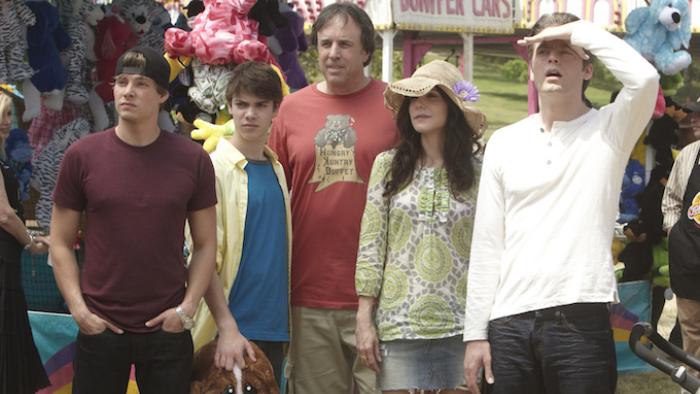
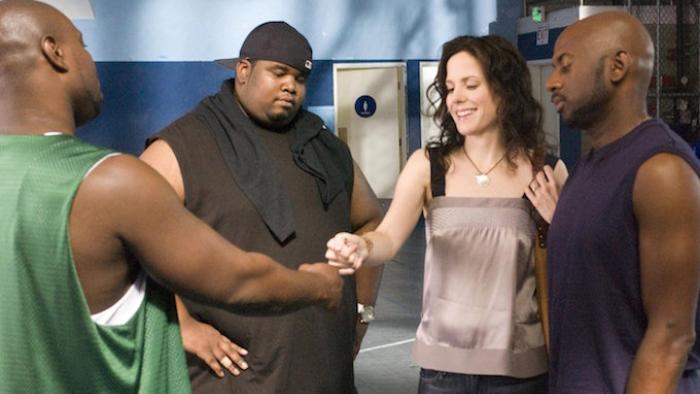
After being widowed abruptly, WEEDS' Nancy Botwin (Mary-Louise Parker) is left with few options for supporting her two sons, teenage Silas (Hunter Parrish) and younger brother Shane (Alexander Gould). She needs serious cash flow to maintain their lifestyle in their ritzy, upper-middle-class gated community, so she starts selling pot. Nancy's friends and family members aren't exactly candidates for the Role Model of the Year Award, either. Her friend Celia (Elizabeth Perkins) routinely fat-shames her daughter, Isabelle (Allie Grant), going so far as to secretly swap the girl's chocolate stash with chocolate-flavored laxatives. Nancy's brother-in-law, Andy (Justin Kirk), is gleefully manipulative and selfish, whether he's exchanging X-rated instant messages with his nephew's girlfriend (while pretending to be said nephew) or lying to get into rabbinical school so he can avoid being drafted. And Nancy's accountant, city council member Doug Wilson (Kevin Nealon), is one of her best clients.
Is It Any Good?
This engaging dramedy isn't the first TV show to expose the dark side of life in the suburbs, and it almost certainly won't be the last. But it's probably safe to say that Weeds is the only series that goes behind the facade in such a large cloud of marijuana smoke. Of course, just about everyone has some good mixed in with the bad. The trauma of her husband's death has left Nancy very much at sea, and all she can do is get through one day at a time. She cares deeply about her sons and honestly wants what's best for them, even if her very questionable parenting choices don't always make that clear. And Andy really likes being part of a family -- he just has trouble understanding that he's supposed to be one of the grown-ups. Even Celia has a softer side, though she doesn't show it often.
Thanks to complex, interesting characters like these and some very sharp writing, Weeds can be both laugh-out-loud funny and poignantly dramatic. But it's definitely meant for adults. The rampant drug use, racist stereotypes, and statutory rape -- all mined for dark comedy -- are only a few of the show's red flags. Most of the characters curse a blue streak, teens drink and do drugs, and almost all of the show's Black and Latino characters are drug dealers and gangsters. One thing's for sure -- life in Weeds may be complicated, smoky, and sometimes even shocking, but it's certainly never boring.
Talk to Your Kids About ...
Families can talk about how far they'd go to support each other in times of crisis. Are the depictions in Weeds realistic? Was becoming a drug dealer Nancy's only option to provide for her kids?
Part of the reason Nancy originally got involved in the drug business was to maintain her family's affluent, gated-community lifestyle -- is that a reflection of society's values? What points is the show making about the McMansion lifestyle?
Do the people on the show seem like a realistic reflection of upper-middle-class suburban life? Are any of the characters role models? Why, or why not?
What stereotypes did you notice while watching Weeds? Do the writers successfully subvert them, or does the show perpetuate damaging portrayals of people who are seldom shown in a different way on screen?
How has the United States'/the world's relationship with marijuana changed since the show debuted? How do you think it might be different if it got rebooted today?
TV Details
- Premiere date : August 7, 2005
- Cast : Mary-Louise Parker , Hunter Parrish , Justin Kirk , Alexander Gould , Elizabeth Perkins , Kevin Nealon
- Network : Showtime
- Genre : Comedy
- Topics : Family Stories ( Siblings )
- TV rating :
- Awards : Golden Globe - Golden Globe Award Winner , NAACP Image Award - NAACP Image Award Nominee
- Last updated : October 9, 2025
Did we miss something on diversity?
Research shows a connection between kids' healthy self-esteem and positive portrayals in media. That's why we've added a new "Diverse Representations" section to our reviews that will be rolling out on an ongoing basis. You can help us help kids by
Suggest an Update
Common Sense Media's unbiased ratings are created by expert reviewers and aren't influenced by the product's creators or by any of our funders, affiliates, or partners.
See how we rate