







Common Sense Media Review
 By Sandie Angulo Chen
,
based on child development research. How do we rate?
By Sandie Angulo Chen
,
based on child development research. How do we rate?
Wild West-themed final installment is fine for older tweens.
Parents Need to Know
Why Age 9+?
Any Positive Content?
Where to Watch
Videos and Photos


Back to the Future Part III
Parent and Kid Reviews
Based on 18 parent reviews
Based on 58 kid reviews
Kids say this movie offers a unique blend of western and sci-fi themes, providing a fun, albeit less thrilling, conclusion to the trilogy. While some viewers appreciate the character development and humor, many also note a drop in quality compared to the first two films, citing less originality and fewer laughs.
- western themes
- character development
- less thrilling
- drop in quality
- mixed reviews
 Summarized with AI
What's the Story?
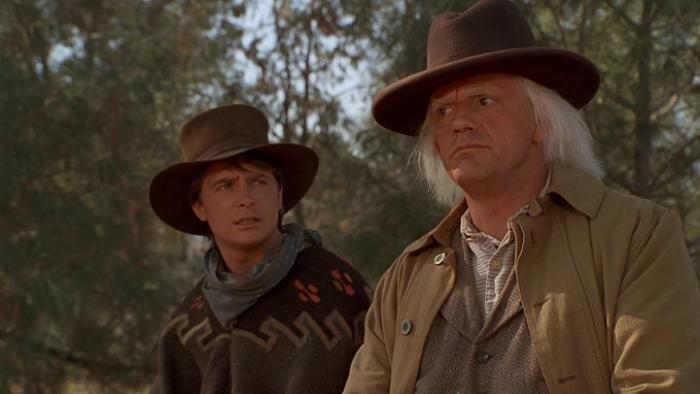
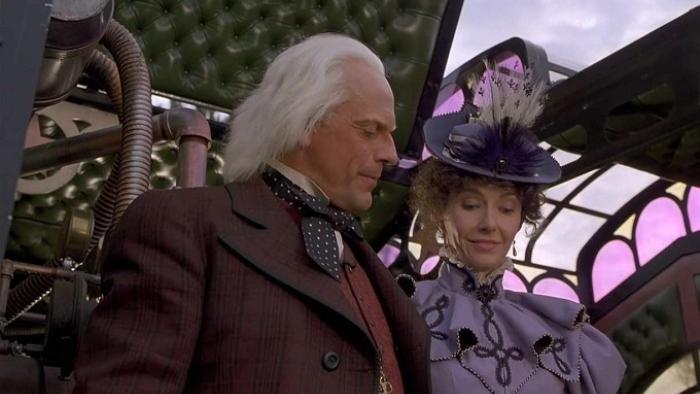
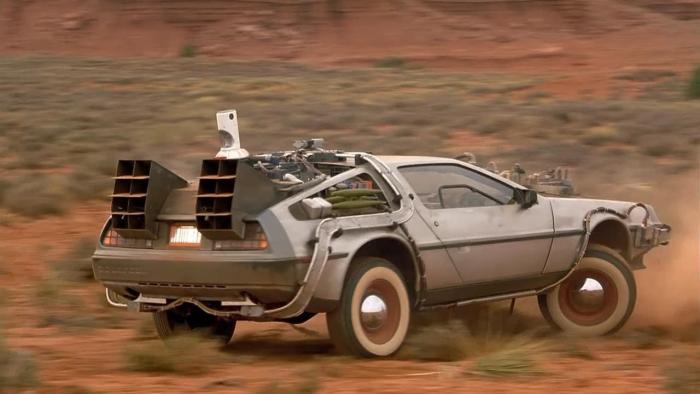
Once again picking up right where Back to the Future Part II left off, Marty McFly (Michael J. Fox) gets a telegram from Doc Brown (Christopher Lloyd) explaining that he's stuck in the year 1885, but instructing him not to attempt time travel again. Marty discovers Doc's tombstone, and decides to disregard Doc's orders. Marty dresses up in a cowboy costume and slips into the DeLorean again, landing in the 19th century. He runs into his Irish ancestors (played by Fox himself, and Lea Thompson), and the town outlaw "Mad Dog" Tannen (Thomas F. Wilson), who is Biff's ancestor. Marty finally reunites with Doc, and the two must find a way to refuel the time machine before Mad Dog kills Doc. Complicating matters is the arrival of open-minded schoolteacher Clara Clayton (Mary Steenburgen), who winds up falling for Doc, and forcing Doc to rethink his stance on not changing the past.
Is It Any Good?
Somehow Robert Zemeckis, Fox, and Lloyd make the back-in-time gimmick work, and it's a pleasant surprise. After the mildly disappointing Part II, it would seem that a Wild West-themed threequel would flounder under the weight of too much time-travel confusion and overall Marty and Doc fatigue. The introduction of a love interest for Lloyd may not seem interesting to kid viewers, but as an adult viewing it through grown-up eyes, that subplot with Steenburgen is so much more appreciated. Doc was such a hermit outside of his connection with Marty, that it was a relief to see he could still have a chance at love -- especially with someone as patient and intelligent as Clara. So for the romantics at home, this installment is for you.
Humor-wise, there are plenty of in-jokes for those who've seen the first two films, like Marty's touchiness at being called "yellow." As Marty's rival, Wilson gets to unleash a whole new set of insults as he bullies everyone around him. A heavily accented Thompson returns as Marty's relative, and Fox does double duty again as his own great-great-great grandfather, but the McFly kin has less to do in this one than in the first two; the final film really belongs to Lloyd. One of the funniest moments is the saloon scene where Marty does the moonwalk when he's being shot at; it may take some explaining if your kids don't understand the significance of Michael J. Fox's signature dance move, but it's funny even two decades later. The entire trilogy is still a must-see for parents who want to share a little bit of their own youth with the next generation, even if the children won't laugh quite as hard as you do at some parts.
Talk to Your Kids About ...
Families can talk about how Marty and Doc remain loyal friends in all three movies. How do they help each other in this installment? What challenges change from film to film, and what stays the same?
How did romance change Doc's ideas about time travel? Why does he decide that he's going to stay behind in the "past"?
What does Marty learn about not letting taunts like "are you chicken?" get to him? How can you apply that lesson in your own life?
If you've seen the first two films, which of the three is your favorite? Why?
Movie Details
- In theaters : January 1, 1990
- On DVD or streaming : September 12, 1991
- Cast : Christopher Lloyd , Lea Thompson , Mary Steenburgen , Michael J. Fox
- Director : Robert Zemeckis
- Studio : Universal Pictures
- Genre : Science Fiction
- Topics : Adventures
- Run time : 118 minutes
- MPAA rating :
- Last updated : October 22, 2025
Did we miss something on diversity?
Research shows a connection between kids' healthy self-esteem and positive portrayals in media. That's why we've added a new "Diverse Representations" section to our reviews that will be rolling out on an ongoing basis. You can help us help kids by
Suggest an Update
Common Sense Media's unbiased ratings are created by expert reviewers and aren't influenced by the product's creators or by any of our funders, affiliates, or partners.
See how we rate