







Common Sense Media Review
 By Joyce Slaton
,
based on child development research. How do we rate?
By Joyce Slaton
,
based on child development research. How do we rate?
Violence, mature concepts in faith-based animated adventure.
Parents Need to Know
Why Age 8+?
Any Positive Content?
Where to Watch
Videos and Photos


The Pilgrim's Progress

Parent and Kid Reviews
Based on 21 parent reviews
Parents say the 1986 film offers a strong and powerful message about the Christian journey, impressively animated and capable of engaging children, though some scenes may be intense for younger viewers. While many appreciate its faith-based themes and ability to prompt family discussions, criticisms arise regarding its animation quality and deviations from the book's core messages, particularly concerning sin and repentance.
- powerful message
- strong animation
- family discussions
- intense scenes
- deviations from book
 Summarized with AI
Based on 10 kid reviews
Kids say this movie offers a powerful message suitable for family viewing, particularly highlighting the Christian journey and its challenges. However, some viewers noted it contains a frightening scene and a controversial part that may not be appropriate for children, leading to mixed feelings about the overall presentation and adaptation from the original book.
- great message
- family entertainment
- scary moments
- controversial scenes
- mixed adaptation
- inspiring themes
Summarized with AI
What's the Story?
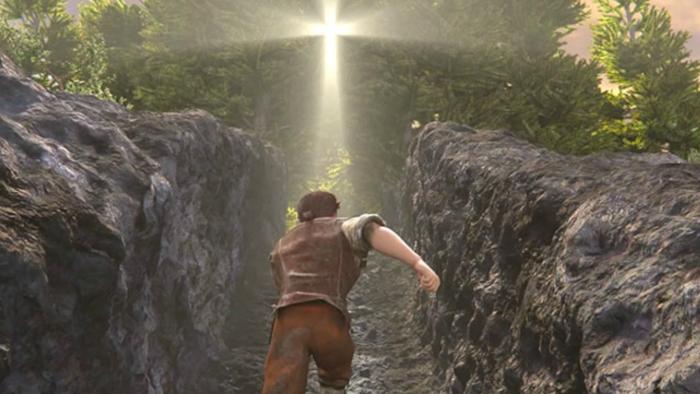
Based on John Bunyan's same-named 17th-century novel, THE PILGRIM'S PROGRESS centers on Christian Pilgrim (voiced by Ben Price). Christian makes an allegorical journey from his hometown, the "City of Destruction" (in other words, the human world), to the "Celestial City" (i.e., Heaven) after he chances upon a particular book that sounds a lot like the Bible. Leaving his family behind, Christian passes through many terrible obstacles and meets lots of frightening individuals, all intent on stopping him from reaching his final destination. Will he find the place he seeks, a land of utter contentment and happiness where he can experience the "fullness of joy in the presence of the king"? It's going to take 108 minutes to find out. (Spoiler-potential note for parents: The second half of the 1678 book records Christian's family's journey to the celestial kingdom, but this movie ends when he finds his destination.)
Is It Any Good?
Transforming 17th-century literature into modern animated family fare isn't easy, so viewers' opinions of this movie are likely to vary according to how much they know and enjoy Bunyan's book. Those who've read the Christian classic are rather thin on the ground these days, but plenty know at least the story's outline. Children, who are most likely to have encountered The Pilgrim's Progress only in Laura Ingalls Wilder's Little House series (in which the book was one of the very few permitted for Sunday reading, along with the Bible) may need help with the main concept: that this is a metaphorical hero's journey, in which everything real and literal is actually a stand-in for something else. Without that understanding, the film basically follows a guy on a long walk who stops to have lots of hard-to-follow conversations -- not a particularly juicy setup for a movie, particularly one aiming to be a sort of Christian adventure story.
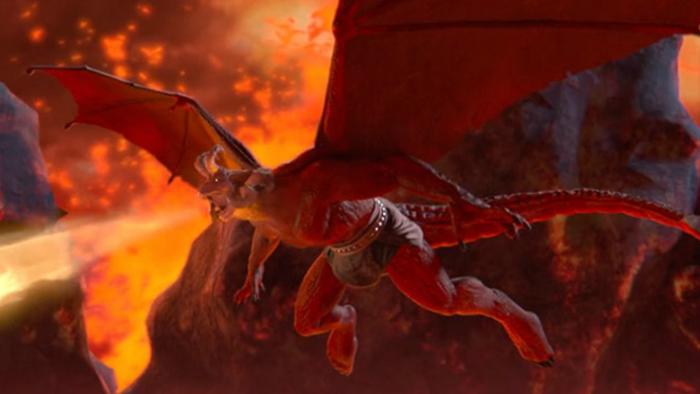
The movie works best when Christian is facing down some of the strange characters he meets on his journey: a menacing stone mountain that stands for the Rule of Law; a pair of bickering giants intent on convincing Christian and traveling companion Hopeful to kill themselves; the dragon-like Apollyon, which morphs between a winged creature and the honcho of Christian's hometown. Most of the movie's straight-on action/battle scenes involve the Apollyon, including one conflict that takes up a full five minutes. At least during these moments, parents won't have to whisper explanations of metaphorical biblical concepts as the "straight and narrow path" or the "place of deliverance." Yet when things do get livelier in this movie, they're often too mature for little kids, as when one of Christian's friends is summarily executed. Kids may also be confused by Christian abandoning his family early in the movie ("You mean this dad up and left because of something he read in a book? And that's a good thing?"). (Spoiler alert!) At the movie's end, Christiana learns that her husband is still alive, which the movie presents as a joyous moment -- yet she's still stuck alone in a tiny, doomed village with presumably no way to support her family. Mr. Bunyan, is a rewrite possible?
Talk to Your Kids About ...
Families can talk about the concept of a hero's journey. What does that mean? What elements are necessary to turn a trip into such a journey? What type of people usually go on such journeys in movies? What are they seeking? Does it matter to the story?
Viewers may notice that characters tend to have nontraditional names in The Pilgrim's Progress -- as they did in the original book. What do you think the author was trying to convey by choosing names like Despair, Hopeful, and Obstinate?
What did you notice about representation in this movie? How are villains drawn/portrayed? Heroes? What does the comparison between the two suggest or imply?
Do you think this movie is only meant for viewers of faith? Why or why not?
Movie Details
- In theaters : April 18, 2019
- On DVD or streaming : October 1, 2019
- Cast : John Rhys-Davies , Ben Price , Kristyn Getty
- Director : Robert Fernandez
- Studio : Vision Video
- Genre : Family and Kids
- Topics : Adventures
- Run time : 108 minutes
- MPAA rating :
- MPAA explanation : mild thematic elements, action violence, and scary images
- Last updated : October 8, 2026
Did we miss something on diversity?
Research shows a connection between kids' healthy self-esteem and positive portrayals in media. That's why we've added a new "Diverse Representations" section to our reviews that will be rolling out on an ongoing basis. You can help us help kids by
Suggest an Update
Common Sense Media's unbiased ratings are created by expert reviewers and aren't influenced by the product's creators or by any of our funders, affiliates, or partners.
See how we rate