







Common Sense Media Review
 By Tara McNamara
,
based on child development research. How do we rate?
By Tara McNamara
,
based on child development research. How do we rate?
Bourdain biopic is a stew of sex, drugs, and swearing.
Parents Need to Know
Why Age 15+?
Any Positive Content?
Where to Watch
Videos and Photos



Tony
What's the Story?
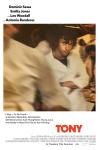
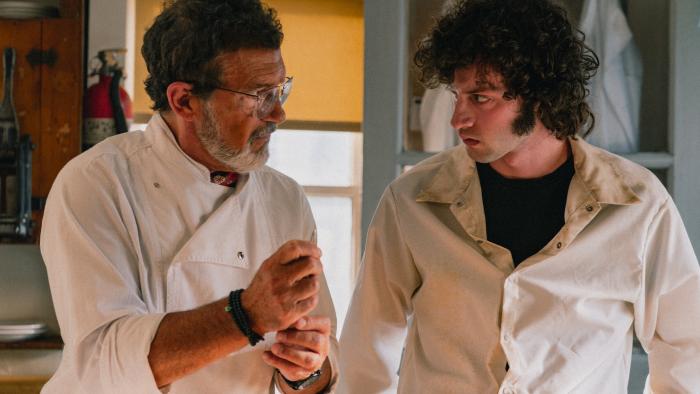
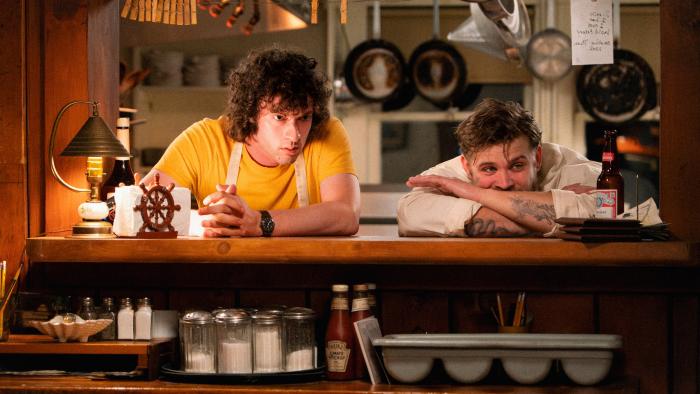
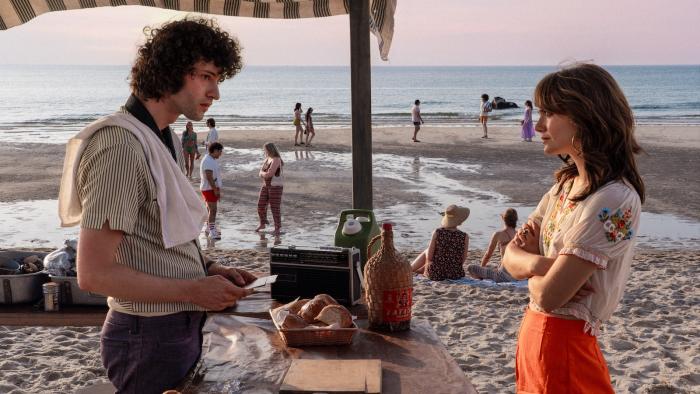
It's the summer of 1975, and—after not receiving a writing fellowship he'd already boasted about winning—college student TONY Bourdain (Dominic Sessa) slips out of his family's home in the middle of the night to follow his crush, Nancy (Emilia Jones), to Provincetown, Massachusetts. Pretending to be the novelist he aspires to be, Tony pursues Nancy while secretly working as a dishwasher at a local seafood joint, where he finds community with the rest of the kitchen staff, particularly breezy, cool, reckless rogue Sal (Leo Woodall). A counter personality in Tony's life is Chef (Antonio Banderas), a religious Portuguese restaurant owner who takes Tony in and becomes his mentor, influencing him with his kindness, hospitality, and a love of service. Ultimately, the experience will change Tony's point of view—and his life—forever. The film is loosely adapted from a chapter of Anthony Bourdain's autobiography Kitchen Confidential.
Is It Any Good?
Filmmaker Matt Johnson plays fast and loose with the details of the celebrity chef's story to create this sparkling yet sobering drama. But in doing so, his Tony loses Bourdain's most defining trait: charm. Johnson depicts Bourdain as a somewhat sheltered young man who's bursting to be respected as an adult. It's through his yearning eyes that viewers see the behavior of the rogues he encounters in the galley as aspirationally cool. Working as a dishwasher, Tony absorbs the backroom camaraderie of the male kitchen staff, who tease one another about going for girls who are barely above the age of consent, call one another names ("fat f--k," for instance), pretend to masturbate with a crab claw, and inhale cocaine as heedlessly as chewing gum. Tony is wowed by slightly older co-worker Sal, a ladies' man who literally takes a notch out of every door frame for each of his sexual conquests, filling a jar with them over the summer.
What Tony doesn't initially recognize—although viewers should, based on our first meeting with Sal—is that Sal is the devil. And Chef, who takes in Tony after finding him dead drunk in the street, gives him a job, a place to sleep, and structure while he mentors him, is an angel. Just like a 1930s cartoon, young Tony is flanked by both of them: Who will he listen to, who will he follow? For the sake of the film, it seems to go the way most parents would hope. But for the sake of real life, anyone who knows the basics of Bourdain's story knows it wasn't that simple (he came to fame through his shocking firsthand account of what happens in the back of the house during dinner and had a long struggle with drug dependency). Johnson has created a drama that's captivating and even beautiful, and teens may take away the message that you can be a colossal screw-up and still go on to greatness. But if you're looking to understand the real Bourdain, you won't; the major plot points and behavioral motivations in Tony are artificially conceived, and you actually might walk away thinking less of him.
Talk to Your Kids About ...
Families can talk about whether drug use, drinking, and smoking are glamorized in Tony. How is it implied that Tony thinks substance use is cool? How did these habits affect Bourdain in real life?
Tony is inspired by a couple of chapters of Bourdain's autobiography, but many of the plot points are fictional, and the filmmaker has said his goal was to portray the emotional truth. What do you think of this approach when dealing with a real person's life story? Does it matter more or less if the subject is no longer living?
How did the way the men talk to each other in the movie make you feel? Does the movie make it seem that disrespectful teasing and insults are tools of communication or bonding for men—and is that true?
What were attitudes, culture, parenting, and life like in 1975? How does that compare to now? What do you think it might have been like to be a young adult in that era?
What does Tony suggest about choosing our role models? Do you consider Tony one? Why, or why not?
Movie Details
- In theaters : August 7, 2026
- Cast : Dominic Sessa , Antonio Banderas , Emilia Jones , Leo Woodall
- Director : Matt Johnson
- Studio : A24
- Genre : Drama
- Topics : Cooking
- Run time : 106 minutes
- MPAA rating :
- MPAA explanation : pervasive language, drug use, and sexual content/nudity
- Last updated : August 22, 2026
Did we miss something on diversity?
Research shows a connection between kids' healthy self-esteem and positive portrayals in media. That's why we've added a new "Diverse Representations" section to our reviews that will be rolling out on an ongoing basis. You can help us help kids by
Suggest an Update
Common Sense Media's unbiased ratings are created by expert reviewers and aren't influenced by the product's creators or by any of our funders, affiliates, or partners.
See how we rate