1980s comedy pokes fun at the rich; has sexism, stereotypes.
Parents Need to Know
Why Age 15+?
Any Positive Content?
Parents Need to Know
Parents need to know that Trading Places is a 1980s comedy starring Eddie Murphy and Dan Aykroyd. It has explicit female nudity, very coarse language ("f--k", "s--t," "goddamn," and more), and plenty of drug and alcohol use and references, including PCP, cocaine, and quaaludes. Characters binge-drink and smoke pot, cigarettes, and cigars. Sexism, homophobia, ableism, and stereotypes make up much of the film's humor, as does attempted suicide and gun usage (no injuries are shown except for one character who collapses, clutching his heart). Expect to see blackface, offensive impressions of different cultures (African, Native American, Chinese, Jamaican, etc.), and multiple scenes of men sexually harassing women -- grabbing a stranger's breasts, for example -- depicted as appropriate courtship behavior. Greed drives many of the characters, but the film does show some of the ill effects of that motivation. Characters work together in order to topple the main villains.
To stay in the loop on more movies like this, you can sign up for weekly Family Movie Night emails
.
Drinking, Drugs & Smoking
a lot
Characters drink whiskey and smoke cigarettes and cigars. Main character hides in a bathroom to smoke a joint. Drugs are planted on various characters, including a bag of PCP, Valium, quaaludes, and marijuana (all briefly visible). A character dressed as Santa gets stumbling drunk and crashes a party.
Did you know you can flag iffy content?
Adjust limits for Drinking, Drugs & Smoking in your kid's entertainment guide.
Multiple instances of "f--k," "motherf----r," "s--t," "a--hole," "goddamn," "piss." White villains use the terms "Negro" and the "N" word. Other insults include "bitch" "f--gots," "lunatic," "psychopath," "whore," and "scumbag," and "p---y" to mean a weak person. A person says they are "horny."
Did you know you can flag iffy content?
Adjust limits for Language in your kid's entertainment guide.
A theater advertises "XXX NUDE SEX SHOW" (text only, no images). One central character is a sex worker. Characters undress to their underwear (bra and panties, boxers with shirt and socks on) and kiss, fading to black. Naked man takes a bath (no genitals visible). Multiple topless women. A person in a gorilla costume is humped by a real gorilla (implied rape).
Did you know you can flag iffy content?
Adjust limits for Sex, Romance & Nudity in your kid's entertainment guide.
Various characters use guns (including a shotgun) to threaten, but no injuries take place. Humor is often based on violence: Police officers chase a main character who's Black and point several revolvers at his face; a character kisses another without their consent; a main character buys a gun at a pawn shop and tries to kill himself (the chamber clicks empty, but when he throws it off-screen, a gunshot sounds). Also played for laughs are scenes of someone choking another (no injuries), a person in a gorilla costume being humped by a gorilla (implied rape), and someone collapsing, clutching his heart, and ending up wheeled out of the building by medics.
Did you know you can flag iffy content?
Adjust limits for Violence & Scariness in your kid's entertainment guide.
Philadelphia Eagles and Budweiser logos glimpsed in background. A character reads the Wall Street Journal. Jameson ad visible in a magazine. Mentions of Mastercard, American Express. Character drives a Mercedes and rides an Amtrak train.
Positive Messages
very little
Mixed messages about wealth: Film shows how money and power can corrupt anyone. But it also argues that poor people have no choice but to turn to immoral and sometimes criminal activity, like lying, stealing, shooting a gun, binge-drinking, and more. It sympathizes with poor people but still strongly reinforces stereotypes about them.
Positive Role Models
very little
Ophelia is clever, street-smart, selfless, and caring, but she's surrounded by negative role models. Many characters are greedy, selfish, and prejudiced, including the main characters. Two characters drastically alter the lives of two complete strangers for their own personal amusement. But the main characters do show teamwork in order to get back at the villains.
Kids say that the film is a highly entertaining and funny option for families, though it contains strong language, nudity, and themes that may not be suitable for younger viewers. While many appreciate its humorous take on financial literacy and race relations, there are mixed opinions on its appropriateness for children, with some suggesting it is more suitable for ages 15 and up due to its adult themes.
entertaining comedy
family-friendly message
strong language
nudity present
age-appropriate concerns
Summarized with AI
What's the Story?
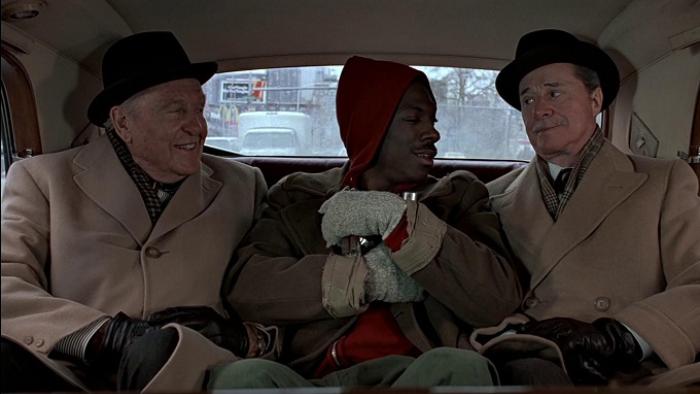
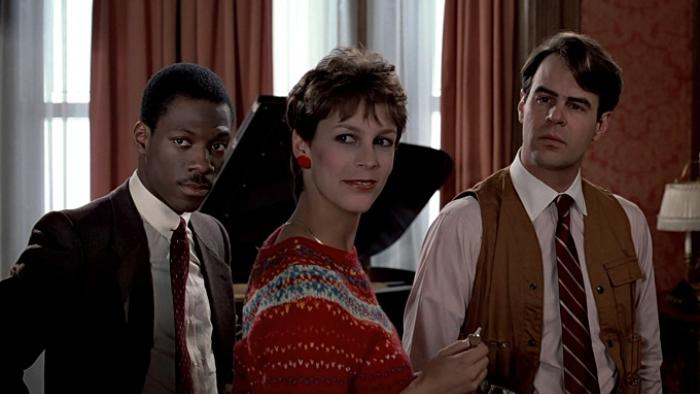
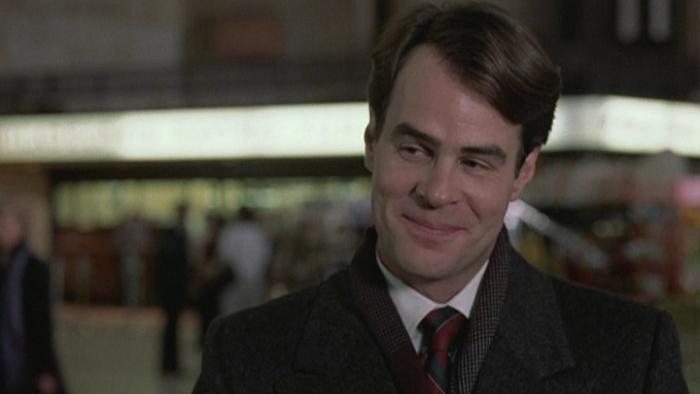
TRADING PLACES tells the story of greedy, wealthy Wall Street brothers Mortimer (Don Ameche) and Randolph (Ralph Bellamy) Duke, who bet on whether environment or heredity defines a man. The pawns in their game are smart-mouthed street hustler Billy Ray Valentine (Eddie Murphy) and affluent investment executive Louis Winthorpe III (Dan Aykroyd). The bet entails taking Winthorpe's power and money and giving it to Billy Ray to see whether nature or nurture will take over. When both Valentine and Winthorpe get wind of the brothers' scheme, they join forces to turn the tables on the Dukes.
This bawdy comedy insightfully raises issues about economic inequality and class structure in America. Both Aykroyd and Murphy make Trading Places memorable with their performances, and there are fun cameos by Al Franken and Jim Belushi. But the movie uses so many stereotypes, plus a near constant stream of sexist content, that you may want to find your conversation starters about wealth and morality elsewhere.
Talk to Your Kids About ...
Families can talk about the overall message of Trading Places. Does positive behavior come from nature, or nurture? Are people who are born with money more or less likely to commit crimes? Do you agree with the film?
Why do some movies objectify women? What effect does it have on you, as the viewer? Would you feel differently if male characters were objectified instead? And what's the difference between a camera that objectifies its subject versus a neutral depiction?
A party in Trading Places shows White characters wearing traditional clothing from different cultures as costumes, including one character donning blackface. Is this OK? Why, or why not?
How do characters use teamwork to take down the Duke villains? Why is this an important character strength?
Research shows a connection between kids' healthy self-esteem and positive portrayals in media. That's why we've added a new "Diverse Representations" section to our reviews that will be rolling out on an ongoing basis. You can help us help kids by
Common Sense Media's unbiased ratings are created by expert reviewers and aren't influenced by the product's creators or by any of our funders, affiliates, or partners.