

Off-the-wall family comedy has language, sex references.
Parents Need to Know
Why Age 13+?
Any Positive Content?
Parents Need to Know
Parents need to know that Malcolm in the Middle is an irreverent family sitcom about a boy named Malcolm (Frankie Muniz), his brothers, and their parents. The show can be crude and/or risqué, but Malcolm is an intelligent, often sensitive main character who faces many of the challenges of growing up and fitting in that real kids may encounter. The show puts family dysfunction and sibling rivalry in the spotlight, but ultimately, family members are there for one another. Characters kiss, it's implied that sex takes place, there are references to pornographic magazines, and condom packets are shown. Kids and teens date, and teen boys often stare longingly at teen girls. Occasional language includes "ass," "damn," "bastard," "son of a bitch," and "whore," as well as "God" as an exclamation. A child who uses a wheelchair is referred to as "cripple," and there's reference to "the R word," though "retard" isn't said out loud. Characters punch and wrestle one another, objects fall on people, and there are explosions, fires, arguments, and peril. People throw up off-screen. Characters, including teens, drink and smoke.
Drinking, Drugs & Smoking
some
Characters, including teens, occasionally drink and smoke cigarettes and cigars. It's implied that a younger kid smokes once. One character pretends to have a drug addiction to impress a narcotics officer. Underage teens drink alcohol, a central character is shown drunk, and younger children are seen drunk after being given "hard lemonade."
Did you know you can flag iffy content?
Adjust limits for Drinking, Drugs & Smoking in your kid's entertainment guide.
Language includes "damn," "dammit," "piss," "pissed," "hell," "bastard," "son of a bitch," "whore," "d--k," "crap," and "ass." Other swear words are bleeped out for comic effect, though it's often clear what the word would have been—including "f--k." There's name-calling such as "idiot," "loser," "freak," "moron," "butt-munch," and "butt-wipe." "God" is used as an exclamation. There's reference to "the R word," though "retard" isn't spoken out loud, and "cripple" is used in reference to a child who uses a wheelchair. It's implied that a character uses the middle-finger gesture, but it's obscured by an object.
Did you know you can flag iffy content?
Adjust limits for Language in your kid's entertainment guide.
Occasional sex-related subject matter and innuendo. Parents flirt and kiss, with the dad leaving a room saying "you'd better be naked when I get back," and an episode where they give up sex due to an infection. A 17-year-old boy loses his virginity to an older woman and is seen naked beneath a blanket, implying they've had sex, and sex is implied on other occasions. There's occasional partial nudity, but private parts are concealed by objects and angles. A teenage boy has a pornographic magazine, and women are briefly seen in underwear with cleavage showing. Kids and teens date and kiss, sometimes passionately. One scene shows two teens kissing while lying on top of each other, and the girl throws a condom at the boy (he leaves before it goes further). Suggestive behavior from teens, including girls stripping down to their underwear in front of a boy they believe to be gay and him spraying fake tan on their behinds, and a girl getting a back massage from the same character with her bra undone. A man accidentally slaps a stranger's behind, believing her to be his wife. Teen boys stare at girls in bikinis, and then bikini tops are seen floating in a lake, implying the girls are topless. A sex talk between mother and son touches on protection, periods, pleasure, and virginity.
Did you know you can flag iffy content?
Adjust limits for Sex, Romance & Nudity in your kid's entertainment guide.
Various brands are seen in shops and homes, including Sunkist, Fruit Loops, Starburst, Crunch bars, Doritos, Lipton, Pokemon, Bionicles, Goosebumps, Power Rangers, Crayola, Chips Ahoy, Coke, Nintendo, Durex, and Trojan. Comics are mentioned and shown, including Young Blood and Savage Dragon. Characters wear brands including Puma.
Violence & Scariness
a little
Lots of goofy roughhousing, sometimes resulting in injury like bruises or cuts and scrapes. There's bullying at school, including kids hitting one another, playing pranks, and name-calling like "moron" and "butt-wipe." Kids behave recklessly, putting themselves and others in danger. There are explosions, fires, objects falling on people, characters falling from heights, and many day-to-day accidents around the house. People are seen in the hospital with limbs bandaged. Arguments.
Did you know you can flag iffy content?
Adjust limits for Violence & Scariness in your kid's entertainment guide.
Family life can be chaotic, and sometimes people argue when they're stressed. But family is important, and when push comes to shove—sometimes literally—family members are there for one another.
Positive Role Models
a little
Malcolm is very smart but not always sensible in his actions. He often does selfish or dangerous things in his desire for fun or to impress others (particularly girls). His family members all care about one another, though they sometimes show it in odd ways—like teasing, playing pranks, and yelling at each other instead of expressing their feelings or talking. Misbehaving often results in punishment, but there are no major consequences for rude or dangerous behavior, and kids often repeat the same things again.
Diverse Representations
very little
The central family is White. There's a bit of diversity within supporting roles, but characters tend to be two-dimensional. Malcolm's best friend, Stevie, is Black and uses a wheelchair. He's portrayed as gifted but because he's asthmatic, he finds it difficult to speak full sentences without taking a deep breath. He's referred to as "Stevie the wheelie" and "cripple" on a number of occasions. Hal's poker buddies are all Black. A White man says to a Black man "I will own you," meaning he'll beat him at a game, then looks embarrassed. The family's oldest son, Francis, marries a Native woman from Alaska. Stereotypical gender roles include the mother taking care of the house and the father fixing things. The siblings in the family are all boys, and the only girls around them are usually love interests. Outdated language includes "Indians" used to reference Native Americans when kids talk about history. A class of gifted students has more East Asian kids than other classes do, playing into the "model minority" stereotype. One character is gay and out, but she's only in one episode. She's also stereotypical, portrayed as masculine—playfighting with a male friend and punching him in the stomach. A male character is mistaken for gay and also falls into stereotype, saying "girlfriend" in a campy way. He's later seen in a religious setting where men try to "pray out the gay."
Parents say the show is generally humorous and entertaining, praised for its relatable family dynamics and character development, but also noted for containing some questionable content regarding language and suggestive themes. While many believe it is suitable for kids aged 7 and up, others caution against its portrayal of female characters and potential negative behavioral influences, recommending parental guidance for younger viewers.
kid-friendly humor
character development
suggestive themes
parental guidance needed
Summarized with AI
age 11+
Based on 103 kid reviews
Kids say the show is hilariously realistic, showcasing the chaos of family life while also addressing mature themes such as sex and language that may not be suitable for all young viewers. Many emphasize its relatability for teenagers and older children but caution that the later seasons tend to include more explicit content, making it more appropriate for audiences aged 12 and up, especially if watched with parents.
realistic portrayals
mature themes
funny and relatable
mixed content suitability
caution for young viewers
Summarized with AI
What's the Story?
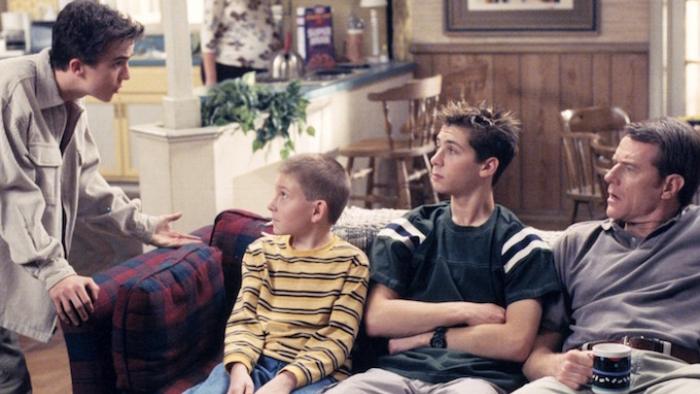
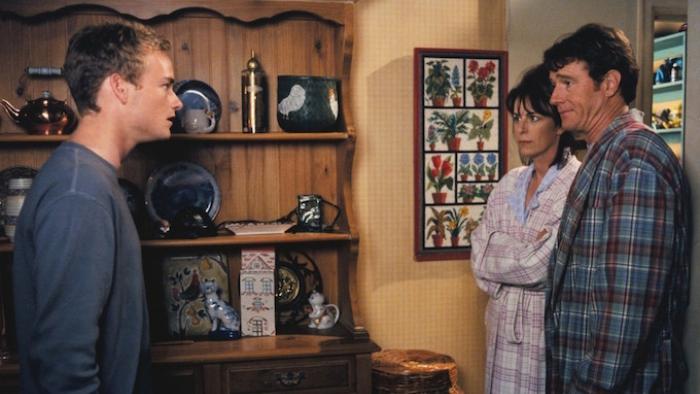
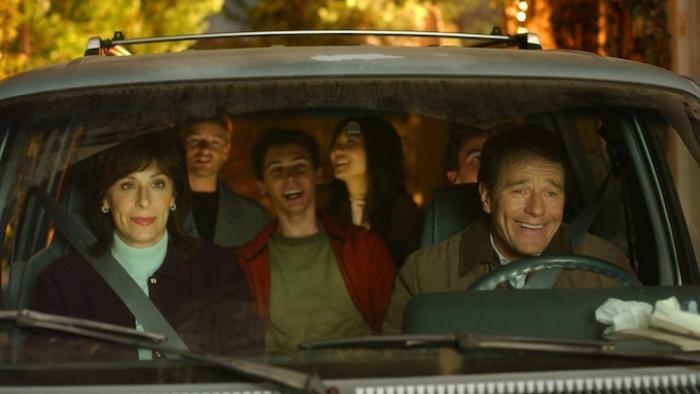
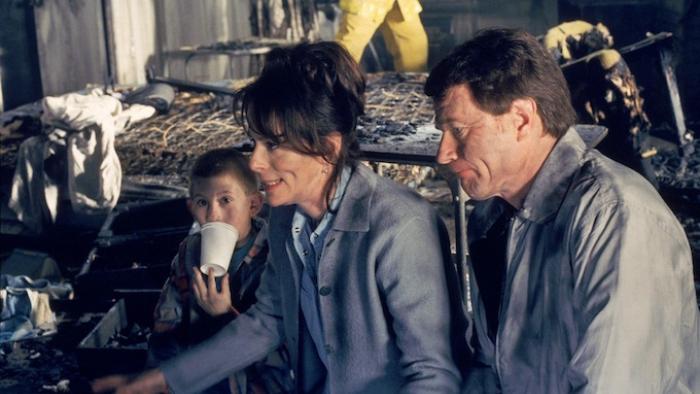
MALCOLM IN THE MIDDLE focuses on the trials and tribulations of young Malcolm (Frankie Muniz), who has a genius IQ and is placed in his school's gifted program despite the fact that he'd rather be just a "normal" kid. His family—which includes chaotic brothers Reese (Justin Berfield), Dewey (Erik Per Sullivan), and Francis (Christopher Masterson); goofy dad Hal (Bryan Cranston); and exasperated mother Lois (Jane Kaczmarek)—is just about coming apart at the seams, yet somehow it hangs together. The kids (and their parents) routinely embarrass one another, misbehave, and cause mayhem and destruction. But ultimately, their love keeps them together.
Unlike typical family sitcoms that have predictable stories and easy answers, some viewers might prefer this warm show because it deals with issues realistically. Episodes of Malcolm in the Middle can be clever and endearing—showing how kids deal with growing up—while others highlight how the family pulls together in hilarious ways. The show often brings to light how, at times, parents' rules are no match for children's curiosity.
All that said, there's no doubt that Malcolm in the Middle is loud and chaotic: Children often misbehave, talk back, and make dangerous, irresponsible decisions—but they also show vulnerability and care toward one another. Add to this the fact that situations concerning Malcolm's parents occasionally involve mature humor, including sexual references, and the show is best viewed by teens and adults, rather than younger kids.
Talk to Your Kids About ...
Families can talk about the ways in which Malcolm's family express their love for one another in Malcolm in the Middle. What do they do to show they care? Is it always easy to see the intentions behind their actions? How do you and your family show one another that you care?
Do you think the show exaggerates kids' iffy behavior for laughs? Why is it important to remember the difference between behavior on TV and in real life? How might some of the consequences of the boys' actions differ in the real world?
How do various relationships change during Malcolm in the Middle's seven seasons? Why do you think siblings sometimes argue or compete? How do Malcolm's relationships with his siblings compare with ones you see around you in your life?
Research shows a connection between kids' healthy self-esteem and positive portrayals in media. That's why we've added a new "Diverse Representations" section to our reviews that will be rolling out on an ongoing basis. You can help us help kids by
Common Sense Media's unbiased ratings are created by expert reviewers and aren't influenced by the product's creators or by any of our funders, affiliates, or partners.