







Common Sense Media Review
Japanese warrior fights evil in violence-heavy cartoon.
Parents Need to Know
Why Age 14+?
Any Positive Content?
Where to Watch
Videos and Photos


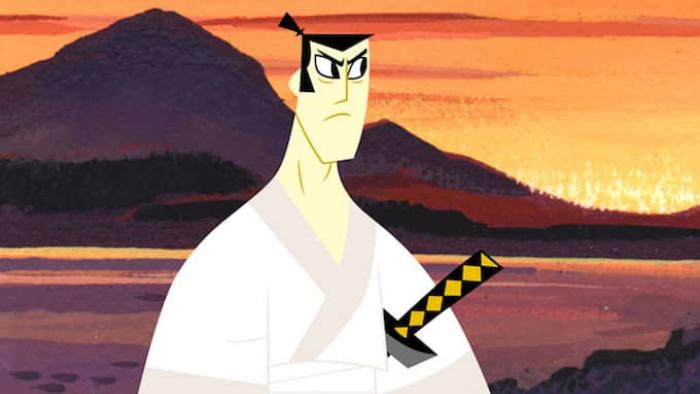
Samurai Jack
Parent and Kid Reviews
Based on 20 parent reviews
Parents say this show is primarily suitable for children aged 10 and up, particularly its early seasons which feature mild violence mainly involving robots, oil, and adventurous themes. However, the final season is significantly darker and contains graphic violence, suggesting that it is best for older teens and adults, with some recommending a minimum age of 14 for that season due to its heavier themes and intense action.
- family friendly
- mild violence
- dark themes
- age rating
- positive role model
 Summarized with AI
Based on 42 kid reviews
Kids say that the show has a unique animation style and compelling storytelling, making it a favorite among many. While the first four seasons are deemed suitable for kids aged 9 and above, the fifth season has significantly darker themes and increased violence, leading to a recommendation for mature audiences only, ideally with parental guidance.
- unique animation
- mature themes
- suitable for teens
- increased violence
- parental guidance
- enjoyable stories
Summarized with AI
What's the Story?
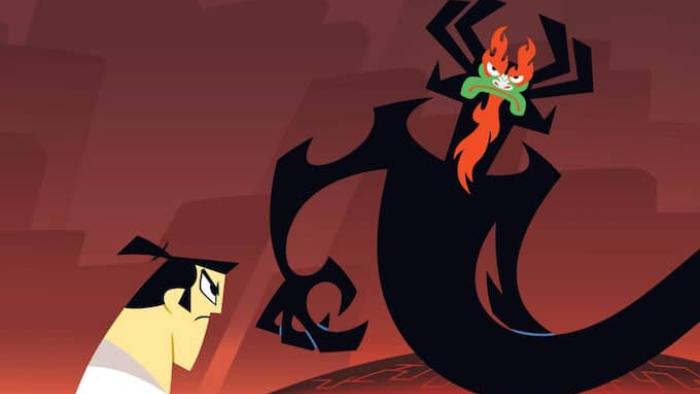
In feudal Japan, a young prince's father is killed by a demon named Aku (voiced by Greg Baldwin) in SAMURAI JACK. The prince escapes and spends his life training as a samurai, eventually challenging the demon. Before he can deal the killing blow, however, the demon opens a time portal and flings his opponent into it. The prince arrives in a frightening dystopian future Earth ruled by Aku and his robot servants and assumes the task of attempting to find a way back to his time to prevent the future he's seen, but he's also occupied by Aku's underlings who seek him out to destroy him. Haunted by memories of his family and the knowledge that they need him, Jack (Phil LaMarr) survives decades of Aku's assaults without giving up hope of returning home.
Is It Any Good?
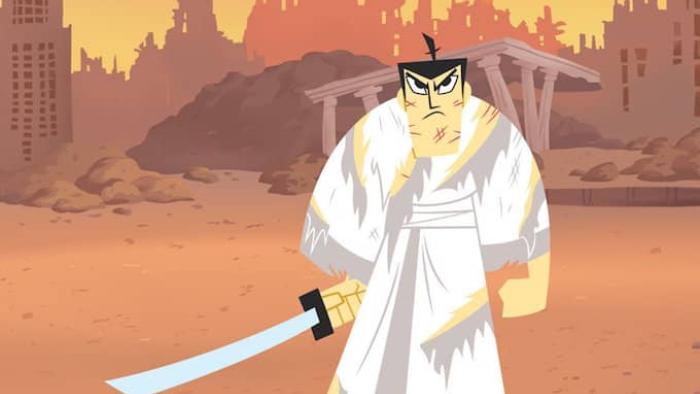
This beautifully drawn, animated, and edited cartoon is a cut above most, but the brooding hero and mature themes – especially evident in newer episodes – mean it's not for most kids. Older episodes involve some absurdity and lightheated content, but season five is decidedly more intense and violent, casting Jack as an increasingly tortured soul haunted by his extended inability to get back to his family. As such, the show is better suited to older teens and adults than it is to kids.
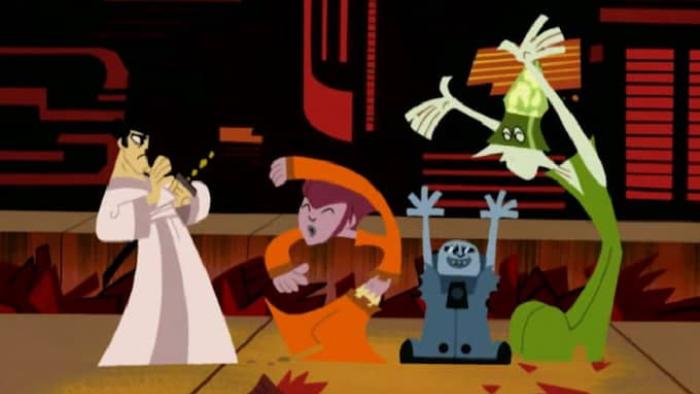
Violence is the biggest concern in Samurai Jack's content mostly because of how the show's minimal dialogue accentuates these exchanges. Even though most involve Jack facing off against robots, it's evident the experiences weigh on him; in those moments when his adversary is human, he's bothered long after the deed of self-preservation is done. This translates to a highly sympathetic, understated hero who maintains his own humanity despite forces that seek to undo it.
Talk to Your Kids About ...
Families can talk about how shows like Samurai Jack portray violence. Are there circumstances under which the use of violence is necessary? Who decides when it's justified and when it's not?
Is Samurai Jack a viable hero? Does he act like one? Are heroes always easy to spot in real life? What accounts for his ability to persevere through so many years of mental anguish?
How does this series reflect aspects of Japanese history and culture? Is it respectful in its representation? How fine is the line between stereotypes and honest representation?
TV Details
- Premiere date : August 10, 2001
- Cast : Phil LaMarr , Greg Baldwin , Grey Griffin
- Networks : Boomerang , Cartoon Network
- Genre : Drama
- Topics : Fantasy ( Magic ) , Robots
- Character Strengths : Perseverance
- TV rating :
- Last updated : October 1, 2025
Did we miss something on diversity?
Research shows a connection between kids' healthy self-esteem and positive portrayals in media. That's why we've added a new "Diverse Representations" section to our reviews that will be rolling out on an ongoing basis. You can help us help kids by
Suggest an Update
Common Sense Media's unbiased ratings are created by expert reviewers and aren't influenced by the product's creators or by any of our funders, affiliates, or partners.
See how we rate