







Common Sense Media Review
 By Jeffrey Anderson
,
based on child development research. How do we rate?
By Jeffrey Anderson
,
based on child development research. How do we rate?
Empathy, family, and autism in scary monster story.
Parents Need to Know
Why Age 13+?
Any Positive Content?
Where to Watch
Videos and Photos


Come Play
Parent and Kid Reviews
Based on 13 parent reviews
Based on 17 kid reviews
Kids say this movie is a well-executed horror thriller that strikes a balance between being scary and suitable for younger audiences, particularly pre-teens and teens. While it features elements of fear and bullying, it also delivers strong emotional messages, making it a good choice for first-time horror viewers despite being somewhat predictable for genre enthusiasts.
- kid-friendly
- strong messages
- good for beginners
- emotional depth
- somewhat predictable
 Summarized with AI
What's the Story?
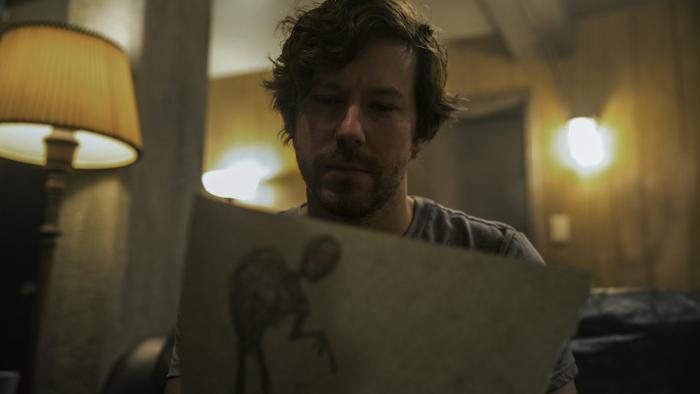
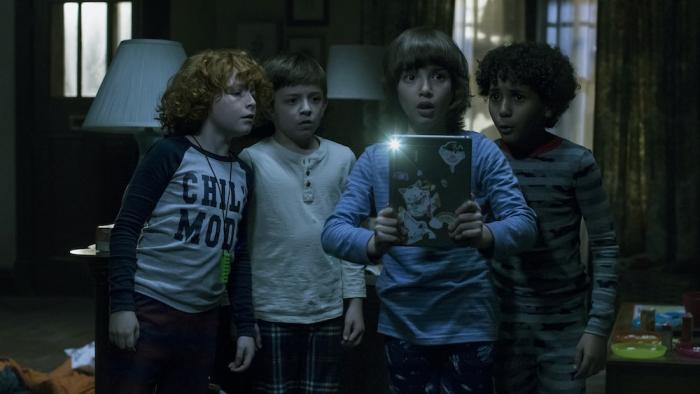
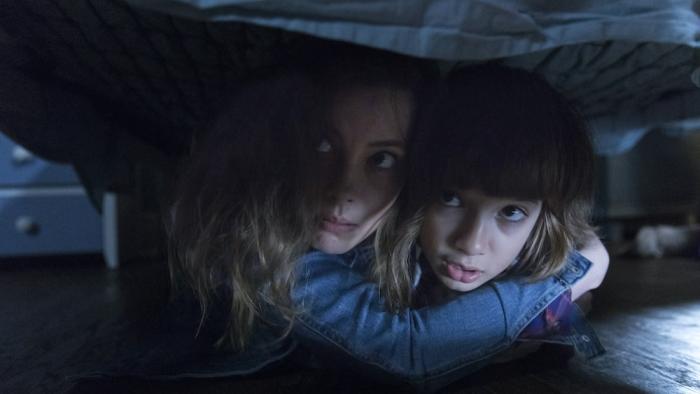
In COME PLAY, Oliver (Azhy Robertson) is a boy on the autism spectrum who loves SpongeBob SquarePants. Oliver doesn't speak, instead communicating with his mother (Gillian Jacobs) and father (John Gallagher Jr.) via an app on his cell phone. One day a mysterious ebook, Misunderstood Monster, shows up on his device. It tells the story of "Larry," a monster who wants a friend and will "climb through a window" to get one. During a sleepover with three other boys -- a hopeful attempt to get Oliver to make some friends -- Larry manifests himself. From then on, it's only a matter of time until Larry comes for Oliver. Can his parents protect him?
Is It Any Good?
Despite small hiccups in plot and character, this teen-friendly horror movie is a well-made production from top to bottom, and it effectively encourages strong empathy for its central characters. Written and directed by Jacob Chase, who adapted his own five-minute short film to feature length, Come Play resembles The Babadook in many ways, but it doesn't quite reach that film's league. It sometimes clouds the rules behind Larry; in one scene, Oliver smashes the lights in his room and causes Larry to fizzle out, even though Larry seems to have the power to douse the lights himself when he arrives. It also rushes friendships between Oliver and three other boys who start out by bullying him. But the dynamic between the family of three makes up for these things.
Young Robertson is remarkable as Oliver, while Jacobs' Sarah spends the most time with him and is tested by the impact of his autism. Her impatience leads to rash decisions, which drives the story. Meanwhile, Gallagher's Marty frequently works -- a night shift in a little booth in the center of a parking lot, a nice touch -- and gets to be the "fun" one at home. Come Play is bold enough to illustrate the strain in the family members' relationships, humanizing them. And it has a strong, vivid look that recalls the suburban habitats of E.T. and Poltergeist (Steven Spielberg's Amblin was one of the production companies). It also boasts tight, precise editing by Gregory Plotkin (Get Out), a chilling score by Roque Banos (Evil Dead), and a smart sound design, with Larry's slow, clicking footsteps an especially effective touch.
Talk to Your Kids About ...
Families can talk about Come Play's violence. Does the fact that children are in peril make the violence seem stronger?
How is bullying depicted? How does Oliver's mother try to solve the problem? What other ways are there to handle bullies?
What is the "autism spectrum"? Do you think this movie depicts life on the spectrum realistically?
What's the appeal of scary movies? Why do people sometimes like to be scared?
Movie Details
- In theaters : October 30, 2020
- On DVD or streaming : January 26, 2021
- Cast : Azhy Robertson , Gillian Jacobs , John Gallagher Jr.
- Director : Jacob Chase
- Studio : Focus Features
- Genre : Horror
- Topics : Fantasy
- Run time : 96 minutes
- MPAA rating :
- MPAA explanation : terror, frightening images and some language
- Last updated : September 29, 2025
Did we miss something on diversity?
Research shows a connection between kids' healthy self-esteem and positive portrayals in media. That's why we've added a new "Diverse Representations" section to our reviews that will be rolling out on an ongoing basis. You can help us help kids by
Suggest an Update
Common Sense Media's unbiased ratings are created by expert reviewers and aren't influenced by the product's creators or by any of our funders, affiliates, or partners.
See how we rate